
Apartment Search 2026: Why Finding a Home in Mallorca Remains Difficult
Apartment Search 2026: Why Finding a Home in Mallorca Remains Difficult
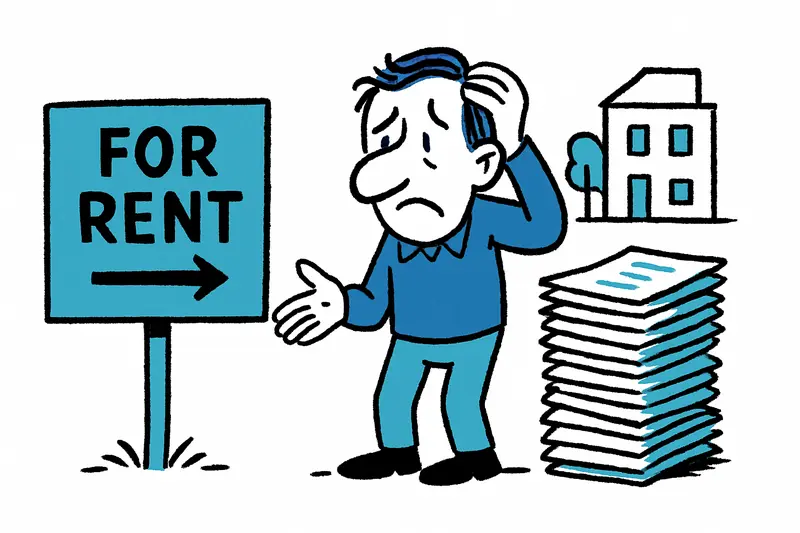
Despite a slight easing of price increases, the housing market remains strained: around 55,000 people are still searching for a home, while more than 24,000 rental contracts are expiring.
Apartment Search 2026: Why Finding a Home in Mallorca Remains Difficult
Key question: What happens when 55,000 people searching the island encounter fewer available homes?
Early in the morning in Palma's old town you can hear delivery vans rumbling past the shops. On the Plaça Major older residents sit and talk about the neighborhood, and at the same time you see young people with moving boxes looking for their next room. These observations match a sober number: around 55,000 people are currently looking for an apartment in Mallorca.
The simple explanation is: there are too few available apartments. This is not a new finding, but in 2026 the shortage takes on a new urgency. More than 24,000 rental contracts expire this year — Rent-price shock 2026: How Mallorca is heading toward a social crisis — for these households that often means: renegotiate, move on, or pay more. Altogether this creates pressure on the market that is not evenly distributed: popular neighborhoods in Palma, coastal towns and tourism-oriented municipalities feel the effect more strongly than scattered rural communities.
Prices are not falling. Neither the purchase nor the rental market shows relief, only a slight flattening of the growth rate, as discussed in Buying and Renting in Mallorca: Why Prices Are Pushing Locals to the Edge — and What Could Help Now. That sounds harmless, but it is not: a smaller increase on top of high bases still means noticeably more expensive living for families, pensioners and employees with middle incomes. For people who work here — waiters, care workers, teachers — that shifts the line between "affordable" and "out of reach" steadily upward.
Viewed critically, a perspective on the different causes is often missing: not only building regulations or a lack of plots play a role, but also the short-term nature of many rentals, conversions of housing to holiday lets and the decision of many owners to set market prices when contracts change, a problem analysed in Why long-term rentals in Mallorca are dwindling — and what could help. In public discourse this is often summed up simply as "there are not enough apartments" — the dynamic details get lost.
What is missing in debates: everyday experiences. A craftsman from Sóller describes how colleagues have to commute to Palma because housing nearby is unaffordable. A teacher who has worked in a small village for ten years is looking for an alternative because her current contract is expiring and the re-let is being offered at a significantly higher price. Such stories are not isolated; they repeat in supermarkets, on construction sites and in bars and echo reports such as When Living Rooms Become Bedrooms: How Mallorca Suffers from a Housing Shortage.
Then there is the question of the data: the figures cited — 55,000 seekers, over 24,000 expiring contracts — show the volume but not the distribution by age, income or employment situation. Without these details, measures can only be roughly sketched. Therefore the public debate often lacks the basis for targeted solutions.
Concrete approaches that could prove successful in practice can be assembled: first, more affordable new builds with long-term rental commitments; second, targeted incentives for owners to keep housing permanently on the residential market instead of short-term holiday rentals; third, transparency about lease terms and re-letting conditions so tenants can plan. Fourth — not to be underestimated — partnerships between municipalities and large employers so housing is created where the jobs are.
On the street this would mean: fewer moving boxes, fewer conversations about "having to leave." In places like El Arenal or Port de Pollença this would ease daily commuting; in Palma neighborhoods could become more mixed again instead of further developing into socially segregated zones. Such effects are not immediately visible; they require planning and the courage to regulate.
Another lever is the data situation: a publicly accessible register of expiring leases, vacancies and conversions would allow bottlenecks to be identified locally. Such registers must be data-protection compliant, but they are a prerequisite for releasing plots or promoting new construction where it is actually needed.
In conclusion: the housing crisis in Mallorca is not just a collection of numbers, it is a daily problem with sounds, smells and faces — on the square, in the cafeteria, at the bakery. Politics and the local economy can meet the challenge, but debates must become more concrete, solutions must be thought of locally and measures must be binding. Otherwise 2026 will remain for many people just another year of the same quiet insecurity: a room somewhere, but no home.
Frequently asked questions
Why is it so hard to find an apartment in Mallorca in 2026?
Are rental prices still rising in Mallorca?
Which areas of Mallorca are most affected by the housing shortage?
What happens when a rental contract expires in Mallorca?
Why are long-term rentals disappearing in Mallorca?
What can Mallorca do to ease the housing crisis?
Why do workers in Mallorca have trouble finding housing near their jobs?
Would a public register help with Mallorca’s housing shortage?
Similar News
Injured captain, big plans: Germania Mallorca before the away match in Consell
The newly founded FC Germania Mallorca travels to Consell on Saturday. Captain Bastian Müller is out injured, but coach ...

Palma, Palma de Mallorca, Palma‑Mallorca: What is it really about?
The debate over the city's name is more than grammar: it concerns identity, law and branding policy. A sober reality che...

Warning to Bathers: Nipping Fish in Cala Major and Other Coves — a Reality Check
In Cala Major and several beaches around Mallorca, bathers report painful “nips”. Who are the animals, why are they gett...

Rental Car Theft in El Arenal: What This Incident Reveals About Our Gaps
A teenager steals a running rental car in El Arenal, flees on foot, climbs over walls and is caught by the Guardia Civil...

Red Rope in Palma's Library: What Helps Against Selfie Tourism — and What's Missing
Palma's city library cordoned off an area with a red rope to keep selfie tourism away from reading and working activitie...
More to explore
Discover more interesting content

Can Cap de Bou

Townhouse Lleo 72
