
Arrest after Incident at Palma Beach: What the Episode Should Really Tell Us
A man reportedly performed sexual acts publicly on Palma beach. Witnesses alerted the police, who found and arrested the suspect in a nearby bush. What does this mean for safety on our beaches and which precautions are missing?
Arrest after Incident at Palma Beach: What the Episode Should Really Tell Us
Key question: How safe are our beaches — especially for young visitors?
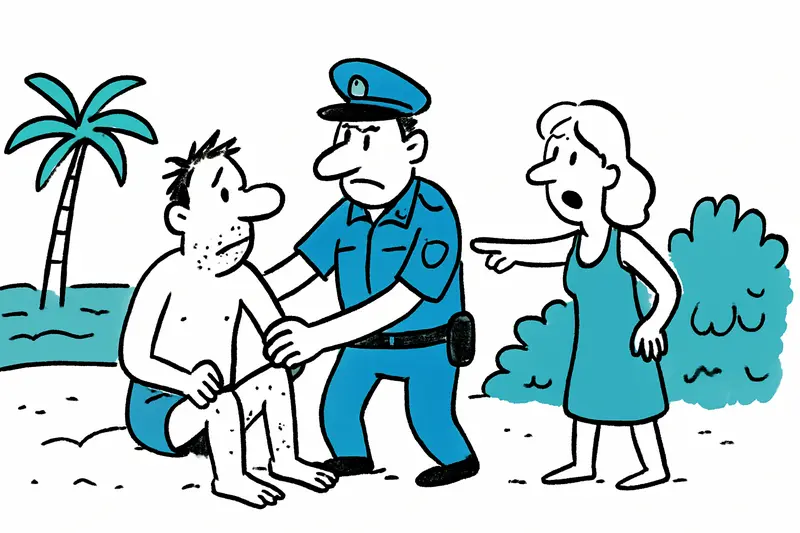
On a warm Saturday late in the morning, people sat at the shore of Palma, listening to the sea, children shouted while playing and vendors called out their prices. Amid this everyday scene something disturbingly different occurred: a man lingered near two girls, fiddled with his phone — and is said to have eventually masturbated in front of them. Other bathers intervened, alerted the National Police, who shortly afterward found and arrested the man in a nearby bush, a case echoed in Arrests after threats at the city beach: Why an evening stroll must become safer again.
These are the sober facts: witness statements led to a search by uniformed and plainclothes officers (GOR), the suspect was detained; he is accused of exhibitionism and, according to the police, is a Moroccan national. Several people on the beach confirmed the observations; the girls had already moved away from the man because they felt uncomfortable.
Critical analysis
What happened here is twofold: the immediate misconduct of an individual and a failure of everyday routines to notice or prevent the situation earlier. Mallorca's beaches are spacious, sounds overlap and people spread over a large area — this makes targeted observation difficult. In addition, the line between harmless inattention and clearly criminal behavior is not always immediately recognizable, especially for minors who are often unsure whether they should report something.
From a policing perspective the response was correct: witnesses called 091, officers searched and detained the suspect. Yet the fact that the incident apparently went on for an extended period raises questions: were lifeguards or beach wardens informed? Was there preventive presence in this section of the beach? Were the affected minors given immediate support? Similar reporting on the scale of policing this summer can be found in Arrests made — is that enough to make beaches safer?.
What is missing from the public debate
Discussion of such incidents often remains limited to the lone-perpetrator narrative: an arrest is made and the report quickly fades. Several levels are missing: first, the primacy of protecting minors and how we prepare parents, schools and beach staff; second, binding procedures for witnesses who not only know emergency numbers but also how to preserve evidence (for example who to contact and how to hand over photos in a legally secure way); third, transparency about how often such cases occur on the island's beaches and whether there are hotspots, as previous incidents such as Brawl at Playa de Palma: Why a verbal exchange could have ended fatally demonstrate.
Everyday scene
Picture the playa: sun umbrellas, an ice-cream vendor, a lifeguard track in the sand, an older couple on a blanket. A group of teenagers look out to sea. In this familiar setting a stranger with a phone initially hardly stands out. Only when another bather shouts do heads turn, glances follow, someone runs to the changing area, a child begins to cry. The police arrive with the same soft siren, people whisper, a patch of scrub beside the beach becomes a search site. Scenes like this happen faster than you think — and often a watchful look is enough to prevent something worse.
Concrete solutions
1. Visible prevention: regular foot patrols by the National Police during peak times, complemented by coordinated presence of local police and beach wardens. Visibility deters and builds trust.
2. Training for beach staff: lifeguards and small kiosk operators should receive brief training to recognize suspicious behavior and activate first-aid and reporting chains — including how to deal with minors as affected parties.
3. Clear information signs: at the entrances to busy beaches there could be short notices: how to report suspected incidents, which numbers are important, and where to find support services.
4. Support for victims: especially for minors there must be low-threshold, confidential points of contact — on-site contacts or a hotline that quickly informs specialist personnel.
5. Public education in schools and communities: sensitive education about bodily boundaries, how to act in cases of harassment and reporting routes strengthens awareness among children and parents.
Conclusion
The arrest of the suspect was necessary and correct. But it is only the first step. If we want beaches to remain safe spaces, we must do more than react: we need visible prevention, clear procedures for witnesses and support for victims. After a summer day in Palma no one should leave the beach with the uneasy feeling that they were not taken seriously. A city that loves its beaches protects those who want to play there carefree.
Frequently asked questions
How safe are beaches in Mallorca for children and teenagers?
What should I do if I see suspicious behaviour on a Mallorca beach?
When is the best time to go to Mallorca beaches if you want a calmer atmosphere?
How can parents help children feel safe at Mallorca beaches?
Are lifeguards or beach staff supposed to react to suspicious situations in Mallorca?
What numbers should I know for emergencies on a Mallorca beach?
What should beaches in Palma do to improve safety for visitors?
What support is available for minors after a disturbing incident on a Mallorca beach?
Similar News

After the large demonstration: Human chain in Palma — can perseverance move politics?
On Saturday activists in Palma plan to form a human chain from Plaça d'Espanya to La Lonja. Chairs, pens and conversatio...
Dead Dolphin in Peguera — a Lesson for Beach Protection
A young dolphin was first seen alive at Palmira Beach in Peguera and was found dead at the boat dock the next day. The s...

Born conflict: Who owns Palma's most elegant promenade?
The city ordered bars on Passeig del Born to dismantle their terraces ahead of a planned sit-in. Residents, restaurateur...
Unidentified body near Tolleric: How can a person be overlooked in the middle of the island?
An older man was found dead in a patch of woodland near the cliffs of Tolleric. He had no identification, showed signs o...
Water shortage in Mallorca: Reserves shrinking, answers lacking
Despite rainfall, reservoir volumes remain low: Gorg Blau falls, Cúber rises slightly — together only 39.9 percent. Key ...
More to explore
Discover more interesting content

Boat Tour with BBQ along Es Trenc Beach

Private transfer from Mallorca Airport (PMI) to Pollensa
