
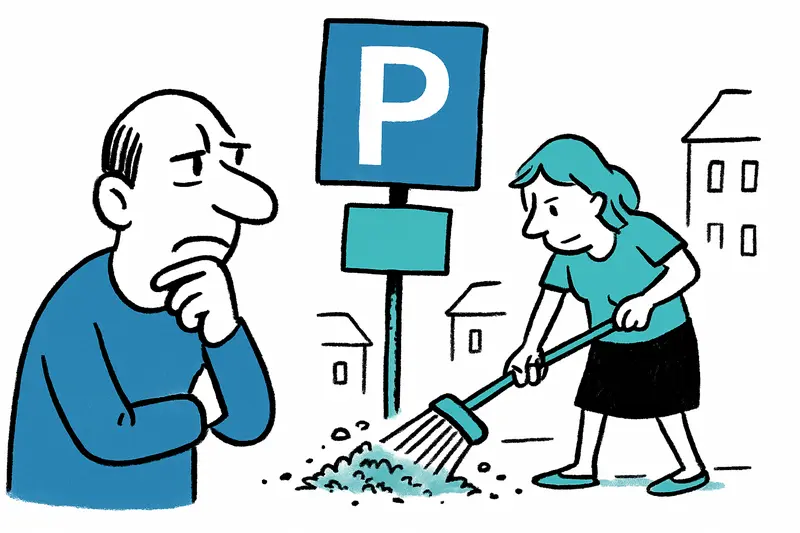
ORA parking zones: Santa Catalina left out — who will clean up the consequences?
ORA parking zones: Santa Catalina left out — who will clean up the consequences?
The town hall postpones the expansion of the blue parking zone in Santa Catalina. Good news for pedestrians — but up to 600 parking spaces could disappear due to one-sided parking. Who is thinking of delivery traffic, residents and small shops?
ORA parking zones: Santa Catalina left out — who will clean up the consequences?
Leading question: How can the parking situation in Santa Catalina be organized without driving residents and businesses into the wall?
The news is, for now, a breather: the planned expansion of the blue ORA parking zone temporarily leaves the northern part of Santa Catalina out. The town hall instead wants to reorganize the parking situation in the narrow neighborhood. On paper this means that in several narrow streets parking will only be allowed on one side in the future — a measure that could, according to calculations, eliminate around 600 parking spaces, a situation also seen in Cala Major: Parking lot turns into a litter and problem zone – who will clean up?.
That sounds sober, like transport policy. But on the street in front of the Mercado de Santa Catalina the tone is different: delivery vans honked, a garbage truck rattled by, a bicycle courier weaved between parked cars. Residents with shopping bags squeezed past doorways. The smell of coffee from the small corner café briefly drowns out the city noise — and then everyone here remembers why spaces are so scarce.
Critical analysis: one-sided parking does indeed create more travel width and safety in many places — that is indisputable. Problematic is the consequence: if up to 600 spaces disappear in densely built-up neighborhoods, the parking problem is merely shifted to side streets or adjacent neighborhoods. We already see the result today: vehicles on the pavement, deliveries in no-parking zones, residents circling the area at night looking for parking spaces, similar to the Beyond the Parking Lottery: Son Espases and the Daily Parking Chaos reported elsewhere.
Another friction point is the lack of a data basis in the public debate. How many spaces are really needed, when is parking happening (time of day, duration), how many of the currently used spaces belong to apartments, businesses, tourists? The raw number "600" says little about the social effects: who loses the spaces — commuters, shop owners, families?
What is missing in the discourse: clear timetables, transparent parking counts and genuine citizen participation. There is a lack of honest engagement with delivery logistics for bakeries, restaurants and tradespeople. Someone who drives a van into Calle de la Reina in the morning needs space — and does not need a wave of fines if the city suddenly tightens rules without offering alternatives.
Everyday scene: early in the morning, when the weekly market fills the square, the situation becomes particularly noticeable. Trucks with pallets of vegetables, suppliers with handcarts, parents with prams — all compete for the same space. If a third of the parking spaces disappear, chaos quickly ensues. That is exactly where the city must take action, not with abstract area figures.
Concrete solutions that should be discussed now: first, pilot zones with time-limited measures (e.g. a 6-month trial phase) and accompanying data collection using sensors or manual counts; second, regulated delivery times with designated loading zones near market areas; third, tiered resident parking that secures affordable spaces for locals but excludes long-term parkers and commuters, an approach similar to proposals in Sóller wants to tame the parking chaos: Three parking lots and 300 resident spaces — is that enough?; fourth, expansion of secure bicycle parking and short-term parking spaces instead of long-term spaces; fifth, examination of small municipal parking garages or decks on the edges of the neighborhood, combined with a feeder bus or e-shuttles.
Additionally recommended: transparent communication formats — regular town hall meetings, digital maps with real-time parking spaces, and an evaluation system for business owners that makes impacts on delivery traffic visible.
Pithy conclusion: the town hall is right not to simply plaster Santa Catalina with regulations. But the current solution must not mean: we reorganize — and you deal with the consequences. Whoever potentially removes 600 spaces must simultaneously offer, test and adjust concrete replacement and compensatory measures. Otherwise the end result will just be less space — for cars and for the residents of this neighborhood who every day have to arrange their lives between market stalls, delivery people and stacked bicycle boxes.
If the administration is smart now, it will take the expansion in other places like Pere Garau and Son Oliva as an opportunity to create a transport plan that brings together data, residents' interests and business. And last but not least: Santa Catalina needs participation instead of surprises — a bit of pragmatism in a historic old town, and attention to public spaces such as Parc de la Mar neglected: Who will save Palma's living room at the foot of the cathedral?.
Frequently asked questions
Why is Santa Catalina in Palma not included in the new ORA parking expansion?
Will parking in Santa Catalina become harder if one-sided parking is introduced?
How should Mallorca neighbourhoods handle parking changes without affecting residents and businesses too much?
What parking solutions are being suggested for Santa Catalina in Palma?
How will delivery traffic be affected in Santa Catalina if parking spaces are removed?
When is parking most difficult in Santa Catalina, Palma?
Could parking changes in Santa Catalina push cars into nearby Mallorca neighbourhoods?
What can residents in Santa Catalina do if parking rules change in Palma?
Similar News

When the Phone Falls Silent: Concern for Sarah Joelle in Mallorca — and What It Reveals
After days without a response, the TV personality's unreachability in Mallorca sparked concern. Shortly afterwards an al...

Ultraluxury on the Ground: Four Seasons Jet in Palma — a Reality Check for Formentor and the Island
A high-priced flight crosses Mallorca and its guests stay for days at the Formentor resort. What does the island get bes...
Death of a Witness and the Justice Backlog: Why the Kegel Brothers Trial Matters in Mallorca
A witness in the Playa de Palma fire case has died, and the trial against eight German holidaymakers has been delayed un...

Champagne Reception, Red Carpet and Mini Originals: The Pre-Nit del Art at Gallery Mensing
Almost 400 guests, champagne, pop-art feats by Tom Boston and a raffle for the Parkinson's foundation: Gallery Mensing t...
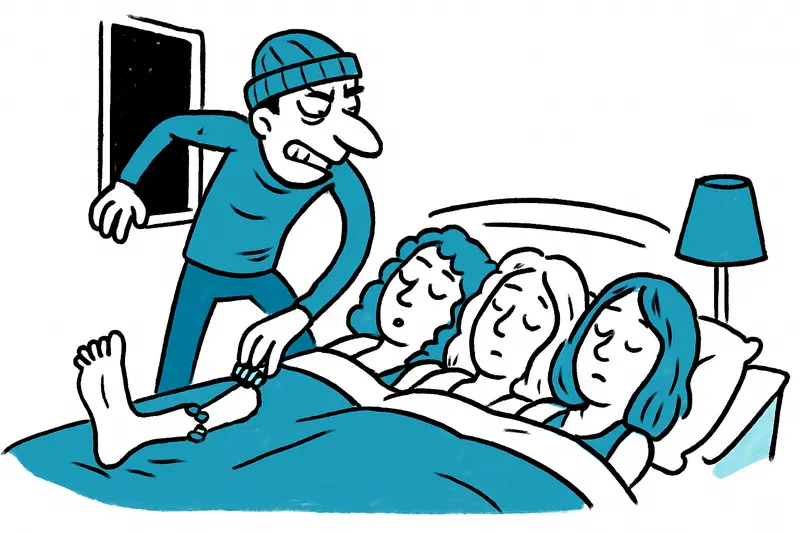
Break-in in Cala Rajada: How Three Tourists Were Robbed in Their Sleep
In the early morning hours a holiday home near Son Moll in Cala Rajada was visited by a burglar. Three German holidaymak...
More to explore
Discover more interesting content

Can Cap de Bou

Townhouse Lleo 72
