
Two Seriously Injured in Head-On Collision Between Campos and Felanitx: How Safe Are Mallorca's Country Roads?
Two Seriously Injured in Head-On Collision Between Campos and Felanitx: How Safe Are Mallorca's Country Roads?
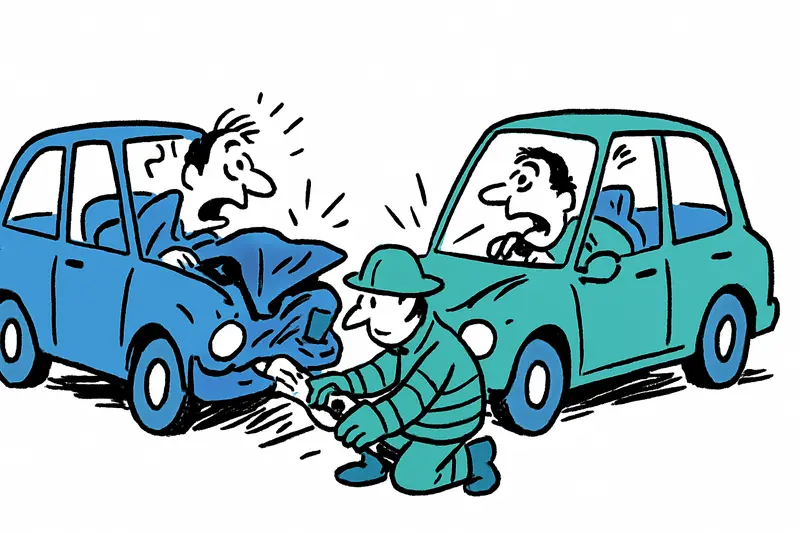
Two cars collided head-on on the country road between Campos and Felanitx. Two drivers were seriously injured and had to be freed by the fire brigade. Why such accidents occur more frequently here remains an open question.
Two Seriously Injured in Head-On Collision Between Campos and Felanitx
Fire brigade freed drivers, long traffic jams near Campos – the cause is still unclear
Yesterday afternoon, a serious head-on collision occurred on the country road between Campos and Felanitx. Two people were so severely injured that the fire brigade had to cut them out of the vehicles. Both were taken to hospital. As a result, long queues formed towards Campos; residents and commuters waited patiently in the sweltering heat while sirens echoed across the fields.
Key question: Are the two-lane connections on Mallorca still safe enough to prevent such serious accidents — and who bears responsibility when infrastructure fails?
The sober facts are sparse: head-on collision, two seriously injured, a fire brigade operation and significant traffic disruption. Why the vehicles collided is not yet publicly known. What we do know is that such accidents repeatedly occur on Mallorca's country roads, as documented in Three serious accidents in one night: What's wrong with Mallorca's country roads? and in coverage of a Head-on Crash near Manacor: Two Dead, Questions Remain.
When analysing such accidents one must not stop at individual fate. The question of cause quickly leads to several levels: driver behaviour, vehicle condition, time of day and weather all play a role — just as the road itself does: markings, shoulders, lighting and the design of junctions and driveways. What is often missing here is broad cooperation between municipalities, the traffic authority and the police.
Public debate after accidents usually focuses on the immediate events. What is missing are reliable official data on accident frequency on specific stretches, clear statements on speed enforcement and transparent information on which measures have already been discussed or implemented after similar incidents. It is also not regularly reported how quickly rescue teams arrive on site or whether bottlenecks hinder access for ambulances and recovery vehicles.
A typical Mallorca everyday scene after such an accident: On the Plaça in Campos the café briefly empties, people check their phones, the local police patrol directs traffic, and farmers with tractors carefully manoeuvre past the end of the queue. The heat is heavy; the smell of coffee mixes with the petrol odor of idling cars. Such images make clear: road safety here is not an abstract problem but affects neighbours, tourists and commuters alike.
Concrete solutions that should not remain mere lip service:
1. Route-specific analyses: Conduct traffic studies for the most heavily used connections between towns and publish the results. No data, no priorities.
2. Visibility and road engineering: Refresh road markings, widen shoulders, install warning markers at blind bends, add reflective posts and create escape bays at critical points, measures that could prevent incidents like the Crash on the Ma-10: Bus collides head-on with a truck — What does this say about our roads?.
3. Speed monitoring and enforcement: Deploy mobile and fixed controls at known accident hotspots as well as targeted enforcement actions during peak times.
4. Public awareness: Local campaigns on risky overtaking, driving under the influence and distraction by smartphones — in Spanish, Catalan and German to reach all road users.
5. Strengthen rescue chains: Regular joint exercises between fire brigade, ambulance services and police, clearly marked emergency access routes and funding for faster extraction equipment.
These measures cost money and time. That is the bitter truth. But every saving in the wrong place can endanger lives. On Mallorca, where distances are short and roads are often old, prevention pays off.
Conclusion: The accident between Campos and Felanitx is not only a tragic event but also a warning signal. Those responsible must not simply close the case. More transparency, targeted infrastructure measures and stricter enforcement are needed — otherwise the question remains how many similar accidents must occur before real action is taken.
Frequently asked questions
When is the best time to visit Mallorca for good weather?
Is Mallorca warm enough to swim in the sea?
What should I pack for a trip to Mallorca?
Is Mallorca a good destination for a beach holiday?
What is Port d'Alcúdia like for visitors?
What makes Sa Calobra worth visiting in Mallorca?
Is Cala Millor a good place to stay in Mallorca?
What should families know before visiting Mallorca in summer?
Similar News

After the large demonstration: Human chain in Palma — can perseverance move politics?
On Saturday activists in Palma plan to form a human chain from Plaça d'Espanya to La Lonja. Chairs, pens and conversatio...
Dead Dolphin in Peguera — a Lesson for Beach Protection
A young dolphin was first seen alive at Palmira Beach in Peguera and was found dead at the boat dock the next day. The s...
Born conflict: Who owns Palma's most elegant promenade?
The city ordered bars on Passeig del Born to dismantle their terraces ahead of a planned sit-in. Residents, restaurateur...
Unidentified body near Tolleric: How can a person be overlooked in the middle of the island?
An older man was found dead in a patch of woodland near the cliffs of Tolleric. He had no identification, showed signs o...
Water shortage in Mallorca: Reserves shrinking, answers lacking
Despite rainfall, reservoir volumes remain low: Gorg Blau falls, Cúber rises slightly — together only 39.9 percent. Key ...
More to explore
Discover more interesting content

Boat Tour with BBQ along Es Trenc Beach

Private transfer from Mallorca Airport (PMI) to Pollensa
