
When Buses Stay Empty: Why Mallorca Is Losing Drivers and How to Fill the Gap
At the start of the season in Mallorca, hundreds of driver positions remain vacant. What are the reasons — and what pragmatic solutions could get buses and trucks reliably back on the road? A local check.
How do we keep buses and trucks on Mallorca running when drivers are missing?
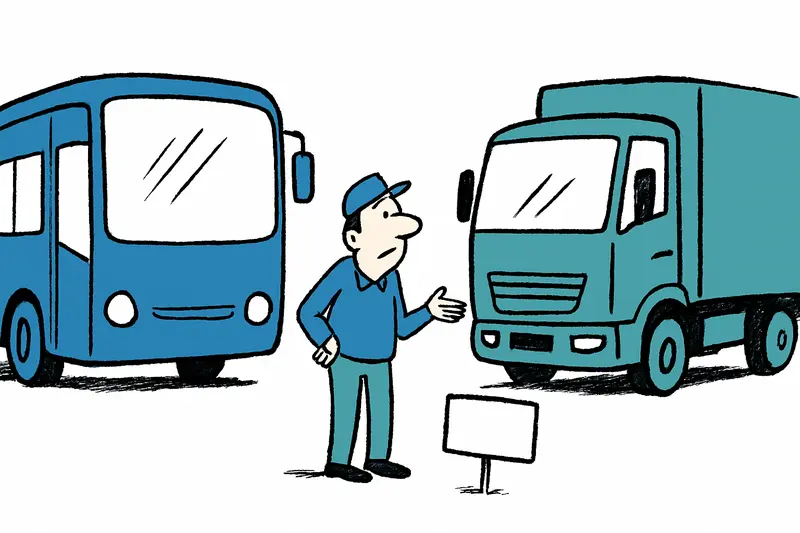
Early in the morning in Palma, when seagulls cry over the harbour and the first coffee steams on Plaça d’Espanya, you can see it: at some depots buses stand with closed doors and empty driver seats. Not an isolated case – as highlighted in Ten Days of Bus Strike in Mallorca: How Long Can the Island Endure It?, transport companies in the Balearic Islands report that around 150 driver positions regularly remain unfilled during the high season. The question is simple and urgent: what happens if this gap grows beyond a temporary fix?
Age, costs, availability: the obvious causes
The usual answers sound familiar. Many long-term employees are retiring; the average age in some companies is close to 57 to 60 years. Young people enroll less often in professional driver training – not because they do not like the road or fresh morning air, but because the entry barriers are high. Driving licence courses for buses and trucks cost between €2,000 and €4,000, plus exam fees and the time during which little income can be expected. For someone who can hardly find housing in Palma or Manacor and has to cover rent and living costs, that is often simply too much.
Too little public funding, industry representatives say: no attractive subsidy programmes, only isolated grants from regions or employers, as documented in New ambulances, empty seats: How a drivers license shortage is slowing Mallorca's emergency services. That is why some companies lure applicants with bonuses, hiring guarantees and flexible shifts – but that is not enough across the board.
What often gets lost in the debate
In addition to the well-known factors, there are aspects that are heard less: for example, the psychological strain. Drivers report constant time pressure in the high season, unbalanced shift schedules and responsibility towards passengers and delivery deadlines. Someone who wakes up to the beeping of a bus in the morning but has hardly any social life in the evening thinks twice about whether they want this job in the long term.
Another issue: the recognition of foreign qualifications. Many migrants work in logistics and bring experience from abroad – but formalities, costs and long waiting times for conversion or recognition hinder integration. And very locally: the distribution of depots. Someone who lives in Alcúdia and is employed by a company in Palma faces long commuting times or expensive relocation questions. You cannot organise an island the same way you organise the mainland.
Concrete solutions – from short-term measures to structural change
Talking alone is not enough. Employers, politicians and training institutions must get concrete. Our proposals, practical and directly implementable:
1. Subsidise training: Regional support programmes that cover exam costs and parts of course fees – targeted at trainees from socio-economically disadvantaged households.
2. Mobile testing centres and intensive courses: Exam dates in several island locations, compact intensive courses in the low season so that applicants do not have to wait for months.
3. Dual models with guaranteed hiring: A combination of school, company and practical driving – similar to an apprenticeship. Hiring bonuses for companies that take on trainees.
4. More attractive working conditions: Better shift planning, premiums for night and weekend work, childcare for shift workers and affordable staff housing near depots.
5. Recognition and mobility: Faster procedures for recognising foreign licences, state assistance with licence conversion (see DGT guidance on recognition of foreign driving licences) and an island-wide placement portal.
6. Long-term strategies: Higher vocational goals in secondary schools, promoting the profession to young people – with realistic insights, not just image films. Community solutions such as cooperatively organised transport services could also help small companies buffer staff shortages.
What this means for Mallorca
For locals this means: less stress on crowded routes, more reliable supply chains for supermarkets and a city that does not tumble into delivery and bus chaos every year. For tourists it means a more stable offer – punctual buses from the airport, fewer cancelled trips and less-stressed drivers who can explain the island with a smile.
There is no magic formula. But there are solutions that take action: money for training, streamlined administrative processes, better shift models and clear signals to young people. A mix of short-term subsidies and structural reforms could prevent you from standing at the depot on a sunny July morning and thinking: "Why is there no driver here?"
The clock is ticking. If action is not taken soon, the gaps will be visible not only on paper but at every bus stop sign, at every missed delivery and on the exhausted faces of the remaining colleagues; for local reporting and further context see More than 350 drivers without a driver's license in the Balearic Islands: Why the problem on Mallorca shouldn't exist. Mallorca can be more beautiful – and easier to get around. But it takes courage, time and a bit of public commitment to keep the island moving.
Frequently asked questions
Why are there so many bus driver shortages in Mallorca?
How much does it cost to become a bus or truck driver in Mallorca?
What would help Mallorca attract more bus drivers?
Can foreigners work as bus drivers in Mallorca if they already have a licence?
Why is the bus driver shortage a problem for Mallorca residents and tourists?
Is Palma especially affected by Mallorca’s driver shortage?
How does the driver shortage affect places like Alcúdia or Manacor in Mallorca?
What practical steps could ease Mallorca’s bus and truck driver shortage?
Similar News

Caro Robens: 15 kilograms lighter — and again in the crossfire of online comments
Bodybuilder Caro Robens, who lives in Mallorca, has lost 15 kilograms. Her success on Instagram was met with applause — ...

Meager Industry in Mallorca: How the Island Can Be More Than Just Tourism
The industrial sector in Mallorca is shrinking, productivity is falling and firms remain tiny. The key question: can the...
Pre-Nit de l'Art: Galerie Mensing invites to a special evening with Tom Boston
Before the big art night, Galerie Mensing opens its doors: pop art, champagne, a DJ and a hand-signed print by Tom Bosto...

Sea view and more seats: Cappuccino Grand Café reopens in Port d'Andratx
After a long renovation, the Cappuccino Grand Café on the Port d'Andratx harbor promenade has quietly reopened. Larger t...

Enric Mas wins the Vuelta – a triumph that resonates in Mallorca
Mallorcan Enric Mas has won the 82nd Vuelta — the first Spanish overall victory since 2014. Cyclists and neighbors on Ma...
More to explore
Discover more interesting content

Can Cap de Bou

Townhouse Lleo 72
