
2025 Tally: Fewer Wildfires — Cause for Concern or Complacency?
2025 Tally: Fewer Wildfires — Cause for Concern or Complacency?
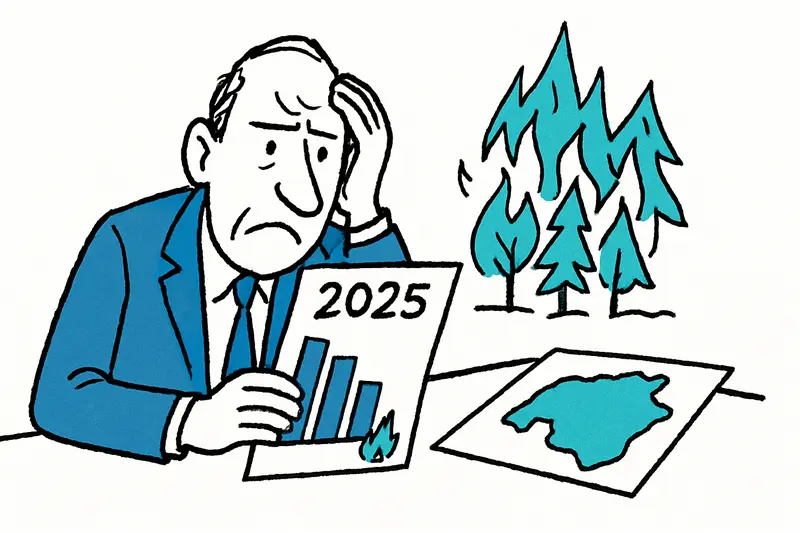
82 fires, 17 hectares burned, 96 percent human-caused: Why the figures look positive — and why Mallorca must not become complacent.
2025 Tally: Fewer Wildfires — Cause for Concern or Complacency?
Key question: Is one year with few fires enough to judge Mallorca's fire-protection policy as successful, or do the numbers obscure structural risks?
The raw figures are tempting: 82 fires in the Balearic Islands in 2025, only 17 hectares burned — 39 fires were recorded on Mallorca. That is below the ten-year average of 88 fires and 148 hectares burned. Quick conclusion: All clear? Not so fast.
If you drive through the Serra de Tramuntana on a cold January morning, you still smell the resins of the pines, hear the creak of old stone steps in villages like Fornalutx and see farmers at work on olive trees. This normality is deceptive: 96 percent of the recorded fires in 2025 were caused by human activity. Only four percent were natural events such as lightning strikes. That means the solution is not solely in the hands of technicians and authorities — it lies centrally in our everyday behavior: the actions of residents, farmers and visitors.
The good annual tally conceals two problem areas. First: area statistics neglect dynamics. Small, quickly extinguished fires do not scale linearly with the risk of large fires; a recent Field fire near Manacor: What the operation on the Ma-15 reveals about Mallorca's fire risk underlined how quickly a local blaze can become serious. A few dozen small ignition points in windy locations can become catastrophic in a hot summer when vegetation, wind and temperature combine.
Second: the distribution of risk is uneven. Mallorca accounted for almost half of all island fires. The island is densely populated, heavily frequented by tourists and crisscrossed by a network of walking paths, access roads and secondary roads — an environment where human error and arson can have immediate consequences. The 17 hectares are manageable at present, but that is no guarantee for future seasons. Recent warnings such as Mallorca on Alert: Highest Wildfire Warning Level and Scorching Heat – What to Do Now highlight the local risk.
Ministerial statements make one point clear: climate change is shifting the balance. Higher temperatures, longer dry spells and changed vegetation patterns increase the likelihood that a single spark will flare up. The Ministry of Agriculture therefore focuses on preventive winter measures, especially firebreaks. An initial €1.5 million has been allocated. A step in the right direction, but not the whole answer. This concern mirrors broader national debates about preparedness, as detailed in Spain is Burning: Fire Traces as Far as Mallorca – Is the Country Really Prepared?.
What is missing from the public debate is a concrete picture of how these funds will be used: Will firebreaks be established where wind conditions and slope angles quickly drive flames uphill? Are there priorities for protecting settlements, water extraction points and access routes for firefighting vehicles? Without such details the measure remains a promise, not a plan.
The situation calls for a combination of technical, organizational and social responses. Technically: investments in permanent water reservoirs, widening of access routes for emergency vehicles and more modern detection (cameras at critical points, targeted satellite observation during the dry season). Organizationally: better coordination between municipalities, forestry authorities and the fire service, clearly defined responsibilities for maintaining margins along paths and roads. Socially: awareness campaigns for residents and visitors, clear rules on open fires, smokers at road edges and controlled agricultural burnings.
A commonplace scene that says a lot: On a Sunday afternoon at the beach in Port d'Andratx a family watches an unattended barbecue glowing while gusts of wind sweep the coast. Such small lapses are not images of catastrophe — today. But they are the most common precursors to fire responses that later tie up specialist forces. Prevention must therefore reach the tourist information office, the rental-car contract and the parking lots of hiking trails.
Concrete, implementable proposals: 1) Allocate the €1.5 million according to risk level, not municipality size; 2) Subsidies for controlled grazing and mechanical clearance in critical border zones; 3) mandatory training for farmers who perform land clearing by burning; 4) mobile water reservoirs and hose lines along heavily used hiking routes; 5) clear, easily understandable marking of at-risk areas and official quiet times for fires and barbecues during the dry season.
One final word on political attention: A good year is not a carte blanche. The current tally offers an opportunity — not to rest, but to strengthen strategically. It is easier and cheaper to plan firebreaks sensibly and build local prevention networks when you are not fighting a major blaze. Using the budget for short-sighted measures would be more short-sighted than any spark after a hot summer.
Conclusion: The 2025 figures are encouraging, but they are not proof that the risk has been eliminated. Whether sipping coffee at the Plaça Major in Palma or walking the Camí de sa Figuera, people benefit from good framework conditions — these must now be sustainably maintained and improved. A quiet year must not become an excuse for a lack of planning.
Frequently asked questions
Are wildfires in Mallorca getting better or should visitors still be cautious?
What should I know about Mallorca wildfire season if I’m travelling in summer?
Can I have a barbecue or open fire in Mallorca during dry weather?
Why do so many wildfires in Mallorca start from human activity?
Is the Serra de Tramuntana especially vulnerable to wildfires?
What does Mallorca’s fire prevention budget usually need to cover?
What should hikers in Mallorca do to reduce wildfire risk?
Is Mallorca safer from wildfires after a low-fire year?
Similar News

Are the Balearic Islands the Southern Border of Europe? A Reality Check on Immigration
The Balearic Islands are again calling for EU aid after a sharp rise in arrivals by sea. Conflicting priorities between ...

"Expensive chaos" and many open questions: What clients can do when a lawyer suddenly stops responding
Several clients complain that a well-known German lawyer in Mallorca has been unreachable for months. Key question: What...

TV tip: 'The Last Problem' — Mallorca as the setting of a classic crime
A classic whodunit on Mallorca: A new miniseries set in spring 1959 brings storm, an isolated hotel and a dense web of s...
Nipping Sea Creatures: Why Bathers in Cala Major and Elsewhere Should Be Cautious
In Cala Major, bathers have reported being nipped by small fish. What is behind it, how can problems be avoided — and wh...
Forced eviction in Santa Catalina: When a 65-year-old slept in her car and showered on the beach — a question of responsibility
The story of Pilar López from Santa Catalina represents a problem affecting many Mallorcans: How can an island with a bo...
More to explore
Discover more interesting content

Can Cap de Bou

Townhouse Lleo 72
