
Bird Strike and Control Malfunction: A Reality Check on the Shock Landing in Palma
Bird Strike and Control Malfunction: A Reality Check on the Shock Landing in Palma
After the emergency at Son Sant Joan Airport with an evacuation and no injuries, many ask: Was this purely a technical failure or a chain of avoidable errors? A critical look at procedures, missing information and concrete measures for Mallorca.
Bird Strike and Control Malfunction: A Reality Check on the Shock Landing in Palma
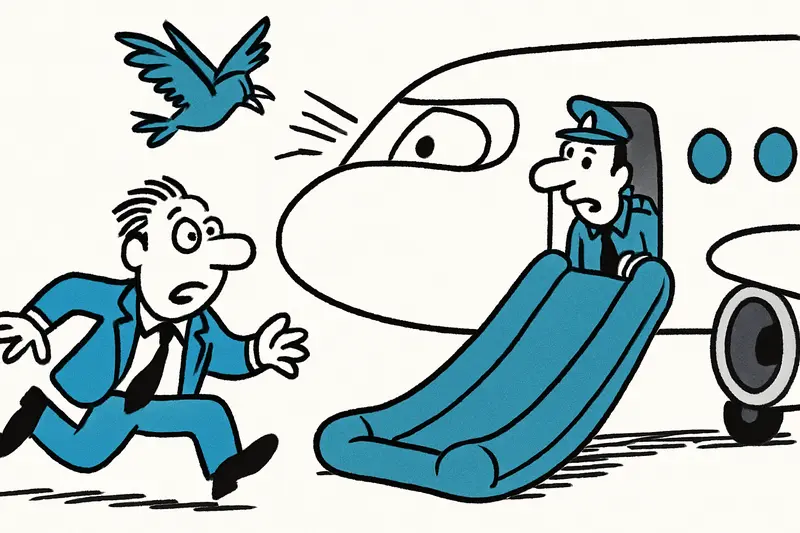
On Friday evening what began as a routine landing at Son Sant Joan Airport turned for a few minutes into a small nightmare: an Air Europa Express flight from Madrid apparently suffered a bird strike, and subsequently problems with the control system occurred during the final approach. The aircraft touched down in a controlled manner, but then came to a sudden stop in an unusual position. Emergency services activated the emergency plan and evacuated the passengers in an orderly fashion—fortunately without injuries. Nevertheless, the confidence of many travelers was shaken.
The central question
What exactly happened between the bird collision and the jolt during the rollout—and could this happen again at Son Sant Joan?
Critical analysis
The available facts paint a picture of a chain of events: a bird strike during flight, followed by a control-system fault during the landing approach and an abrupt stop in an unusual position. Two points stand out: first, a bird strike can cause visible damage to engines, sensors or control surfaces, but such damage is often not immediately apparent in the cockpit. Second, the airport operator reports that the aircraft left the runway and came to rest on a taxiway area, while the airline insists the aircraft remained within the runway boundaries. Inconsistent accounts make it harder for outsiders to understand and fuel distrust, echoing previous disruptions such as Laser over the runway: Pilot in Palma blinded — landed safely, but questions remain.
Practically, this means three levels must be examined in any incident — the technical integrity of the aircraft, the interaction between the flight crew and air traffic control, and the ground procedures (evacuation, closures, diversion of other flights). In the recent incident the emergency response worked: people were taken out of the aircraft uninjured, medical and psychological support was provided, and flight operations were managed. That is good. But "a good response" does not replace a transparent investigation of the causes.
What's missing in the public discourse
1) Concrete, technically understandable information: a short timeline of damage, system faults and crew decisions is missing. 2) Consistent statements from the operator and the airline: inconsistencies undermine trust. 3) Long-term measures against bird strikes: it was only suggested that the incident may be linked to a bird — but not which preventive steps are planned. 4) Data on the frequency of such incidents in Palma: without context every event sounds more dramatic than it may be statistically, as with incidents like Drone paralyzes Palma — why a small device makes our airport vulnerable.
An everyday scene from Palma
Those who were on Passeig Mallorca that evening felt the aftermath: distant sirens, the yellowish glow of the runway lights, the low murmur of people waiting in the departure hall, the coffee machine at the airport café still running while police and technicians hurried to the position. A delegation from the hotel industry that had come to Mallorca stood pale and tightly packed at a coffee counter; phone calls, the rustle of tickets and suitcases, colleagues who wanted to get home that night — all of this made the event tangible for those nearby, much like the coverage of Drone over Palma: Menorca refueling stop and the question of Mallorca's airspace safety.
Concrete solutions
- Better communication: airport and airline should provide timely, coordinated core information — a clear timeline, verified facts and the next steps for the investigation. - Prevention against bird collisions: habitat management near the airport, use of bird radar or acoustic deterrent systems, and regular scaring or population-control plans during breeding and migration seasons. - Post-strike inspections: standardized technical checks that go beyond visual inspection (sensor and control-system tests) before an aircraft is moved again. - Visible crisis management for passengers: easily reachable assistance points, initial psychological support and clear information about connecting flights. - Training and transparency: regular joint emergency exercises by airline, air traffic control and airport operator and a subsequent public summary of findings, similar to recommendations following severe operational disruptions discussed in Storms in Palma: Why Takeoffs and Landings Are Stalling — and What Helps Now.
Concise conclusion
The evacuation without injuries shows that procedures work when it matters. But trust also rests on prevention and open information. Anyone standing at the airport at night watching the spotlights over the runway does not want vague explanations — they want concrete measures so that the next bird strike remains a technical routine and not a trigger for fear.
Frequently asked questions
How serious is a bird strike during landing at Palma Airport?
What happens if an aircraft has a control problem during landing in Mallorca?
Are bird strikes common at Palma de Mallorca Airport?
What should passengers do after an emergency landing in Palma?
What runway areas can be affected when a plane stops unexpectedly at Son Sant Joan?
How do airports in Mallorca try to prevent bird strikes?
Why is clear communication important after an incident at Palma Airport?
What does a safe evacuation look like during an airport incident in Mallorca?
Similar News
Car accident on the MA-1: Mother and daughter on a bicycle struck by a fellow countryman – Who protects cyclists here?
On the MA-1 between Portopí and the Cala Major exit, a mother and her daughter on a bicycle were struck by a car. A para...
Smoke over the UIB: Who is responsible for the fire on the roof?
On Saturday afternoon a fire broke out on the roof of the Arxiduc Lluís Salvador building at the University of the Balea...
Short Getaway with Sea View: Inmood Aucanada among Spain's Top Hotels for Dinner Breaks
A small hotel on the coast of Alcúdia was highlighted by a Spanish experience platform as particularly suitable for shor...
Cala Pi crowned Mallorca's most beautiful beach: A morning at the rocky cove
The travel portal Holidaycheck praises Cala Pi as Mallorca's most beautiful beach: a narrow, romantic cove, clear water,...
Injured captain, big plans: Germania Mallorca before the away match in Consell
The newly founded FC Germania Mallorca travels to Consell on Saturday. Captain Bastian Müller is out injured, but coach ...
More to explore
Discover more interesting content

Can Cap de Bou

Townhouse Lleo 72
