
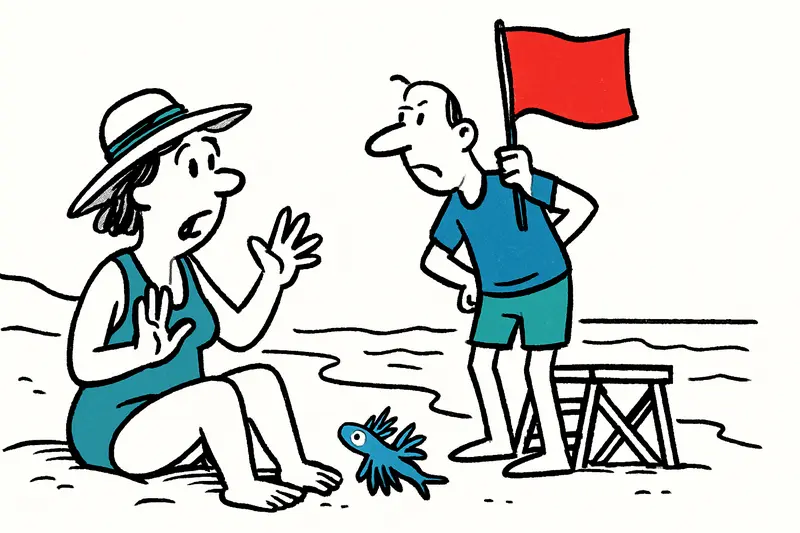
Blue Dragon off Mallorca's Gates? What Beachgoers Should Know Now
Sightings of the 'Blue Dragon' on the Costa Blanca have also sparked conversations in Mallorca: How real is the danger, what's behind these animals — and what should beach and dog owners do now?
When the 'Blue Dragon' is washed ashore: small animals, big fuss
Recent Blue Dragon sightings on the Costa Blanca immediately sparked conversation on our island. The creature is tiny, blue and incredibly photogenic on Instagram. At the same time its 'sting' can be painful. On the Paseo Marítimo you can hear the sea a bit louder on such days, the seagulls cry, and lifeguards put up warning signs. The question we ask here: Do we now have to expect swimming bans in Mallorca?
What exactly is this 'Blue Dragon'?
Glaucus atlanticus is not a jellyfish but a small nudibranch, hardly larger than a coin. It feeds on species such as the Portuguese man o' war and appropriates their nematocysts. That makes it potentially dangerous for humans: touching it can cause severe pain, nausea and circulatory reactions. You often only see them after they have been washed ashore — especially after southern currents or windy mornings.
How likely is an appearance off Mallorcan beaches?
In short: possible, but not very likely in large numbers. The Balearic Islands are not far from the described current paths. Strong southerly currents, a rough Tramuntana or unusual sea conditions can carry organisms over long distances. On windy mornings in Portixol or at Playa de Palma fishermen and walkers have already seen unusual flotsam — though living specimens are rarer than dead, washed-up ones.
Important: sightings on the Costa Blanca are a warning signal, not an alarm; similar incidents have prompted beach closures along Spain's Mediterranean coast. Our beaches are well frequented, the reporting and rescue services are well established. Nevertheless, we should take the phenomenon more seriously than just an exotic curiosity.
What does this mean for swimmers, dog owners and beach vendors?
The simplest rule still applies: Do not touch. Not even with gloves. Children and dogs are especially at risk because they frolic on the beach and are more likely to come into contact. Coordinate with the lifeguards: they are the first point of contact on site. In case of a sting, rinsing with seawater, cold compresses and seeking medical attention help — freshwater is counterproductive.
For beach vendors, kiosks and landlords this means: more questions in the short term, possibly worried guests. A little information at the bar or on the towel is often enough to calm people — and perhaps a call to the beach authority.
What is discussed too little?
Some points remain vague in the public debate. First: climate change and altered sea currents play a role in the spread of such species. Second: beach litter and piles of seaweed can protect or concentrate small animals — they are therefore more than just unwanted flotsam. Third: there is often a lack of clear, easily accessible reporting channels for sightings — a photo via WhatsApp to the municipality is enough, but a structured approach would be more effective.
Concrete proposals for Mallorca
A few practical ideas that could help here and now:
• Uniform warning signs at the main entrances to beaches with short behaviour rules;
• Training for lifeguards and beach teams on identification and first aid;
• A local reporting portal or hotline for sightings that collects data for marine biologists;
• Information sheets for landlords and dog owners who should be particularly attentive;
• Cooperation with universities and research institutions to recognise patterns — when and why do the animals appear?
A small appeal
A bit of respect for the sea helps more than panic. On my morning walk along the Passeig I heard the regular slap of the waves, a few anglers were packing up, and an older woman handed her neighbour an espresso. Caution yes, alarm no. If you want to be on the safe side: keep your eyes open, take warning signs seriously and when in doubt ask the lifeguards. Mallorca has experience with marine surprises — and usually the right answers.
Frequently asked questions
What is the Blue Dragon and is it dangerous on Mallorca beaches?
How likely is it to see Blue Dragons on Mallorca beaches?
What should you do if you find a Blue Dragon on a Mallorca beach?
Can a Blue Dragon sting dogs or children on Mallorca beaches?
Is it safe to swim in Mallorca if there are Blue Dragon warnings?
Why do unusual sea animals sometimes wash up on Mallorca beaches?
What should beach vendors and landlords in Mallorca tell guests about Blue Dragons?
Where in Mallorca have unusual sea creatures been spotted before?
Similar News
Failed before the first flight: How Fischer Air's plans for Palma were ground down
Announced routes, repeated postponements and now apparent insolvency: Why the Fischer Air project for Mallorca is not me...
Seconds in the Water: 19-year-old Fights Her Way Out of Flooded Car in Palma
A 19-year-old managed to rescue herself from her half-submerged car after sliding under the Verge de Lluc underpass. Res...

Between Dream and Reality: Thorsten Legat and the Challenges of FC Germania Mallorca
The former Bundesliga pro has assembled a colorful squad in a short time. But how realistic is the grand plan for promot...

Arrest warrant at check-in: Why two travelers at Cologne/Bonn Airport suddenly had to pay
At Cologne/Bonn Airport, federal police in mid-September found two German passengers subject to enforcement measures. Bo...
Balearic Islands as a New Route: A Reality Check on Rising Boat Migration
For the first time the Balearic Islands are ahead of the Canary Islands in boat arrivals. What do the numbers really say...
More to explore
Discover more interesting content

Can Cap de Bou

Townhouse Lleo 72
