
When boats block the recycling yard: Colonia de Sant Jordi awaits clearance
When boats block the recycling yard: Colonia de Sant Jordi awaits clearance
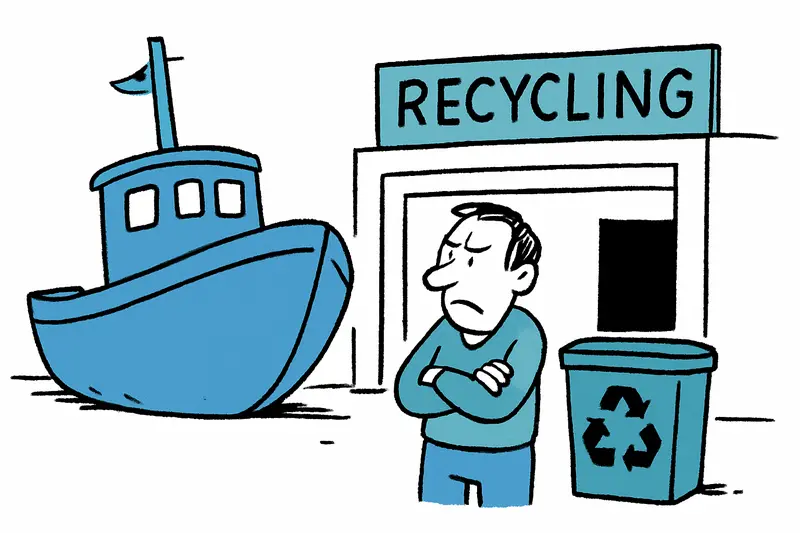
For months, decommissioned refugee boats have been sitting at the Colonia de Sant Jordi recycling yard. The municipality is waiting — the state is responsible. Lack of space, environmental hazards and a patchwork of responsibilities are causing frustration.
When boats block the recycling yard: Colonia de Sant Jordi awaits clearance
Who clears up when stranded rescue boats fill the space in a small municipality?
There are currently nine decommissioned refugee boats at the Colonia de Sant Jordi recycling yard, occupying parking spaces, paths and storage areas. The Ses Salines municipality reports that the boats have been there for months and have not been removed. According to the municipality, the state is responsible for disposal — a responsibility that apparently has not been carried out without delay.
The situation is not only a logistical nuisance. On the paved site, containers, cardboard and bulky waste are piled up; among them stand the pale fiberglass hulls, bleached by sun and salt. Anyone walking past the Plaça del Port in the morning can hear the men from the fishing harbor murmuring: "Something that belongs to all of us is being blocked." Heat shimmers over the Calle del Mar, gulls cry, and the lack of space is palpable: truck convoys must make tight maneuvers, and seasonal bulky-waste collections are reaching their limits. Similar resident complaints have arisen elsewhere, as shown in Trouble in Es Carbó: How many boats can the small bay handle?.
From the municipality's point of view the situation is clear: the town hall has been waiting seven months for feedback from the responsible state office. In the meantime the boats clog the recycling yard and create potential environmental hazards. Fiber-reinforced plastics age under sun and salt wind; splintering material can release pollutants and cannot be disposed of as easily as wood or metal.
The problem is known in other municipalities on the southeast coast as well: recycling yards in Santanyí and Campos apparently face similar cases, according to South Coast at the Limit: When Boats and Plastic Overwhelm Communities. This suggests a structural problem, not an isolated incident.
Critical analysis: the division of responsibilities between municipal administration and state authorities has created a stalemate. Official procedures take time, deadlines lapse, and meanwhile public space fills with waste that should be handled professionally. The consequences are inefficient processes, increased costs for the local administration and a growing risk to soil and groundwater.
What is missing from public debate: concrete timelines, transparency about responsibilities and a statement on the proper disposal of the hulls. There is no information on whether specialized disposal companies have already made offers, whether recycling or reuse has been examined, or whether environmental assessments have been commissioned. It is also rarely discussed who would cover any follow-up costs if disposal is handled improperly.
An everyday scene that makes the problem tangible: on a Tuesday morning an elderly woman with a shopping bag sits in front of the kiosk on the Via Principal. She points at the boats and says quietly: "There used to be space here for the market cart. Now the stalls have to stand further back." Small business owners feel the restrictions immediately — deliveries are delayed, parking spaces become scarce, and tourists see weathered hulls instead of clean sorting areas, a dynamic also reported in Noise, rings, deposit gone: Colònia de Sant Jordi and the problem with dubious landlords.
Concrete proposals for solutions: first, the responsible state authority needs to set binding deadlines for collection and disposal. Second, technical assessments to evaluate the hazard posed by the fiberglass parts should be commissioned promptly so it is clear whether interim on-site storage with coverings is necessary. Third, the island administration could temporarily hire certified private companies and pre-finance the costs in order to later claim reimbursement from the responsible authority.
Other practical approaches include: tendering a specialist transport for fiber-reinforced boats, promoting recycling solutions for composite materials, temporarily using the hulls for training local rescue teams or for art projects — provided environmental regulations allow such uses. Regional cooperation between Ses Salines, Santanyí and Campos could make collection dates and shared logistics cheaper.
Funding options should be openly discussed: state budgets, emergency contingents from the island government or EU funds for maritime waste management could be deployed quickly. It is important to clearly document all steps so that the municipality does not end up bearing the costs.
Conclusion: the boats in Colonia de Sant Jordi are a small but symbolic example of a larger challenge: when responsibilities overlap and no one acts quickly, the problem clogs public spaces and creates environmental hazards. Politics must now set binding deadlines, enable technical assessments and strengthen regional capacity to act. Residents expect not just words but, after seven months of waiting, visible movement.
Frequently asked questions
Why are abandoned boats still sitting at the recycling yard in Colonia de Sant Jordi?
Is it a problem when decommissioned boats are left outdoors in Mallorca?
How does a blocked recycling yard affect a small town like Colonia de Sant Jordi?
Who is supposed to remove abandoned rescue boats in Mallorca?
What can municipalities in Mallorca do if the responsible authority does not collect the boats?
Is fiberglass boat waste hard to recycle in Mallorca?
Are Santanyí and Campos also dealing with abandoned boats?
What long-term solution is being suggested for the boat backlog in Colonia de Sant Jordi?
Similar News

Carriages Without Horses: Palma Plans E-Carriages – a Reality Check
Palma plans to switch to electric carriages in 2027. The prototype was shown near the cathedral. What is the technology ...

Record season, empty coffers: Who really benefits from the tourism boom?
Full hotels and more flights: the numbers sound impressive — yet many locals feel no benefit. A reality check with an ev...

Pool ordered for €46,000 – €23,000 paid, no work carried out: A fraud case in Palma
A homeowner in Palma transferred €23,000 for the construction of a pool. Weeks later it emerged that no building applica...

Summer greetings from the Pitiusas island: Gottschalk and Krüger enjoy the sun on Ibiza
A friendly photo of Thomas Gottschalk and Mike Krüger on Ibiza evokes memories of their shared film years and shows that...

Occupied in a Few Days: When Property in Mallorca Turns into a Dispute
Six young men were arrested in Palma after homeowners returned and could no longer open their own door. A case that rais...
More to explore
Discover more interesting content

Can Cap de Bou

Townhouse Lleo 72
