
Burning Yacht near Ibiza: Smoke over the island and unanswered questions
Burning Yacht near Ibiza: Smoke over the island and unanswered questions
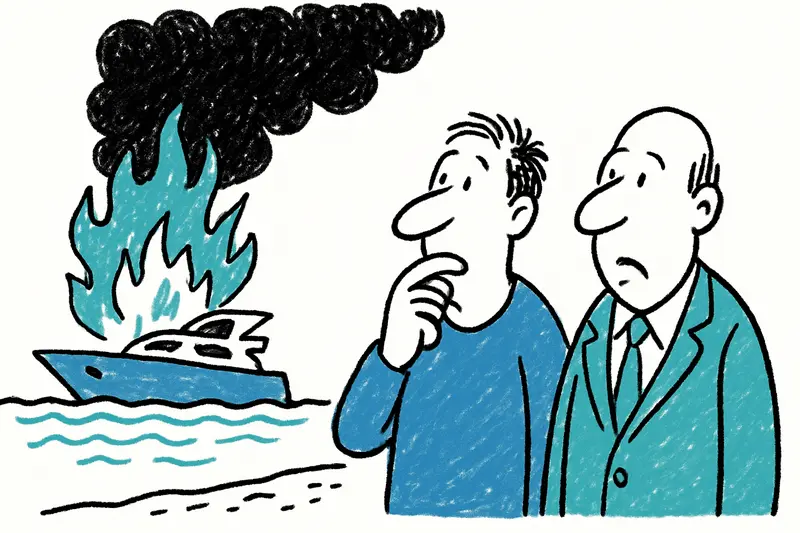
In the early evening a 20-metre leisure boat near the Botafoc breakwater became a source of fire with a thick plume of smoke. Six people on board were able to escape, two were treated for minor injuries. Why do key answers remain missing — and who bears the risks?
Burning Yacht near Ibiza: Smoke over the island and unanswered questions
On early Friday evening a dense, black column of smoke rose near the Botafoc breakwater at Ibiza. A roughly 20-metre leisure boat caught fire for reasons that remain unclear. Six people were on board; according to the emergency service SAMU 061 two men aged 26 and 29 were treated on site for minor injuries, a hospital stay was not necessary. A search-and-rescue vessel took over the firefighting measures, and the heavily damaged vessel is said to be towed into unprotected waters and scuttled there under controlled conditions. Coverage of other local fires, such as Boat in Flames off La Savina: A Wake-up Call for Recreational Boat Safety, has likewise raised questions.
Key question
How well protected are people, harbours and marine ecosystems when a yacht goes up in flames in the middle of a harbour — and why do we as the public receive only fragments of the information?
Critical analysis
A fire on board a leisure boat is not a small matter. On relatively confined harbour areas, burning materials, fuel and possibly lithium batteries can trigger a rapid spread. That the crew got off board in time and only two people suffered minor injuries is undoubtedly fortunate. At the same time, the incident reveals weaknesses: fires on maritime leisure craft require specialized firefighting equipment, sufficient personnel and coordination between the port authority, sea rescue services and medical services. The decision to tow the wreck into unprotected waters and scuttle it suggests the vessel was deemed no longer salvageable. Which considerations carried weight — environmental risks, ownership issues, salvage costs — remains vague in the available information, as past incidents such as Shipwreck at Cala Millor: One Dead, Many Questions — How Can We Better Protect People? have shown.
What is missing in the public discourse
1. Environmental risks: No one has clearly stated how much fuel was on board, whether oils or chemicals were released, or whether batteries were involved. Without this information it remains unclear what traces may remain in the water, on beaches or in the food chain.
2. Responsibility: Who owns the boat, and who covers the costs for salvage, cleanup and possible disposal?
3. Prevention: There are hardly any publicly available figures on how often yachts are safety-checked or which routine inspections local harbours carry out.
4. Communication: Residents and boat owners should be informed promptly whether an oil pollution threat exists and which exclusion zones apply; the need for timely public information was evident in coverage of evacuations like Fire in hotel at Playa de Palmanova: Evacuation, no injuries — and unanswered questions.
Everyday scene from here
On the Passeig Marítim in Palma the usual evening hustle could be heard: scooters, voices from tapas bars, the distant horn of ferries. On my short walk to the harbour a fisherman from Port de Sóller was talking animatedly with colleagues and showed on his smartphone the photo of the plume of smoke that stood over Ibiza. Children stopped, puzzled, tourists looked for the best vantage point to take pictures, a kiosk vendor nervously rolled his cigars in his fingers. Such scenes show that an incident on a neighbouring island immediately becomes conversation here in Mallorca — concern for health and the sea included; local disturbances such as Car on the Paseo Marítimo in Flames – Bang, Smoke and Many Questions keep residents alert.
Concrete solutions
1. Duty of transparency: Port authorities should publish basic information promptly (amount of fuel, pollutants, measures).
2. Standardised safety audits: Regular, documented inspections for recreational boats, with special attention to electrical systems and fuel tanks.
3. Better equipment for firefighting fleets: Special foam and oil-absorbent agents as well as firefighting vessels with greater range for harbours with high leisure traffic.
4. Clear disposal plans: Define who pays for salvage and disposal of wrecks; tighten insurance obligations.
5. Joint emergency drills between island ports: Exercises involving Ibiza, Mallorca and other ports improve response times and procedures.
Concise conclusion
The fire was an isolated incident, but it raises questions that affect everyone here in the Balearics: protecting people, protecting the sea, and clear responsibilities. As long as we only see the silhouette of the smoke column and details are missing, the danger remains not only at anchor — it remains in the information gap. Those who use the sea must not be left alone with their risk.
Frequently asked questions
How dangerous is a yacht fire in a harbour like Ibiza or Mallorca?
What happens to a burned yacht after a fire near Ibiza?
What injuries are typical in a yacht fire, and how serious can they be?
What should boat owners in Mallorca check to reduce the risk of fire?
Can a boat fire in Ibiza affect the sea around Mallorca too?
Who is responsible for the costs after a yacht burns in Ibiza?
How should harbour authorities in Mallorca respond to a yacht fire?
Why do fire incidents in Ibiza matter to people in Mallorca?
Similar News
More Electric Cars in the Balearic Islands: Sales Rise Sharply
Between January and August, 14,185 vehicles without petrol or diesel propulsion were sold — an increase of more than 40 ...
Autumn in Mallorca: What Truly Remains of Summer
The days grow shorter, the evenings cool — and yet more of summer lingers than you might think: sounds, recipes, people,...
Rescue operation at Tolleric: Why nighttime cliff parties become dangerous
A British holidaymaker fell about ten meters at the cliffs of Tolleric during the night, later climbed back up and was r...
Car accident on the MA-1: Mother and daughter on a bicycle struck by a fellow countryman – Who protects cyclists here?
On the MA-1 between Portopí and the Cala Major exit, a mother and her daughter on a bicycle were struck by a car. A para...
Smoke over the UIB: Who is responsible for the fire on the roof?
On Saturday afternoon a fire broke out on the roof of the Arxiduc Lluís Salvador building at the University of the Balea...
More to explore
Discover more interesting content

Can Cap de Bou

Townhouse Lleo 72
