
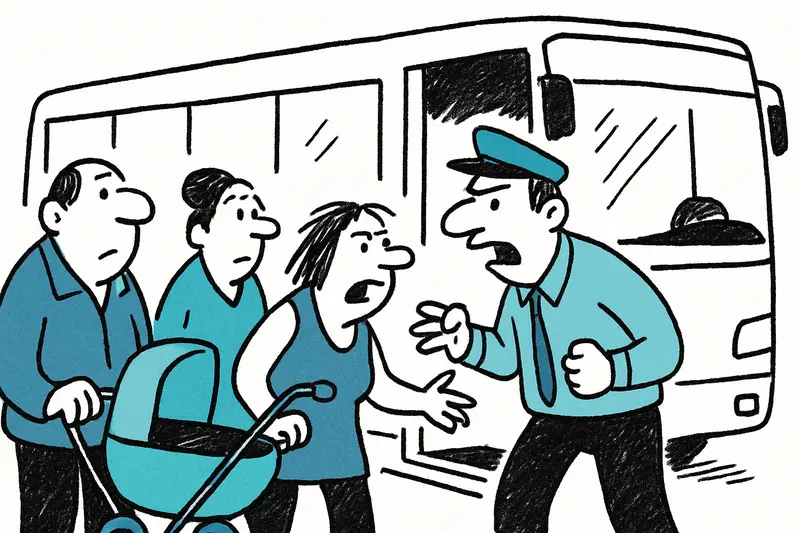
Bus Stop at Palma's Dawn: When a Driver Interrupts Service
Bus Stop at Palma's Dawn: When a Driver Interrupts Service
A bus on Manacor Street stops during the morning rush, the driver gets out — an aggressive passenger, a video that went viral and many unanswered questions.
Bus Stop at Palma's Dawn: When a Driver Interrupts Service
Key question: Was the driver's exit necessary self‑defense or an expression of structural gaps in local public transport?
On the morning of February 23, around 8:30 a.m., a route bus on Manacor Street found itself in a delicate situation: the driver stopped, initially refused to continue, and eventually left the vehicle. According to available statements and a video shared on social media, the trigger was an altercation with a passenger; at the same time, strollers blocked the aisle, several doors were used in an uncoordinated way, and the vehicle's age prevented a reliable onboard video recording.
The driver is no newcomer: he has been driving in Palma's city traffic for about ten years and for another four years on interurban lines. morning commuters know the crush at this spot: parents with strollers, school routes, the smell of bakery at the corner, plus buses, taxis and the everyday hustle when stops must be serviced quickly. At 8:30 a.m. there is little room for leniency.
Soon after the stop, a video circulated showing the scene and igniting heated debates. Some passengers criticized the driver's decision, arguing it endangered travel during peak time. Others pointed out that verbal threats and physical assaults cannot be ignored. According to available information, a woman escalated the situation: accusations, insults, spitting and strikes against the partition are reported; the driver is considering legal action over the spread of the video and the alleged aggression he suffered. Other incidents include Palma: TIB Line 104 Bus Driver Allegedly Under the Influence of Drugs – Stop at Plaza del Progreso.
Critical analysis: the case touches several levels. First: workplace safety. Driving staff must be protected; persistent or escalating aggression is a real burden. Second: infrastructure. An older vehicle without cameras limits the ability to document incidents objectively and to reconstruct events promptly. Third: procedures. Are there clear protocols for dealing with such cases — for example, a regulated driver replacement process, direct contact to the operations center, or a rapid replacement vehicle?
Often missing from the public debate is the perspective of employees and the routine strain on driving staff. It is too rarely discussed how often drivers experience verbal or physical attacks, how emotionally charged morning shifts can be, and how little support some colleagues feel. Instead of popular finger‑pointing, attention should be given to prevention and aftercare.
A typical scene at the location: stop noise, a vendor at the kiosk, bundles of newspapers slumped on the pavement, strollers leaning in the aisle during boarding, and a driver whose voice is barely audible over the din. In such moments it is decided whether small conflicts deescalate or spiral — often there is a lack of technology and staff to maintain control. Similar local reports have also been published, such as Dangerous braking maneuver on the Ma-20: When will authorities finally act effectively?.
Concrete measures that could help immediately: 1) retrofit older buses with cameras or microphone systems so incidents can be recorded objectively; 2) mandatory shift protocols and rapid response teams to assist in escalating situations; 3) regular de‑escalation and legal protection training for driving staff; 4) clear reporting channels and quick replacement vehicles so a driver is not torn between responsibility for passengers and personal safety; 5) awareness campaigns at stops promoting respectful behavior. Past network disruptions underline the wider impact of such events, for example Accident on the Ma-19: Why Palma's Bus Network Collapses on Hot Days.
Brief conclusion: the image of a driver turning off the engine and stepping out at one of Palma's busiest spots is a symptom, not an isolated case. The incident raises both legal and organizational questions. It is not only about blame — it is about designing systems around our bus lines so that passengers and staff can travel safely and respectfully.
For everyday practice this means: more oversight of vehicles, clearer rules for extreme situations and a little more consideration at stops. Only in this way can we prevent a single morning from becoming a week‑long problem for everyone involved.
Frequently asked questions
What should passengers do if a bus driver in Palma stops service because of a conflict?
Why can conflicts on Palma buses lead to service interruptions?
Are older buses in Palma less able to document onboard incidents?
How crowded are Palma buses during the morning rush?
Is it safe to travel by bus in Palma when there is a disturbance onboard?
Can a bus driver in Palma report aggression and take legal action?
What improvements could help prevent bus conflicts in Palma?
Why do bus incidents in Palma affect so many passengers?
Similar News
More water than last year: Mallorca's reservoirs breathe easier
September rain refilled the Tramuntana's reserves: overall fill around 35 percent, Cúber at 40.42 percent, Gorg Blau at ...
Three Luxury Hotels in Banyalbufar: Lots of Money, Many Questions
A Danish investor plans three exclusive accommodations in Banyalbufar — including the historic Son Valentí. The announce...
2.1 tonnes of cocaine on sailing yacht off Spain's coast – a reality check for the coastguard
A 14-metre yacht was seized with 2.1 tonnes of cocaine. Who monitors the ports, how does the international hunt succeed ...

Heat Bonus in Mallorca: 100 Euros Extra for Outdoor Staff at MarSenses
MarSenses pays employees who worked outdoors in August an extra €100 as recognition. Lighter uniforms, reduced hours for...
Renovating in Mallorca: What You Really Can Do Without Neighbour Consent
Many think they can do whatever they want in their apartment. That's partly true — but only as long as structural elemen...
More to explore
Discover more interesting content

Can Cap de Bou

Townhouse Lleo 72
