
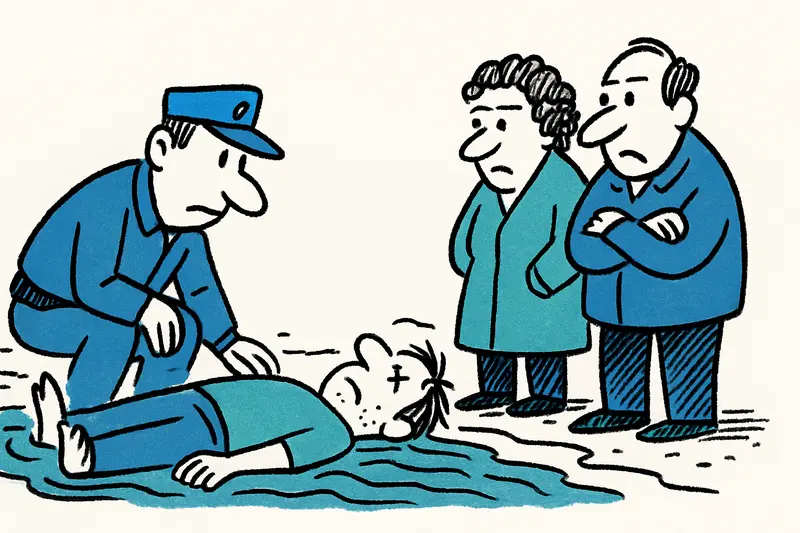
Corpse in Cala Agulla: Who was the man — and why does the debate remain so quiet?
Corpse in Cala Agulla: Who was the man — and why does the debate remain so quiet?
A heavily decomposed body was washed up in Cala Agulla (Capdepera). Investigators are checking whether he was a companion on a boat. An autopsy will clarify identity and cause of death. Why do conversations usually revolve only around numbers?
Corpse in Cala Agulla: Who was the man — and why does the debate remain so quiet?
Discovery on the east coast raises questions about sea migration and the visibility of victims' stories in Mallorca
In the morning, a person whose body was already heavily decomposed was carried ashore in the small, rocky cove of Cala Agulla near Capdepera. A patrol of the Civil Guard from Artà recorded the find. The criminal police and the competent public prosecutor's office were informed; the body was later taken to the Institute of Forensic Medicine, where an autopsy will now determine who the man was and what he died of.
Main question: Why does public debate often reduce such finds to a sober number instead of the story of an individual life?
The facts are sparse: according to current findings, it is a male deceased person without identifying documents. Authorities are also investigating the possibility that this may be someone who arrived in the Balearics by sea. If confirmed, this would — based on currently known reports — be the first confirmed discovery of a deceased migrant on the archipelago's coasts this year; in 2025 a total of 63 deaths in connection with crossings were recorded, the government's delegate in Madrid recently explained. Previous recoveries have raised similar concerns, for example Body Recovered off East Coast: A Sign of Larger Problems at Sea?.
Critical analysis: The investigations are right and necessary, but the public discourse often remains superficial. Authorities speak of identification and cause of death, statistics are cited — yet the circumstances that make such tragedies possible are rarely questioned fundamentally: Why do people undertake risky crossings? What role do smuggling networks play, and what failures exist in preventive sea rescue or international agreements? In Mallorca, two narratives dominate in such situations: the criminal police account and the brief media notice. Neither answers the questions of responsibility and prevention; earlier reporting on Two bodies on the coast: Investigations in Ciutadella and off Alcúdia – Many questions remain highlights this gap.
What is missing from the public debate: local voices and humane details. In Cala Agulla fishermen with oil-stained hands often sit in the mornings and look out to sea, a neighbor's dog barks in the MA-15 car park, tourists photograph the cove despite the grey weather. These everyday images obscure the fact that the sea here is not only a recreational area but also a route of life and risk for people beyond our beaches, as other shore recoveries have shown, for example Body in Es Carnatge: Investigations After Discovery on the Shore.
Everyday scene: I was yesterday late in the morning at the access road to Cala Agulla. The road is still wet from the rain, jackdaws search for food between the rocks. Two women pull their jackets tighter, an older man talks to the owner of the small kiosk about the ferries to Menorca. No one expects human suffering to become visible among these routines — until it is unmistakably washed up on the beach.
Concrete solutions: First, better coordination and transparency in registration and identification: if autopsies and DNA matches are networked more quickly, families can be informed sooner. Second, a serious regional debate on sea rescue capacity: ports, search and rescue units and civilian initiatives need clear, legally sound frameworks so that saving lives takes precedence over bureaucratic hurdles. Third, more prevention in countries of origin and strengthened cooperation with EU partners against smuggling crime — these are long-term steps that must start locally, for example through information centers in ports and at NGOs in Mallorca.
Local authorities are also called upon: municipalities like Capdepera and neighboring towns should have protocols for rapid psychological support for first responders and residents, and for coordinated communication with the media without publishing details prematurely. Transparency must not turn into sensationalism.
A sensitive point remains language: when authorities classify cases as possible "boat migrants," this often reads as a categorical distancing. Every find is also a person with a story; the reduction to origin or a statistical category prevents empathy and political responsibility.
Conclusion: The discovery in Cala Agulla is more than an operational report. It reminds us that the sea on Mallorca's east coast is both a place of beauty and of uncertainty. While investigations are ongoing and the autopsy should provide answers, we need a more open debate: about prevention, humane procedures for identification and the political questions behind escape routes. Not every news item has to become a drama — but we should avoid reducing people to mere numbers in a statistic.
Investigations continue. Anyone who can provide information about possible identities should contact the Civil Guard in Artà; residents have a duty to remain attentive but respectful when the sea once again washes up silent stories.
Frequently asked questions
Why do bodies sometimes wash up on Mallorca's east coast?
What happens when a decomposed body is found in Mallorca?
Could the Cala Agulla body be linked to a migrant crossing?
Is Cala Agulla in Mallorca a place where sea conditions can be dangerous?
What should visitors know before going to Cala Agulla in Mallorca?
Why is there so little public detail when a body is found in Mallorca?
What does a body discovery off Mallorca say about sea rescue and migration?
Who should be contacted if someone may be missing after a sea crossing near Mallorca?
Similar News
Why the End of "Los Últimos Mohicanos" Is More Than the Closing of a Bar
With squealing tires and one last glass, an icon on the Palma–Manacor expressway closes. Why the demise of this German b...
Protest camp on Plaza España: Who asks for solutions to the right to housing?
Around 30 activists set up a tent camp on Palma's Plaza España to push for stronger tenant rights. Our analysis asks: Ar...

In the Name of a Gang: Alleged Extortion in El Molinar and What It Reveals About the Protection of Sex Workers
A man is accused of posing as a member of the Hells Angels and extorting two women at accommodation in El Molinar. The s...

When Chile Meets the Mediterranean: A New Flavor at Can Bordoy
At Can Bordoy in Palma's old town, Chilean chef Jhonatan Maldonado combines Patagonian seafood with Mediterranean island...
End of an Era on the Ma-15: Why the Biker Hangout at Son Gual Is More Than Just a Restaurant
"Los Últimos Mohicanos" closes unexpectedly. A meeting place for motorcyclists on the Palma–Algaida border is disappeari...
More to explore
Discover more interesting content

Can Cap de Bou

Townhouse Lleo 72
