
Caló des Moro: How much bay can Mallorca still take?
Caló des Moro: How much bay can Mallorca still take?
The small cove near Santanyí groans under streams of visitors. Parking and sand problems show: concrete rules are needed — and more courage to limit numbers.
Caló des Moro: How much bay can Mallorca still take?
Key question: How can Caló des Moro be protected without turning the place into an attraction behind barriers?
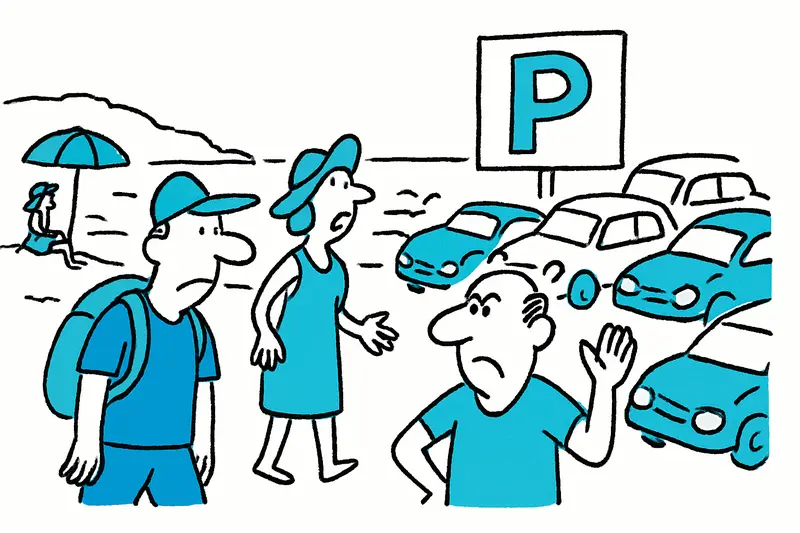
Caló des Moro is so tiny that you can walk around the rock edges in fifteen minutes. At the same time, in summer on some days thousands of people come here — drawn by photos, by stories, by curiosity and by Boom Despite Friction: How Much Tourism Can Mallorca Still Handle?. The municipality of Santanyí has already regulated access to the car park and the residential roads at Es Llombards. The group Amics d’es Caló des Moro is active on site, and according to this initiative up to 70 kilograms of sand disappear every day — on shoes, towels and clothing.
These figures are alarming. They show that the issue at the cove is not just crowds, but tangible change: less sand, trampled vegetation, improvised toilet corners and cars honking on narrow country roads. I was there on a hot Saturday afternoon near the access road: the smell of sunscreen mixed with petrol, cars parked haphazardly behind the olive trees, and pop music blasting from the speakers of a delivery van. The scene is local and yet symptomatic.
Critical analysis
The current practice — access closures, occasional controls, appeals to people's sense of responsibility — falls short. It acts like a bandage on a gaping wound. The cause is a collision of four factors: easy accessibility by car, the massive spread of images on social media, the lack of binding visitor rules for sensitive natural sites and insufficient capacity to enforce rules on the ground.
Public debate often lacks a sober discussion about carrying capacity, as discussed in How many residents can Mallorca sustain? Growth, pressure and ways out of overcrowding. We talk a lot about visitor numbers, but rarely about concrete limits: How many people can a small sandy cove withstand before it changes? Who pays for restoration when sand is lost? And what role do tourism businesses that advertise with such motifs play?
What is often overlooked
First: there is a lack of scientific monitoring on site that documents sand loss over the long term. Without reliable measurement series much remains speculation. Second: there are hardly any coordinated offerings that divert visitor flows — for example attractive alternatives nearby that do not necessarily draw visitors to Caló des Moro. Third: funding. Nature conservation needs not only volunteers but also money for infrastructure, staff and monitoring.
Concrete proposals
Practical measures can be derived from everyday experience: a time-limited reservation system for peak times, combined with shuttle buses from the town centres of Es Llombards or Santanyí; hardened paths and a few viewing points that protect the sensitive area; information boards with concrete rules of conduct (no taking sand, no fires, take your rubbish with you); and simple cleaning stations where shoes can be roughly cleaned before visitors enter the cove.
Also conceivable are seasonal pauses for the cove — temporary closures so that vegetation and the beach can regenerate. Accompanying this should be clear sanctions for ignored parking bans and leaving rubbish. And: a small access fee earmarked for maintenance and restoration. It is important that local actors — residents, the municipality, conservation groups and landlords — are involved in the decisions.
Why this will not work without courage
Restrictions are unpopular. Hosts fear losses, social media influencers love the motif, and some authorities shy away from controls. But the alternative is more expensive: if the cove suffers permanently, Mallorca will lose one of its characteristic natural spots and the work of volunteers will be devalued.
A pragmatic, locally anchored solution could look like this: a one-year pilot project with registration, shuttle, scientific measurements and clear exit rules if the measures fail. That costs some time and money at the start, but it provides data and legal certainty for action.
Conclusion: Caló des Moro is not a symbol that can be stretched indefinitely. If we want to preserve the cove, we need more than appeals. We need rules, enforcement, funding and the willingness to limit visitor numbers — even against short-term resistance. Otherwise all that will remain in the end is the image on the smartphone, not the cove itself.
Frequently asked questions
Why is Caló des Moro in Mallorca so crowded in summer?
Is Caló des Moro in Mallorca still worth visiting if it is so busy?
What should I know before going to Caló des Moro in Mallorca?
What are the best times to visit Caló des Moro in Mallorca?
Can you swim at Caló des Moro in Mallorca?
What is Mallorca doing to protect Caló des Moro from overtourism?
Is there a parking problem at Caló des Moro in Mallorca?
Why do people worry about sand loss at Caló des Moro in Mallorca?
Similar News
Magaluf: Watchtower Alarm – Lifeguards Pull Unconscious Beachgoer from the Water
After a drama in the late afternoon, two lifeguards at Magaluf beach rescued an unconscious 44-year-old man. He was stab...

Turquoise in the City: How dangerous is the color play of the Sa Riera?
The Sa Riera in Palma suddenly turned turquoise — a pretty motif, but behind the effect lies a discharge of saline waste...

Jeckliner at Sunnesching: Cologne spirit sets sail from Palma
In September 2027 the Mein Schiff 2 briefly becomes a floating carnival stage: four days with Cologne bands, comedy and ...
Finally Home: Mike and Leyla Heiter Buy Villa with Sea View in Mallorca
The reality TV couple Mike and Leyla Heiter have bought a house in Mallorca with a roof terrace and sea view. An Instagr...

Arrest after series in Palma: Who protects apartments from repeat offenders?
The National Police arrested a man in Palma who investigators say may have broken into several apartments. In one incide...
More to explore
Discover more interesting content

Can Cap de Bou

Townhouse Lleo 72
