
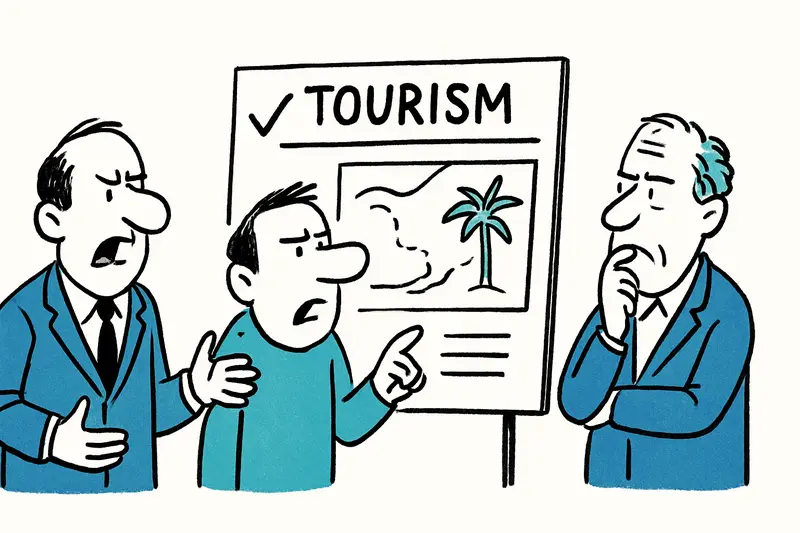
Calvià Presents First Binding Tourism Roadmap — A Reality Check
Calvià Presents First Binding Tourism Roadmap — A Reality Check
Calvià has, for the first time, adopted a strategic tourism plan for 2026–2030. A critical look at gaps, opportunities and concrete steps for practice.
Calvià Presents First Binding Tourism Roadmap — A Reality Check
Why a plan alone is not enough: guiding questions, gaps and practical proposals
Calvià has reached a milestone: for the first time the municipality has bundled a strategic tourism plan for the period 2026–2030. The presentation at the Hotel Bonanza in Illetes took place in the presence of Mayor Juan Antonio Amengual as well as industry representatives such as Gabriel Escarrer (Meliá) and Jordi Llobregat (Amundsen). The consulting firm Amundsen accompanied the project technically, working on behalf of the municipality. These are all facts. Now the central question arises: Is a well-thought-out plan enough to solve the concrete problems on the ground?
The guiding question is therefore: Can a municipal strategy actually ensure that Calvià's tourism is not only longer, but also more socially compatible and ecologically stable? The documents presented and the discussions contain many answers — but also clear gaps.
Critical analysis: positives sit alongside open points. Supporters rightly point out that it's no longer just about sun and beach — it is about more months of economic activity, longer hotel opening times outside the high season and a year-round events program, yet Empty beaches in the southwest highlight uneven demand. At the same time it remains unclear how the announced diversification will actually reach smaller businesses: What support will bar owners in Magaluf, market traders in Santa Ponça or agricultural operations inland receive if the strategy focuses on events, conferences or sustainable holidays?
A second problem area is financing. Strategy papers sound good, but infrastructure costs money: better bus connections, more waste disposal capacity in heavily frequented places, energy efficiency measures in hotels. These needs appear in the plan, but a clear staged plan with priorities, responsibilities and reliable budget figures is missing — in short, what Mayor Amengual called the shared responsibility of administration, business and civil society. Calvià launches €25 million infrastructure program – opportunities, risks and unanswered questions
On participation, Calvià scored points. There were exploratory visits to hotspots such as Magaluf, Santa Ponça and Peguera, talks with industry insiders and working groups in which entrepreneurs and citizens took part. That is important: if the cafés on the plaza in Peguera already close at midnight in the evening, theory matters little. The administration should systematically pick up these local observations and translate them into binding measures.
What is missing from the public discourse: water and energy issues. On Mallorca, an increasing share of drinking water supply provided by desalination plants is becoming everyday reality. Tourism expansion without clear requirements for water consumption, wastewater treatment and renewable energies remains a risk. Traffic management is also addressed too vaguely: how will peak times at beaches and access roads be managed without residents being stuck in traffic?
Everyday picture from Calvià: on a Saturday morning in Santa Ponça the promenade smells of freshly brewed coffee, delivery vans park half on the pavement, and bicycle couriers weave between tourists. In Magaluf, during the high season, the noise from the beach bars is present before sunrise; in the inland villages the farmer sits at the edge of the Camí de Sa Calderera and wonders why his olive trees only appear as scenery in the strategy paper. Such scenes show that municipal planning must also be very concrete and finely balanced.
Concrete solutions: 1) Season extension with conditions: subsidies or tax relief for businesses that open outside the season, tied to sustainability requirements (reducing water and energy consumption). 2) Mini infrastructure funds for neighborhoods: small projects (public toilets, waste islands, charging points) implemented quickly, financed from levies and EU grants. Examples of municipal-scale investments are described in Calvià Invests 25 Million: Between Renewal and Construction-Site Logic. 3) Public-private coordination bodies with decision-making power: representatives from the municipality, hotels, trade and residents who coordinate operations monthly. 4) Transparent priority list: which investments come first — mobility, wastewater, event logistics? With clear timeframes and budget frameworks. 5) Pilot programs in localities: test runs for traffic zones, visitor management at beaches and pop-up markets in the winter months. 6) Training packages for small businesses: digitization, sustainability certification, accessible tourism.
A pragmatic piece of advice: the municipality should declare parts of the plan as a "binding pilot agenda" — measures that must take effect within 12–18 months, with measurable criteria. Verifiable indicators (e.g. hotel opening rate outside July/August, average water consumption per bed capacity, number of joint management meetings) help separate strategy from mere self-congratulation.
Punchy conclusion: Calvià's tourism roadmap is a necessary step — but planning without measurable intermediate steps and without visible support for micro-enterprises remains theory. If the mayor and hoteliers now want to deliver, they must direct money, time and decision-making powers to where the tourist experience and everyday life take place: on the promenades, in the hotels, in the villages. Otherwise the fine title will remain paper.
Frequently asked questions
What is Calvià's binding tourism roadmap for 2026–2030?
How will progress be measured in Calvià's tourism plan?
What are the main challenges facing Calvià's tourism plan?
How does the plan propose extending Mallorca's tourism season?
What support is planned for small businesses in Mallorca under the plan?
How does the plan address water and energy for Mallorca's growing tourism?
What does the plan say about traffic and beach access during peak times?
What concrete steps can residents expect in the next 12-18 months in Calvià?
Similar News
Bloody clash in Canòdrom Park: What is missing in addressing violence on Mallorca's streets?
At midday on October 23, an 18-year-old man was critically injured in Canòdrom Park in Palma. The attack raises question...
Palma raises bus fares: Who pays the bill for public transport?
Single tickets rise from €2 to €3, airport trips have a reference price of €4.50. It remains unclear whether residents w...

Palma's New Indoor Pool: Sea View, Sunbeds and Space for Everyone
At Aigua Dolça, near the Paseo Marítimo, Palma has a new municipal indoor pool. For a small fee people can now train, re...
How Four Burglars Emptied Ten Houses with a Simple Trick — and What It Means for Mallorca
Four men used the impressioning technique, posed as delivery workers and accepted two years in prison. A reality check f...
Bundles of Drugs, Containers and Open Questions: A Reality Check for Mallorca
3.3 tonnes of marijuana, 80 kilos hidden in golf-ball vending machines and a 44-year-old German released on conditions i...
More to explore
Discover more interesting content

Can Cap de Bou

Townhouse Lleo 72
