
Car hits cyclist on MA-13 near Sa Pobla – who protects cyclists?
Car hits cyclist on MA-13 near Sa Pobla – who protects cyclists?
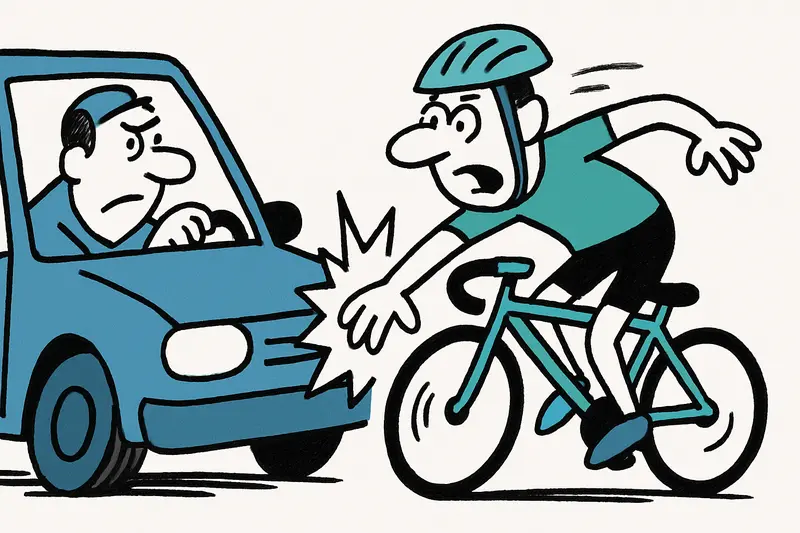
A cyclist was struck by a car on the MA-13 near Sa Pobla in the morning. Emergency services treated him on site and the Guardia Civil is investigating. A reality check: what is missing in infrastructure and enforcement to make such scenes rarer?
Car hits cyclist on MA-13 near Sa Pobla – who protects cyclists?
Guiding question: What measures are needed to make the route between Palma and Alcúdia safer for cyclists?
Late in the morning, around 11 a.m., traffic on the MA-13 near Sa Pobla came to a standstill. Several Guardia Civil and traffic police vehicles secured an accident site at kilometer 41 while SAMU 061 emergency personnel treated an injured cyclist on the closed carriageway. According to first reports, the man sustained minor injuries and was taken to a hospital. Why exactly the collision with the car occurred is currently being investigated.
The scene is easy to imagine: on one side the wide fields, the smell of freshly harvested grain or blooming orange trees, on the other the MA-13 with its mixed traffic — cars, vans, agricultural machinery and repeatedly cyclists using the connection towards Alcúdia. On warm days you see groups of recreational riders, road cyclists in tight jerseys and commuters heading to work. This mix is practical, but it can become dangerous when the road offers too little space for everyone.
Critical analysis: the MA-13 is not a road that only knows cars. Along long stretches there are no continuous bike lanes, the hard shoulder is often narrow or covered in dirt and ruts, and curves or hills limit visibility. That makes overtaking cyclists risky, and measures such as a 1.5‑meter overtaking sign have been proposed. Added to this are seasonal peaks — on weekends and in the shoulder seasons far more cyclists are on the road. The question is: is enough being invested in infrastructure, clear lanes and enforcement, or are cyclists left relying on the consideration of individual drivers?
What is missing in the public debate: reliable figures on accident hotspots on the MA-13 and nearby stretches, including the fatal accident on the MA-5013 near Sant Jordi; a transparent overview of speed limits, radar locations and frequent causes of crashes. The conversation often focuses on who was "to blame" instead of looking at repeating patterns. Also rarely heard is the perspective of the people who use this route daily — commuters, farmers, couriers and club groups who train here. They know the problem spots, but their input seldom makes it into planning.
An everyday scene from the area: on a Tuesday morning just outside Sa Pobla two tractors turn onto the MA-13, a delivery van overtakes, and a pair of cyclists rides in a tight group before leaving town, a situation touched on in discussions about rules allowing cyclists to ride side by side. Car noise mixes with birdsong. Such moments are normal, yet a single thoughtless overtaking maneuver is enough to break the calm — and to provoke accident scenes like the one today.
Concrete measures that can be tackled immediately: short-term conspicuous road markings at known pinch points; temporary speed limits during peak hours; additional mobile speed checks and targeted patrols by the Guardia Civil on weekends. In the medium term, the hard shoulders should be paved and widened, narrow advisory lanes or physical separations should be considered at particularly dangerous stretches. Equally important are clear no-overtaking zones where sight is limited, highly visible signage for shared-road areas and regular cleaning of the verge.
In addition: a low-threshold reporting system for cyclists and residents so hazards can be documented and prioritized. The island administration could also hold dialogue rounds with local cycling clubs to better coordinate training routes and peak usage. Awareness campaigns for considerate overtaking and promotion of high-visibility clothing for cyclists would be simple, low-cost complements.
The Guardia Civil's investigation now has to clarify how this collision happened. But investigations alone are not enough. As long as routes like the MA-13 are not systematically made safer, every bike trip remains a little act of courage. Today's situation is a wake-up call: regulations, infrastructure and enforcement must work together better so people on bicycles no longer have to rely on luck — the accident near Sa Pobla is not an isolated event; similar incidents include a head-on crash on the Ma-13 near Alcúdia.
Conclusion: The accident near Sa Pobla is not an isolated event but a mirror of a longer-term gap in planning and prevention. Authorities now have the opportunity to implement visible short-term measures and to initiate structural improvements in the medium term. For the people who use the MA-13 every morning, that would be more than a sign — it would be a piece of quality of life and safety on a road we all use daily.
Frequently asked questions
Is the MA-13 between Palma and Alcúdia safe for cyclists?
Why do cycling accidents happen on Mallorca roads like the MA-13?
What can Mallorca authorities do to make roads safer for cyclists?
When is the MA-13 busiest for cyclists near Sa Pobla?
What should cyclists in Mallorca wear or carry on roads with heavy traffic?
Where is Sa Pobla in relation to the MA-13 in Mallorca?
Do tractors and delivery vans make cycling on Mallorca roads more dangerous?
What happens after a cyclist is hit on a Mallorca road like the MA-13?
Similar News

Who Benefits from the Half‑Hourly Flight on the Edge? Aena, Investments and the Island's Interests
Almost one billion euros is flowing into Son Sant Joan. The figures show the scale of investment and expected beneficiar...
Are the Balearic Islands the Southern Border of Europe? A Reality Check on Immigration
The Balearic Islands are again calling for EU aid after a sharp rise in arrivals by sea. Conflicting priorities between ...

"Expensive chaos" and many open questions: What clients can do when a lawyer suddenly stops responding
Several clients complain that a well-known German lawyer in Mallorca has been unreachable for months. Key question: What...

TV tip: 'The Last Problem' — Mallorca as the setting of a classic crime
A classic whodunit on Mallorca: A new miniseries set in spring 1959 brings storm, an isolated hotel and a dense web of s...

Nipping Sea Creatures: Why Bathers in Cala Major and Elsewhere Should Be Cautious
In Cala Major, bathers have reported being nipped by small fish. What is behind it, how can problems be avoided — and wh...
More to explore
Discover more interesting content

Can Cap de Bou

Townhouse Lleo 72
