
Cardiac Arrest on Bike Tour: What the Death near s’Aranjassa Means for Mallorca’s Cycle Routes
Cardiac Arrest on Bike Tour: What the Death near s’Aranjassa Means for Mallorca’s Cycle Routes
A 72-year-old cyclist suffered a cardiac arrest near the airport and died at the scene. The incident raises questions about the chain of survival, the safety of older cycling tourists and the island’s provision of life-saving equipment.
Cardiac Arrest on Bike Tour: What the Death near s’Aranjassa Means for Mallorca’s Cycle Routes
Key question: How safe are our roads for older cycling tourists — and what is missing so that such an emergency does not end in death?
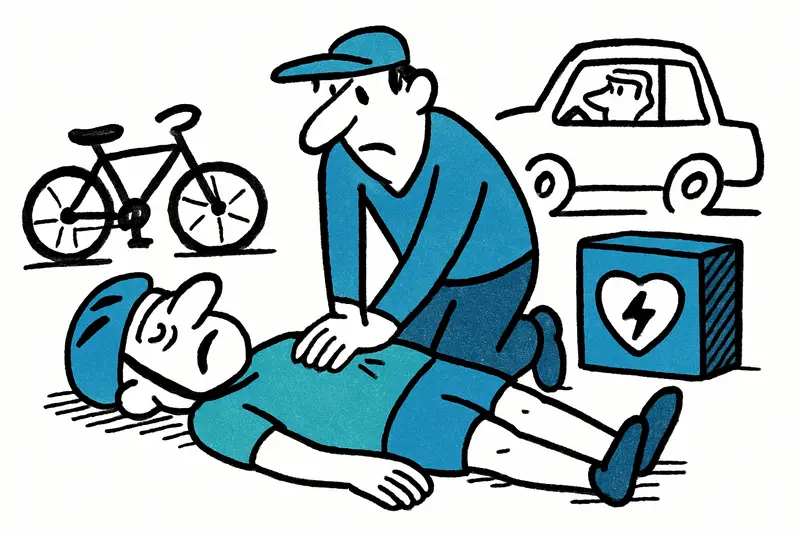
On Saturday around midday, a 72-year-old cyclist suffered a cardiac arrest on the Ma-19A near s’Aranjassa, crashed and died at the scene. The man was traveling from Palma towards Llucmajor; the incident occurred at about 12:50 pm. A doctor and an assistant from civil protection began resuscitation efforts, but the attempts were unsuccessful. On the same day, a 60-year-old mountain biker in Esporles was airlifted to hospital after a fall.
Reports like these shake us. The scenes come to mind: the motorway-like Ma-19A with the deep hum of airplanes, the bright sunlight on the asphalt, the fast cars, and beside them a narrow lane where people in sportswear arrive and depart. These contrasts are everyday life in Mallorca — and they carry risks that go beyond statistics.
Critical analysis: The immediate focus is on the chain of survival. In sudden cardiac arrest every minute counts; in many cases early use of an automated external defibrillator (AED) makes the difference between life and death. Although AEDs are installed at some public locations on Mallorca, they are rare along busy country roads like the Ma-19A. Precise location information is not always quickly available, and many walkers or cyclists do not know how to direct helpers to an exact position with GPS coordinates, as shown in Cardiac Arrest in Caimari: Are Mallorca's Villages Prepared for Medical Emergencies Involving Tourists?.
In public discussion, “cycling” is often treated as a matter of infrastructure or tourism. What is frequently missing is the link to emergency preparedness. It’s not only about cycle paths or speed limits, but about a connected emergency infrastructure — AEDs at junctions, simple emergency signs with GPS coordinates, and the availability of first responders not only at beaches or towns — as in Cardiac Arrest on Can Picafort Beach: Questions Remain and Ideas for the Future — but also along popular routes.
Another blind spot is the target group: older cycling tourists often come to Mallorca for the mild climate and the challenge of hilly terrain. But they are also at higher risk for cardiovascular events. Information offered to travelers often lacks clear guidance: simple pre-ride checklists, advice on physical exertion, and recommendations to realistically assess one’s fitness.
Everyday scene: On a January morning I often see retirees with saddlebags on the Paseo Marítimo, the waves gurgling softly, taxis honking in the distance and an endless string of rental cars heading toward the airport on the Ma-19A. Cycling groups in bright jerseys overtake each other, laugh, take photos at the church of s’Aranjassa. Nobody thinks about the time, the nearest AED or a shortened chain of survival — until something happens.
There are concrete solutions — and they are pragmatic: first, AEDs along main traffic arteries and at well-known start and end points for bike tours. These devices should be clearly visible, weatherproofly mounted and registered in a public database. Second, clear emergency signs on roadside posts: a simple plaque reading “In emergency: nearest AED / GPS coordinates / Emergency number 112.” Third, rental companies and tour operators should give customers short guidance on self-checks of fitness and a brief first-aid instruction when renting bikes. Fourth, expand first-aid and AED training for volunteers, beach and park wardens and hospitality staff along popular routes. Fifth, digital solutions: integration of AED location data into common navigation and emergency apps so helpers can quickly find the nearest defibrillator via smartphone.
Practically that means: fewer blue lights in the distance, more visible help on site. If a passing doctor can already help, as in this case, that is a blessing — but not every emergency is that lucky. We need systems, not chance.
The discussion must not only revolve around blaming road users; similar tragedies on the coast, such as Dead Tourist at Playa de Palma: An Accident Raises Many Questions, demonstrate the wider need for coordinated prevention. It is about planning, prevention and simple tools. Small interventions — a sign here, an AED there, clear information at bike rental shops — can save lives. The island has enough resources and committed people; often all that is missing is the connection between those responsible, tourism businesses and the municipalities.
Bottom line: The death of the 72-year-old is tragic and a reminder that physical fitness, infrastructure and emergency preparedness belong together. Mallorca can use its hospitable community to take pragmatic precautions: bring AEDs closer to the routes, spread emergency knowledge and place simple, clear information along popular stretches. Those who live here or visit the island should not only enjoy the landscape but also insist that help in an emergency is not left to chance.
Frequently asked questions
Is cycling in Mallorca safe for older tourists?
What should I carry on a cycling tour in Mallorca in case of an emergency?
Are AEDs easy to find along Mallorca’s bike routes?
What is the Ma-19A near s’Aranjassa like for cyclists?
What emergency information should Mallorca bike routes have?
Should I check my fitness before cycling in Mallorca?
What happened on the bike tour near s’Aranjassa in Mallorca?
Do Mallorca cycling holidays include enough safety guidance?
Similar News
Magaluf: Watchtower Alarm – Lifeguards Pull Unconscious Beachgoer from the Water
After a drama in the late afternoon, two lifeguards at Magaluf beach rescued an unconscious 44-year-old man. He was stab...
Turquoise in the City: How dangerous is the color play of the Sa Riera?
The Sa Riera in Palma suddenly turned turquoise — a pretty motif, but behind the effect lies a discharge of saline waste...

Jeckliner at Sunnesching: Cologne spirit sets sail from Palma
In September 2027 the Mein Schiff 2 briefly becomes a floating carnival stage: four days with Cologne bands, comedy and ...
Finally Home: Mike and Leyla Heiter Buy Villa with Sea View in Mallorca
The reality TV couple Mike and Leyla Heiter have bought a house in Mallorca with a roof terrace and sea view. An Instagr...
Arrest after series in Palma: Who protects apartments from repeat offenders?
The National Police arrested a man in Palma who investigators say may have broken into several apartments. In one incide...
More to explore
Discover more interesting content

Can Cap de Bou

Townhouse Lleo 72
