
Cold Shock and Festival Postponement: A Reality Check for Palma's Emergency Planning
Cold Shock and Festival Postponement: A Reality Check for Palma's Emergency Planning
An Atlantic front brings rain, wind and a noticeable drop in temperature. Why the cancellation of Diumenge de l'Àngel is more than just a weather issue — and what Palma should do better in future.
Cold Shock and Festival Postponement: A Reality Check for Palma's Emergency Planning
Main question: How well is Palma really prepared for sudden April storms and their consequences — for people on the streets, for events and for infrastructure?
What is happening now
On Sunday an Atlantic front will cross the Balearic Islands, bringing significantly cooler weather, dense cloud cover and isolated, mostly light showers. In Palma, high temperatures will fall noticeably compared with the previous day, and stronger gusts are expected in the mountains. The wind from northerly to westerly directions will make exposed locations feel rougher than the thermometer suggests; similar abrupt events have previously surprised the city, as reported in Sudden Storm in Palma: A Weather Shock and the Question of Protecting Mallorca.
Critical analysis
The decision to move the traditional Diumenge de l'Àngel festival from Castell de Bellver to Parc de la Riera and to postpone it to May 10 is understandable. Public events and strong winds do not mix well. Still, questions remain: Was the risk assessment communicated in a timely and transparent manner? Were stage and power suppliers, security services and transport operators involved closely enough to avoid logistical bottlenecks? And what measures were put in place for visitors who had already arrived? This parallels other festival cancellations such as Rain in the Park — Cancellation as a Wake-up Call: How Mallorca Makes Open-Air Events Weather-Proof.
What is missing in the public discourse
There is a lot of talk about the weather, but little about concrete procedures: evacuation routes, emergency shelters, accessible information for older residents in the Passeig Mallorca area or the status of bus lines to Bellver. Outside the headlines, small but crucial questions are forgotten: How do market stalls and tents secure their anchoring against gusts? Where do emergency vehicles park when narrow streets around Plaça Major are full? Indeed, recent episodes where parks were closed and markets cancelled show the stakes, notably Orange storm cripples Palma: parks closed, markets cancelled – Is the city well prepared?. Such details decide whether an event passes without incident or descends into chaos.
Everyday scene
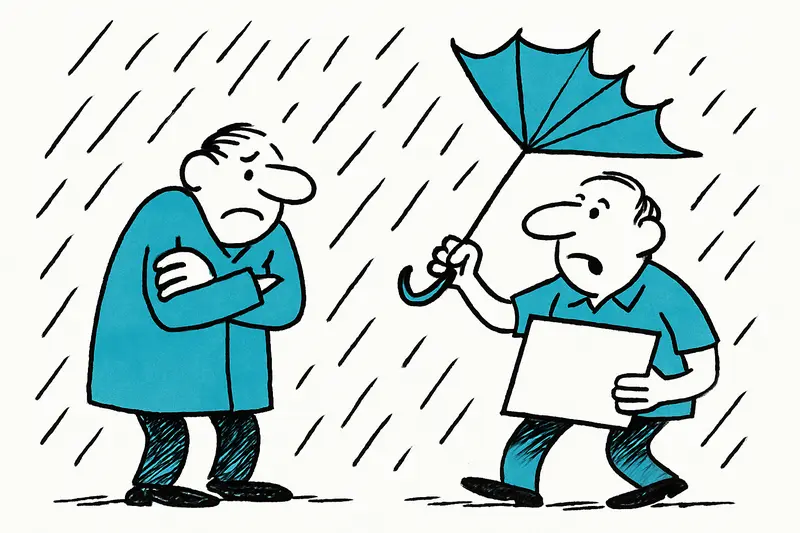
In the morning you can see fishermen in Portixol rolling up their nets in the drizzle and taxi drivers protecting passengers from the rising wind with blankets from the trunk. On Avinguda de Jaume III café goers suddenly put their jackets back on, and at traffic lights people gather with cardboard umbrellas that lose their shape in the gusts. These images show: for many on Mallorca the switch from “summer feeling” to “cold snap” is not just a weather report but a logistical everyday test.
Concrete solution approaches
1) Strengthen the early-warning chain: AEMET forecasts should be fed into municipal crisis teams with standardized checklists so that festivals, transport operators and emergency services are informed in parallel. 2) Checklists for organizers: mandatory fields for wind loads, tent anchoring, electrical safety and evacuation routes. 3) Communication plan for visitors: SMS or WhatsApp information for ticket holders with clear instructions, assembly points and rescheduling information. 4) Protective infrastructure: temporary securing islands for emergency vehicles near large venues, as well as designated parking areas for first responders. 5) Local training: basic workshops for neighborhood associations and stall operators — simple measures like sandbags, straps or alternative power sources make a difference.
Why this matters
In a densely populated urban area like Palma a strong gust can mean more than a wet umbrella: vulnerable people, damaged infrastructure and service outages are real risks. The postponement of the festival is an example of preventive action — but prevention must become systematic, not sporadic, as debated in Parks in Palma Closed: Was the Closure Timely and Sufficient?.
Conclusion
The weather has a say on Mallorca time and again. This Atlantic front is a wake-up call: cities, organizers and residents need clearer procedures, better communication and simple, practical checklists. Otherwise the next cold shock will not only be an unpleasant surprise but a avoidable burden for many people on the island.
Frequently asked questions
How common are sudden cold snaps in Mallorca in spring?
What should I wear in Mallorca when the weather turns windy and cool?
Is it still possible to go outside in Palma during a storm warning?
Why was the Diumenge de l'Àngel festival moved in Palma?
How do strong winds affect outdoor events in Palma?
What should festival organisers in Mallorca prepare for before bad weather?
Are parks and public spaces in Palma usually closed during storm warnings?
What practical steps help residents in Palma during sudden weather changes?
Similar News

More water than last year: Mallorca's reservoirs breathe easier
September rain refilled the Tramuntana's reserves: overall fill around 35 percent, Cúber at 40.42 percent, Gorg Blau at ...
Three Luxury Hotels in Banyalbufar: Lots of Money, Many Questions
A Danish investor plans three exclusive accommodations in Banyalbufar — including the historic Son Valentí. The announce...
2.1 tonnes of cocaine on sailing yacht off Spain's coast – a reality check for the coastguard
A 14-metre yacht was seized with 2.1 tonnes of cocaine. Who monitors the ports, how does the international hunt succeed ...
Heat Bonus in Mallorca: 100 Euros Extra for Outdoor Staff at MarSenses
MarSenses pays employees who worked outdoors in August an extra €100 as recognition. Lighter uniforms, reduced hours for...
Renovating in Mallorca: What You Really Can Do Without Neighbour Consent
Many think they can do whatever they want in their apartment. That's partly true — but only as long as structural elemen...
More to explore
Discover more interesting content

Can Cap de Bou

Townhouse Lleo 72
