
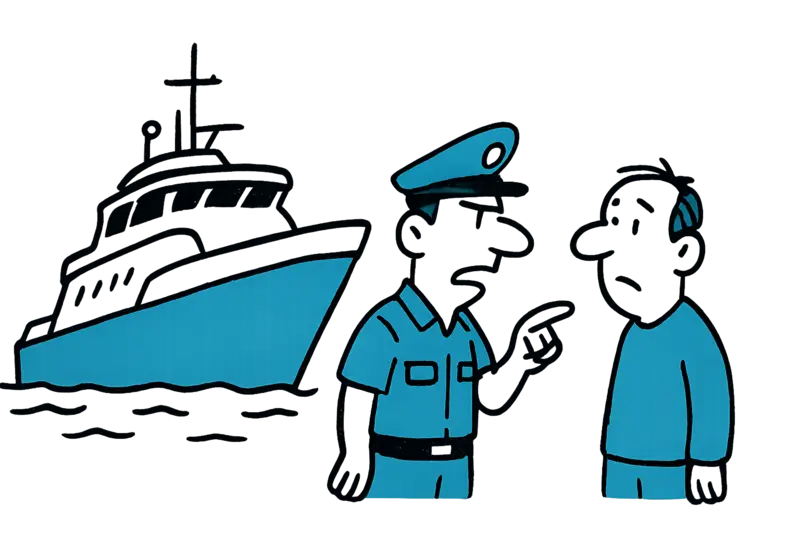
The "Cóndor" in Palma: Superyacht look, law enforcement claims — a reality check
The "Cóndor" in Palma: Superyacht look, law enforcement claims — a reality check
43 metres, around 4,000 hp, built in Galicia: the customs patrol "Cóndor" is moored in Palma. Why that is impressive — and why we should still ask how, when and at what cost it will be used.
The "Cóndor" in Palma: Superyacht appearance, law enforcement claims — a reality check
A vessel that looks as elegant as a private mega‑yacht has recently been moored in the port of Palma — and yet it was designed for inspections, seizures and long deployments at sea. 43 metres long, two engines with a combined output of around 4,000 hp, built in 2021 in Galicia (Rodman 138 model), a range of several thousand kilometres, space for up to 18 people, fast rigid-hulled inflatable boats on board, a water cannon and equipment for maritime operations. The customs authority relocated this patrol boat to Palma to monitor smuggling routes in the western Mediterranean. Local reporting on new patrol assets discussed this deployment in Patrol Boats off Mallorca: Much Technology, Many Questions. That's the news. My guiding question is: Is a large, expensive ship by itself enough to sustainably solve the complex problems of maritime trade and drug trafficking?
Brief analysis: Technology meets fragmentation
The Cóndor brings range and presence, two things that can help in the Mediterranean to detect suspects early and cover large distances. The boat is not built to zip around fishing boats; it is built to stay at sea for days, respond and, if necessary, support boarding actions. Still, the sea is a puzzle of small-scale activity: smugglers change tactics, cargos are hidden in containers, and transit routes run through complex land-sea networks.
A single large vessel brings presence, but not seamless control. That requires networked reconnaissance (satellite, aircraft and drone data), fast coastal boats for near‑range operations, well‑coordinated port inspections and, above all, synchronized information flows between authorities in different countries. The public debate over such high‑tech deployments is reflected in High-tech in the Harbor: the „Duque de Ahumada" in Palma – Security Gain or Topic for Debate?. Without that, the Cóndor remains an impressive but isolated instrument.
What often needs to be reminded in public debate
First: costs and measuring success. Construction prices of more than eight million euros are known; how much do operation, crew, maintenance, fuel, spare parts and sensors cost? There is a lack of regular reporting on which missions yield which results — seized quantities, identified routes, intelligence forwarded to prosecutors. Second: legal and operational responsibilities. On the high seas, customs powers, coast guard authority and international port rights quickly collide. Which rules apply when boarding foreign vessels, and how is proportionality assessed? Third: regional cooperation. Smuggling does not respect harbour walls; data exchange with ports in Algeria, Morocco, Italy and France is needed but is rarely made publicly visible.
Everyday scene from Palma
If you stand on Passeig Mallorca on a late morning, you hear the ferries honk, see fishers at the Muelle Comercial inspecting the catch and pigeons circling above the smell of diesel. Café chairs clatter, tourists watch the water. The Cóndor looks here like a foreign piece of furniture: pleasant to look at, a little out of place in the setting. Harbour staff exchange glances: no one really feels reassured by a large ship alone — what matters at the quay is proximity, familiarity and trust in local authorities' work.
Concrete proposals — not just symbolic politics
1) Transparency obligation: The customs authority should publish monthly mission summaries (patrol hours, deployments, results). Not every tactical detail, but measurable indicators for the public. 2) Multilateral task forces: Formal agreements with relevant neighbouring ports on data and information exchange. 3) Complementary fleet: Invest in smaller, agile coastal boats and drones for near‑range control; the Cóndor as a long‑range overseer, not the sole tool — local coverage of recent arrivals underscores that debate in 'Duque de Ahumada' in Portopí: New high-tech patrol ship sparks debate. 4) Legal clarity: Publish operational rules for boarding and the use of coercive measures to avoid legal uncertainty and international incidents. 5) Land-based prevention: Intensify checks in freight transport, improve training for port inspectors, and strengthen social measures against drug use — without demand there are no markets.
Punchy conclusion
The Cóndor is a strong signal: presence instead of absence. That is good. But without transparent impact measurement, coordinated neighbour policy and complementary resources, it remains an expensive show asset rather than a permanently effective tool. Those who want to relax in Palma should still wait for the monthly figures — and for boats that police close to the coast, not just those that impress from afar.
Frequently asked questions
When is the best time to visit Mallorca for good weather?
What should I pack for a Mallorca trip?
Are there good beaches for swimming in Mallorca?
Is Mallorca good for hiking and cycling?
What’s the best way to get around Mallorca?
What are must-see places in Mallorca for a first visit?
How does Mallorca’s climate affect swimming and sea conditions?
What should I know about language and etiquette in Mallorca?
Similar News
Partial collapse at Palma airport – who is liable for dilapidated infrastructure?
Heavy rain caused part of a plasterboard ceiling and the roof of a former cinema to partially collapse in Son Sant Joan....
Tennis legend Gabriela Sabatini delights at the "Corporate Circle" in Santa Ponsa
An evening where sport and connection came together: Gabriela Sabatini led a masterclass at the Mallorca Country Club, f...

Small Places, Big Money: Why Fornalutx Is Leading — and What That Means for Mallorca
New tax data paint an ambivalent picture: a tiny mountain village tops the Balearic income list while other municipaliti...
Toxic rubber surface on playgrounds: Who protects our children in Mallorca?
Parents demand an end to pollutant-containing rubber surfaces. Local groups show cracked flooring — the city announces t...

Nighttime closure in the Sóller Tunnel: Who pays for the long detour?
The Sóller Tunnel, the main access to the Orange Valley, will be closed at night until November 19. Anyone driving betwe...
More to explore
Discover more interesting content

Can Cap de Bou

Townhouse Lleo 72
