
Cyclists in the pedestrian zone of Can Picafort: Who protects the most vulnerable here?
Cyclists in the pedestrian zone of Can Picafort: Who protects the most vulnerable here?
A video circulating on TikTok shows cyclists riding through a busy market area in Can Picafort without dismounting. Who ensures safety — and why is a clear concept missing?
Cyclists in the pedestrian zone of Can Picafort: Who protects the most vulnerable here?
Key question: How can the balance between popular cycle tourism and the safety of market visitors, children and older people in towns like Can Picafort be restored?
A short video currently circulating on TikTok shows a group of cyclists riding through a densely packed market area on the promenade of Can Picafort without dismounting. Market stalls, shopping bags, children's bikes and tourists with iced coffee — all mixed together in one moment. The images have alarmed many on the island: not only because they look dangerous, but because they reflect a larger problem.
The immediate risk is clear: pedestrians, often older people and families, have priority in a designated zone. When cyclists ignore these rules, tense situations arise — bumps, panic, falls. In the Serra de Tramuntana, increasing cycling traffic on narrow roads already causes tensions between bus drivers and large groups of cyclists; the island council's effort to clean road edges is one response (1,600 km of Roadside: The Big Cleanup for Cyclists — Is It Enough?); in towns a different conflict is looming: cyclists simply have less room to react in tight spaces compared with pedestrians.
Our analysis shows several levels of the problem. First: signage and road markings are often old or unclear, especially where seasonal businesses set up temporary stalls, as discussed in Is a 1.5‑meter sign enough to protect cyclists in Mallorca? Second: enforcement is lacking or sporadic — the Guardia Civil and local police have many tasks, and in the afternoon hours when markets are busy presence is rare. Third: many cycling tourists do not know the local rules; rental companies often provide only rudimentary information, a brief note at the counter is not enough.
What is usually missing in public debate: an honest assessment of responsibilities. It's not just about penalties. It's about infrastructure: safe alternative routes for cycling along the coast, protected parking zones at the market, visible multilingual notices for visiting riders, such as those proposed in More space for cyclists and pedestrians – but is it enough? Mallorca's plan for 60 km of safe routes. And it's about clear regulations for rental companies: handovers with hands-on information instead of casual notices.
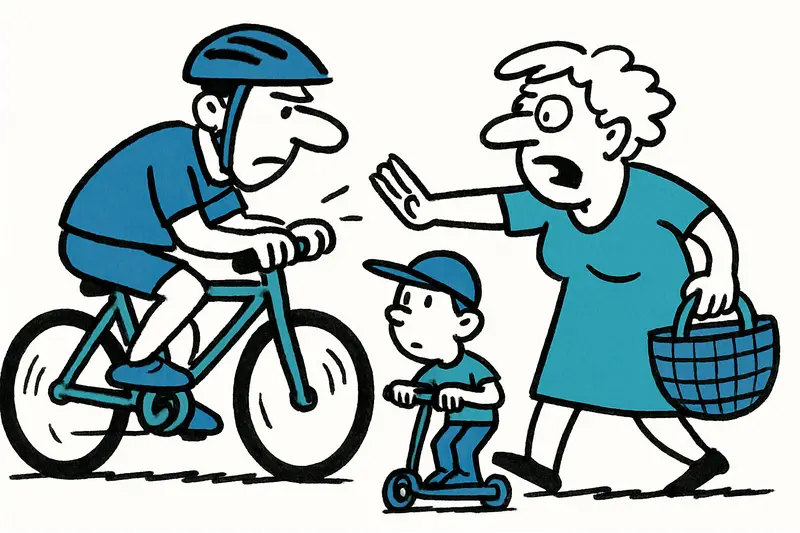
An everyday scene from Can Picafort: it's Saturday afternoon, the market traders are calling out their offers, seagulls screech over the pier, an ice-cream vendor wipes his counter. An elderly woman with a shopping basket makes her way through, behind her a child on rollerblades. Suddenly three cyclists appear between the stalls, ride past the woman without dismounting. A vendor shouts, a tourist is startled — the ice cream falls. Such small moments are enough to undermine the feeling of safety in whole neighborhoods.
Concrete solutions that could be implemented immediately:
- Temporary closures and clear time windows: During peak times (market hours, weekends) pedestrian zones should be truly closed, preventing through-traffic with mobile barriers.
- Visible signage and road markings: Uniform pictograms at all entrances, multilingual, supplemented by reflective strips at dusk.
- Obligations for rental companies: Issuing a short information sheet visibly at handover that states local rules; consider fines for operators in case of repeated violations.
- More presence during peak times: Targeted controls by local police or municipal enforcement officers on weekends; if necessary, orders to leave the area.
- Infrastructure measures: Bicycle parking and stopping zones near market areas, smart detours for routes that separate tour flows from the beach and the town center.
- Education instead of just sanctions: Information campaigns in source markets (online portals, notices at the airport, information in rental accommodations) that politely but clearly explain behavior in pedestrian zones.
A few technical ideas are also conceivable: rental apps could automatically indicate prohibited zones on start; geofencing that warns the rider when entering pedestrian zones is technically possible, but raises data protection and practical complexities.
Who is responsible? In short: several actors. Municipalities must create clarity and enforce it. Rental companies must inform their customers. Visitors must respect local rules. And the community — traders, market managers and neighbors — should feed back their experiences to the municipality so measures can be targeted.
Conclusion: The video from Can Picafort is not an isolated case but a signal — see Alarm on the Paseo Colón: How safe are Mallorca's promenades after nightfall?. It says: we do not need a general debate about cycling in Mallorca, but pragmatic, locally implementable rules and controls. Otherwise a harmless ride through the resort can quickly become a risk for people who live, work or want to enjoy their day here. Anyone traveling in Mallorca should remember: slow down, look ahead and when in doubt dismount — out of common sense and respect.
Frequently asked questions
Can cyclists ride through pedestrian zones in Mallorca?
Why is cycling in busy market areas in Mallorca a safety concern?
What should I know before cycling in Mallorca if I rent a bike?
Is Mallorca safe for cycling tourists in town centres?
What is happening with cyclists in Can Picafort’s pedestrian zone?
Who is responsible for enforcing cycling rules in Can Picafort?
What are the best ways to improve safety in Mallorca’s pedestrian zones?
When should cyclists dismount in Mallorca town centres?
Similar News

Fewer Airlines, Fewer Destinations: What Palma's Winter Flight Schedule Means for Mallorca
Analysis shows: Winter at Son Sant Joan Airport will be quieter, with significantly fewer airlines and destinations. Who...
German tourist dies in Sa Calobra – a reality check for emergencies on Mallorca's beaches
A 40-year-old tourist died at the Torrent de Pareis. The emergency call, a doctor who happened to be present, a defibril...
Deadly Tractor Accident in Bunyola: What Needs to Be Done Now
In a work accident on an estate near Bunyola, a roughly 40-year-old man lost his life. His wife and a small child were o...
Head-first dive into the shallow part of Cala Fonoll: An accident and the unresolved question of responsibility
A young tourist dove into Cala Fonoll and was seriously injured. Key question: Why are clear warning signs missing at da...
Mistaken identity with fatal consequences: Brutal assault in S'Aranjassa — what's missing in the follow-up?
At S'Aranjassa a visitor to a finca was tied up, beaten and thrown out of a van. Three men have been arrested, including...
More to explore
Discover more interesting content

Can Cap de Bou

Townhouse Lleo 72
