
Death of a Three-Year-Old in Coll d'en Rabassa: What Really Lies Behind the Accident
Death of a Three-Year-Old in Coll d'en Rabassa: What Really Lies Behind the Accident
A white Mercedes drove onto the sidewalk in Coll d'en Rabassa and struck a family. Investigators are examining a possible medical incident involving the driver. Which questions remain unanswered — and what needs to change in Palma?
Death of a Three-Year-Old in Coll d'en Rabassa: What Really Lies Behind the Accident
Key question: Was it a one-off medical emergency — or another sign of structural problems in our road safety?
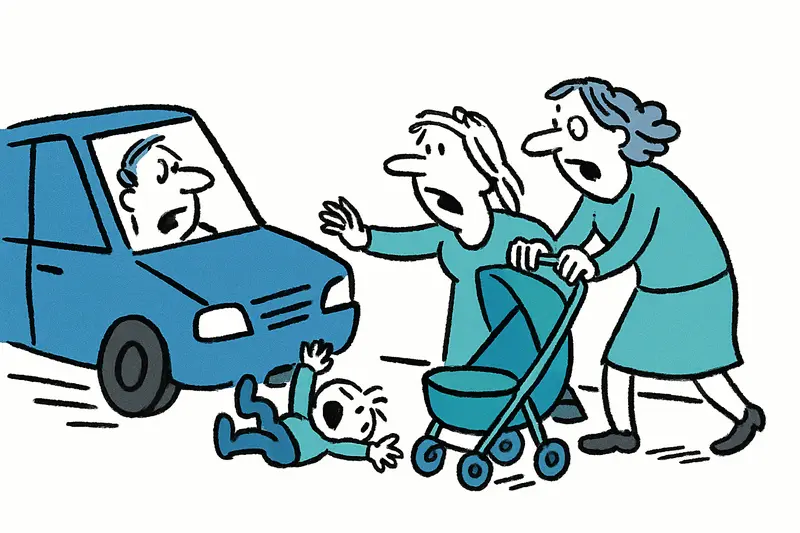
On Sunday at midday, when the sun peeked through thin clouds and the thermometer in Palma showed 18°C and the sounds of children could be heard from the nearby football field, an ordinary residential street in Coll d'en Rabassa turned into a crime scene (see Tragedy in Coll d’en Rabassa: Child Killed on Sidewalk). A white Mercedes mounted the sidewalk at an intersection on Calle Bailén and struck three people: a three-year-old girl, her mother and the grandmother. The child died at the scene. The father, who remained in a parked black Renault Scenic, was uninjured. Initial investigations point to a possible fainting episode of the 40-year-old driver. The question remains: is that explanation sufficient?
The description of events — the family had just taken a stroller out of the trunk — makes the scene especially shocking for many residents. Locals describe the street as one where people often drive fast because it is the shortest route to the football field and to schools. It is precisely this mix of parked cars, parents getting out of vehicles and playing children that turns the sidewalk into a dangerous place.
A sober analysis shows: if a medical emergency at the wheel was the cause, that is only one link in the chain of explanation. Vehicles, road layout and the behavior of all road users influence whether a single mistake ends in tragedy or a minor incident, as highlighted by coverage of a recent crash near Son Castelló, Fatal accident near Son Castelló: Three passengers come forward — where are the gaps in responsibility?.
On Mallorca, during a walk you often hear the rumble of a street sweeper, the clatter of doors at 4 p.m. — and the constant beeping of cars maneuvering into parking spaces. This soundscape is part of everyday life. But it must not distract from the fact that protective measures are missing in some places; recent reporting on a head-on crash near Es Coll d'en Rabassa underlined similar local concerns, After head-on crash in Palma: Fleeing and many questions – 31-year-old dies.
What has been missing so far in public debate: firstly, the technical equipment of modern vehicles and their edge cases. Assistance systems like emergency braking assistants and automatic driver monitoring can help, but they do not always prevent accidents — especially when a vehicle suddenly mounts the sidewalk and collisions occur at close range. Secondly, urban planning responsibility: sidewalks without protective bollards, lanes that are too narrow and missing sightlines increase the risk. Thirdly, medical precaution: how are people with known health risks accompanied in road traffic? No one is calling for blanket driving bans now, but clear procedures for risk cases are needed.
A concrete everyday scene from Palma: on a Tuesday morning a mother walks along Calle Bailén with a stroller beside her; a school bus stops, teenagers pour out, a delivery van parks half on the sidewalk. You feel how little protection a pavement without separating elements offers. In Coll d'en Rabassa, a few meters from the football pitch, such situations are common. Residents know the dangers: loud engines, hurried drivers, no bollards, poor lighting in the evening hours.
So what are sensible measures that can be implemented immediately? Short-term: expand 30 km/h zones and increase enforcement at intersections near schools and sports grounds. Highly visible protective bollards at critical points can prevent a vehicle from directly reaching the sidewalk. Mid-term: automated speed cameras and more enforcement personnel — not only to issue fines, but to change driving behavior sustainably. On the technical level: promote vehicle assistance systems through tax incentives and information campaigns; garages should recommend regular safety checks for seniors or people with pre-existing conditions. Medical measures: doctors, driving schools and authorities should work more closely together so that risk profiles are identified and accompanied by individual recommendations.
Preventive neighborhood work is also important: parent initiatives, clubs and sports associations can cooperate with the municipality to mark safe routes to sports facilities and temporarily enforce parking bans during training times. Such local agreements are often more effective on Mallorca than distant administrative decrees because they take everyday life into account — who knows the short-term bottlenecks better than the people who walk along Calle Bailén every day?
The investigation into the cause of the accident must be thorough. A possible fainting episode of the driver is a serious hypothesis, but it must not lead to structural questions being ignored. If in the end there is only a single human failure, that is tragic. But if that failure is embedded in a system — unprotected sidewalks, lack of controls, insufficient medical coordination — then the danger is that more accidents will follow.
Conclusion: this tragedy is a wake-up call for Palma. Not to quickly find someone to blame, but to ask: how do we better protect the smallest among us? The answer is not only in clarifying medical emergencies, but in a combination of urban planning upgrades, technical support, targeted enforcement and civic engagement. Coll d'en Rabassa needs visible protective measures before the next training session, and we should all be more attentive — out of respect for those who stand on the sidewalk and simply want to take a stroller out of the trunk.
Frequently asked questions
Is Coll d'en Rabassa considered a safe area for pedestrians in Palma?
Can a driver fainting at the wheel really cause a serious accident in Mallorca?
Why are streets near schools and sports fields in Palma often seen as high-risk areas?
What road safety measures help protect sidewalks in Mallorca?
What should parents watch out for when parking near a football field in Palma?
Are automatic emergency braking systems enough to prevent sidewalk crashes?
What is the best time of year to walk around Coll d'en Rabassa in Palma?
Do residents in Mallorca support more traffic controls in local neighbourhoods?
Similar News
The Painter Who Lived Mallorca: Franz Taussig and His Century-Old Secret
A hundred years ago a young Viennese arrived in El Terreno, sketched the island and called himself Francis Caron. Today ...
Airport dispute: Bridge, forecasts and the question of responsibility
A video by the Spanish transport minister has ignited the dispute over DORA figures, capacities and local governance pow...

The Painter Who Invented Himself: How a Young Viennese Drew Mallorca
A hundred years ago a 19-year-old draftsman arrived in El Terreno. His diary and sheets, long known under the pseudonym ...
Released with Conditions: The Plus Ultra Suspicion and a Mallorcan Finca as Residence
A Dutch entrepreneur, sought in connection with the Plus Ultra case, was extradited to Spain after his arrest in Germany...

Haute Nuit in Puerto Portals: Fashion, Art and Indulgence by the Water
On October 2 the Lobster Club in Puerto Portals will be transformed into a stage for curated fashion, art and culinary e...
More to explore
Discover more interesting content

Can Cap de Bou

Townhouse Lleo 72
