

Departure Prevented — Airport Arrest Raises Questions About Checks and Prevention
A 21-year-old was arrested at Düsseldorf Airport shortly before his flight to Mallorca after an arrest warrant for fraud was discovered. What does the case reveal about checks, communication and prevention?
Departure Prevented — Airport Arrest Raises Questions About Checks and Prevention
Key question: How can an arrest warrant remain in place long enough for a traveller to reach the airport — and what can we learn from it?
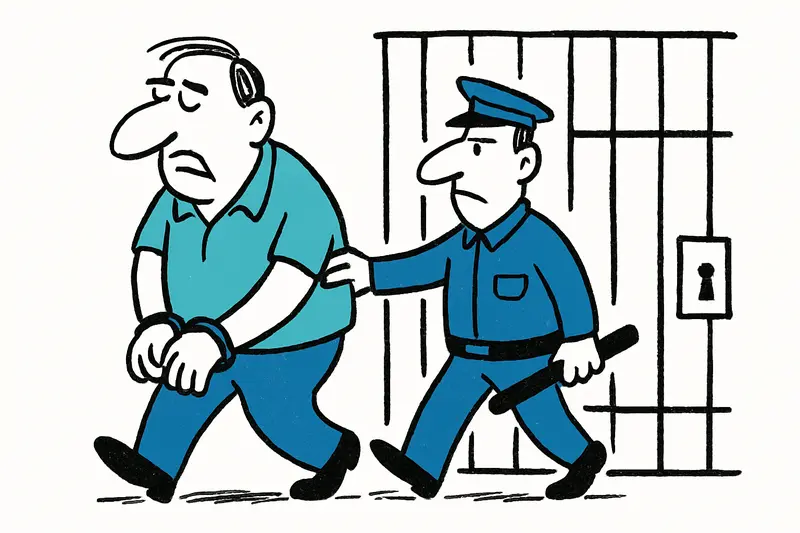
In the early morning, when Düsseldorf Airport still smells of coffee and the conveyor belts hum, federal police stopped a young man who was about to check in for Palma de Mallorca. According to authorities, a pre-trial detention order from the Detmold district court for a fraud offence was outstanding against the 21-year-old. Instead of departure, a sun lounger and sangría, he was taken straight to the officers and then brought before the examining magistrate.
This is not an isolated case: random exit checks regularly affect travellers; sometimes they find wanted suspects, sometimes passengers carrying dangerous items in their hand luggage. Similar incidents have been reported, for example From the Beach to Handcuffs: Mallorca Holiday Ends with Arrest at Düsseldorf Airport and Accidentally Detained: When a Wrong Turn After Returning from Mallorca Becomes Costly.
Critical analysis: Where are the problems?
The check itself worked: officers examined documents, found a warrant and executed it. The question runs deeper: why do people under investigation get as far as the departure gate? Several gaps are possible: delayed data transmission between courts and wanted-person databases, prioritisation in checks, limited staffing resources at airports and the fact that many wanted lists are not matched in real time. Cross-border warrants can complicate matters, as illustrated by Arrest in Mallorca after European arrest warrants: How safe is the island as a hideout?.
Communication also plays a role. Affected persons sometimes know nothing about underlying proceedings — or they underestimate the consequences. On the other hand, courts are bound by specific procedural rules; not every arrest warrant can or should be made public immediately. This balance between protecting investigations and ensuring safety at airports is complicated.
Then there is the social element: a 21-year-old, suitcase, boarding pass — the image seems harmless. But behind such scenes there can be complex fraud proceedings, victims and financial damage. In public debate this often remains invisible; the short headline "arrest at the airport" dominates. This pattern is visible in reporting such as Handcuffed Straight from Palma: Cross‑Border Manhunts, Mistakes and Mallorca's Image.
What is missing in public discussion?
The debate is usually reduced to headlines. Rarely discussed is how courts and police authorities could cooperate faster while complying with data protection. How could prevention work so that people are not confronted with the justice system at the gate? And: what support do victims need so that proceedings can be processed more quickly?
On the promenade in Palma you often hear tourists talking about flights, rental cars and hand luggage — not court dates. Yet the issue affects everyone: travellers, airports, airlines and courts. Near the Passeig Mallorca, where taxi ranks honk and delivery vans rumble over the pavement, the division between holiday world and legal reality suddenly becomes visible — every traveller can find themselves at that intersection.
Concrete proposals — pragmatic and feasible locally
1. Better interfaces: where legally possible, court decisions should be transmitted to police wanted-person databases more quickly. Technical interfaces could provide relief without violating data protection rules.
2. Prioritisation at airports: automated pre-checks of passenger lists against wanted files could help manage international travel volumes. That would not replace every manual check, but would make random checks smarter.
3. Early information channels: lawyers, courts and affected persons could be informed in a targeted way so that travel does not fail only at the gate. A notification service for affected persons — not public, but binding — could be one option.
4. Victim-centred procedures: faster clarification in fraud cases helps avoid arrest warrants and lengthy proceedings. Resources for victim support are not a luxury here, but part of prevention.
An everyday scene that prompts reflection
Imagine a beach bar on Playa de Palma: tourists talk about the next excursion, children splash in the water, vendors call out. One phone call changes everything: "You must go to court immediately." It is this unpredictability that explains many overlaps between holiday life and the law. Such scenes show why local authorities should be interested in clear, fast procedures — and why travellers must remain vigilant.
Conclusion: The arrest at Düsseldorf Airport is less an isolated incident than a symptom. The check ultimately worked, but the system beforehand needs more speed, better information channels and a more honest debate about prevention. Airports are everyday crossroads; there the world of holidays meets the world of consequences. Better networked authorities, clear notices for those affected and targeted victim support could prevent check-in from turning into an arrest.
Frequently asked questions
How can an arrest warrant reach someone at the airport before they are stopped?
What gaps in airport checks could allow a traveller to board before a warrant is found, and could this happen at Palma de Mallorca?
How could authorities speed up sharing warrants with airports to prevent gate-level arrests?
What are automated pre-checks and how might they help at international airports?
What does victim-centered processing look like in fraud investigations tied to travel?
When traveling to Mallorca, what steps can you take to avoid last-minute disruptions at the airport due to legal checks?
Why should conversations about airport arrests include prevention efforts in Mallorca and the Balearic context?
How do airport checks intersect with holiday life in Mallorca, showing the need for clear procedures?
Similar News

Cafetería San Siro: A Meeting Place on Schinken Street Since 1966
In the middle of Schinken Street, Cafetería San Siro has been offering Mallorcan hospitality for more than six decades —...
From Ballermann to Prison: What the Verdict Against the Femina Operator Means for Palma
The Munich Regional Court convicted a German operator for subsidy fraud. What does the verdict mean for the Femina Club,...

Underpass Verge de Lluc: 19-year-old fights her way out of flooded car – a warning sign for Palma
A 19-year-old recently escaped swimming from her car after the Verge de Lluc underpass held up to one and a half meters ...

When the Floodgates Open Again: Why Palma's Floods Aren't a Coincidence
A sudden heavy downpour around 5 p.m. brought Palma to a standstill: flooded streets, full basements, panicked commuters...

Playa de Palma: Life-saving at Balneario 11 – Lifeguards Act Quickly
A German holidaymaker suffered cardiac arrest at Playa de Palma. Lifeguards resuscitated her on the beach; emergency ser...
More to explore
Discover more interesting content

Can Cap de Bou

Townhouse Lleo 72
