
Dilapidated Finca, No Water, No Electricity: When Will the Vacation Rental Bubble on Mallorca Burst?
Dilapidated Finca, No Water, No Electricity: When Will the Vacation Rental Bubble on Mallorca Burst?
A German family from Hanover books a holiday finca in eastern Mallorca — and ends up in a dilapidated property without electricity and water. Who is responsible, and how can travelers better protect themselves?
Dilapidated Finca, No Water, No Electricity: When Will the Vacation Rental Bubble on Mallorca Burst?
Key question: How can it happen that holidaymakers pay for a decent finca and end up in an uninhabitable property — and who is liable?
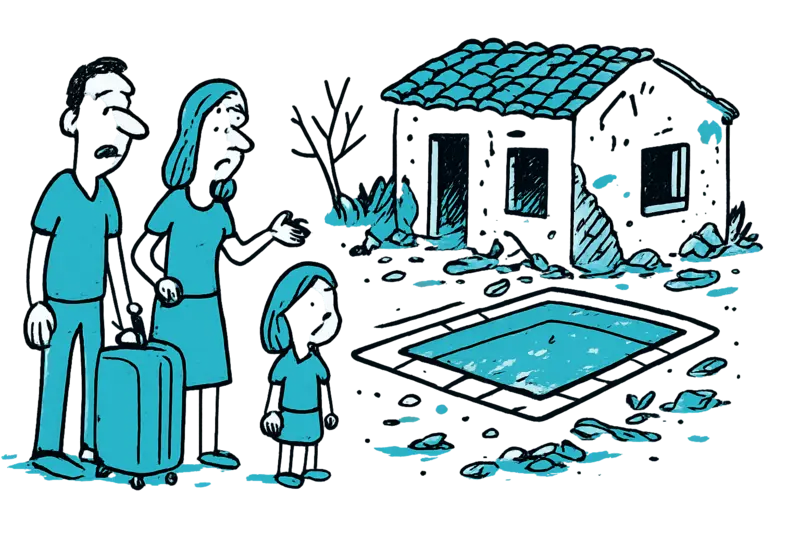
Summer evening, July 17: The heat still hangs over the streets of Artà, cicadas chirp, and traffic toward Cala Rajada slowly thins out. A young family from Hanover puts down their suitcases, tired from the journey, hoping for a quiet garden, a clean pool and a few days of relaxation. Instead they find a finca that looks like everything you don't want on holiday: rubble in the garden, dog droppings among the oleanders, cables and building materials lying around, no running water, no electricity — and a pool they would not dare enter. The disappointment led to an immediate departure and a dispute over a refund of almost €3,000.
This case is emblematic of a larger problem: the gap between listings and reality in holiday accommodations. Platform photos promise well-kept properties with crystal-clear water; reality can be run-down. The affected family booked through a broker with an international structure; several business addresses are given as contact points, and the owner and booking platform are not always the same. This resembles cases reported in When the Finca Dream Collapses: Serious Questions Over a German Agent in Mallorca, and it complicates the legal situation and the enforcement of claims, echoing reports of payments that went missing while agents remained silent.
Critical analysis
First: transparency is patchy. When several companies appear in listings — foreign intermediaries, local management companies, the alleged owner — guests often do not know who they are legally contracting with. Second: practical checks are missing. Photos and reviews can be manipulated; platforms rarely inspect properties on site. Third: communication and customer service fail in a crisis: standard replies don't help when a family stands without water in front of a locked door. Fourth: there is a lack of fast, simple complaint mechanisms on the ground. If you arrive late and the island is fully booked, travelers' time is precious and repatriation or relocation mechanisms must work.
What is missing from the public debate
People often talk about “bad providers” or “unreliable platforms”, but rarely about the everyday mechanisms: How do on-site inspectors detect forgeries? See why enforcement fails and how it could work better. How is an official license verified? The island council's review of permits is one example discussed in the debate. Why do the money flows between tour operator, platform and owner remain opaque? And: how can local consumer protection offices be made more accessible — especially in high season, when the number of complaints rises?
Everyday scene
A regular café in Cala Rajada in the morning: taxi drivers swap anecdotes about “the rotten listing” at the market, the neighbor from Artà brings fresh tomatoes and says, ‘It annoys us when outsiders are cheated like this — it damages the island's reputation.’ Such conversations show: the problem is not abstract, it affects people on the spot, cleaning company employees who would have to tidy up for hours, and neighbors who worry about noise and litter.
Concrete solutions
For travelers: 1) Collect evidence: photos, videos, timestamps, check-in messages. 2) Complain in writing immediately and set deadlines. 3) Check the payment channel: with credit cards a chargeback is often possible; with bank transfers it is more difficult. 4) Contact local consumer protection offices (e.g. the municipal consumer protection center/OMIC) and file a formal complaint. 5) Arrange alternative accommodation and keep receipts — these can later be claimed as damages.
For authorities and platforms: 1) Visible, easily verifiable labeling of licensed holiday properties for tourists. 2) Mandatory inspections or at least spot checks by local authorities during high season. 3) Clear reporting and liability rules: brokers should guarantee accessibility and refunds in case of complaints. 4) Platforms should be required to consider escrow or trust mechanisms for booking payments so that funds are not immediately lost in case of a first error.
Conclusion
Anyone who wants sand in their shoes and soil on their soles should book with better protection. The case of the family from Hanover is not an isolated incident, but a symptom of a market that grows with digital means without updating all control mechanisms. Holidays on Mallorca remain attractive — if providers, platforms and administrations take responsibility and travelers know how to defend their rights. Otherwise, after the return flight only the bitter taste of tap water that did not run and photos that promised what reality did not will remain.
Frequently asked questions
What should I do if a Mallorca holiday finca has no water or electricity on arrival?
How can I verify a Mallorca rental is legitimate before booking?
What red flags should I watch for when booking a finca in Mallorca?
How can I claim a refund if a Mallorca rental is unusable upon arrival?
What payment safety options should I consider when booking Mallorca holidays?
What measures can authorities and platforms take to improve Mallorca holiday rentals?
What should I know about Mallorca's summer weather and packing?
What should I do if I arrive late and Mallorca towns are fully booked?
Similar News
Magaluf: Watchtower Alarm – Lifeguards Pull Unconscious Beachgoer from the Water
After a drama in the late afternoon, two lifeguards at Magaluf beach rescued an unconscious 44-year-old man. He was stab...
Turquoise in the City: How dangerous is the color play of the Sa Riera?
The Sa Riera in Palma suddenly turned turquoise — a pretty motif, but behind the effect lies a discharge of saline waste...

Jeckliner at Sunnesching: Cologne spirit sets sail from Palma
In September 2027 the Mein Schiff 2 briefly becomes a floating carnival stage: four days with Cologne bands, comedy and ...
Finally Home: Mike and Leyla Heiter Buy Villa with Sea View in Mallorca
The reality TV couple Mike and Leyla Heiter have bought a house in Mallorca with a roof terrace and sea view. An Instagr...
Arrest after series in Palma: Who protects apartments from repeat offenders?
The National Police arrested a man in Palma who investigators say may have broken into several apartments. In one incide...
More to explore
Discover more interesting content

Can Cap de Bou

Townhouse Lleo 72
