
Distraction at parking meters: How holidaymakers at Mallorca's ports become targets
Distraction at parking meters: How holidaymakers at Mallorca's ports become targets
Two arrests after targeted thefts at parking meters: older German holidaymakers were distracted and had bank cards taken. A reality check on what's missing and how we can protect ourselves.
Distraction at parking meters: How holidaymakers at Mallorca's ports become targets
At the end of a hot August afternoon, while boats bobbed in the basin of Port d'Andratx and the sea carried a faint diesel smell over the pier, suspected thieves resorted to a classic distraction trick. Two men have since been arrested in El Arenal by the Guardia Civil; investigations link them to incidents in Santa Ponsa and to a familiar pattern: older tourists briefly occupied at a parking meter, suddenly without a credit or bank card. Similar cases have been documented in Pickpockets Stopped in Port d’Andratx – What the Case Reveals About Crime Tourism.
Key question
How were perpetrators repeatedly able to act so openly, and why do these methods keep targeting older German holidaymakers?
Critical analysis
The method consists of a simple, effective three-step sequence: approach, distraction, removal. The offenders address their victim, offer supposed help paying in the blue-marked short-term parking zones or create a situation that holds attention. Meanwhile, wallet or cards are taken unnoticed. That the group then tries to use stolen cards at nearby ATMs to pay or withdraw cash indicates a division of labor: some distract, others withdraw. The coordinated use of vehicles and rapid movement between sites is also described in broader coverage of similar theft patterns in Mallorca, for example New Tricks at Ballermann: How Pickpockets Exploit Playa de Palma — and What Actually Helps.
Technically, the perpetrators take advantage of structural and social vulnerabilities: parking meters are often located near promenades where people gather; parking and ATM areas are not always clearly visible or covered by cameras; older holidaymakers are easier to distract due to language barriers or routine tasks. A specific incident at the end of August in Port d'Andratx escalated when the suspects used a vehicle to flee and a tourist was slightly injured after being hit by the driver. Such scenes leave not only physical but also psychological traces—especially for people far from home.
What is missing from the public debate
Discussion frequently focuses on the arrest(s) and general warnings. Little attention is given to structural countermeasures: Why are parking zones at tourist hotspots so vulnerable? Where are multilingual warning signs at parking meters, harbor facilities and beach access points? And how well are banks and ATM operators connected with the Guardia Civil to enable rapid card blocks or to flag suspicious withdrawals in real time? Without addressing these questions, prevention remains patchy.
Everyday scene from Mallorca
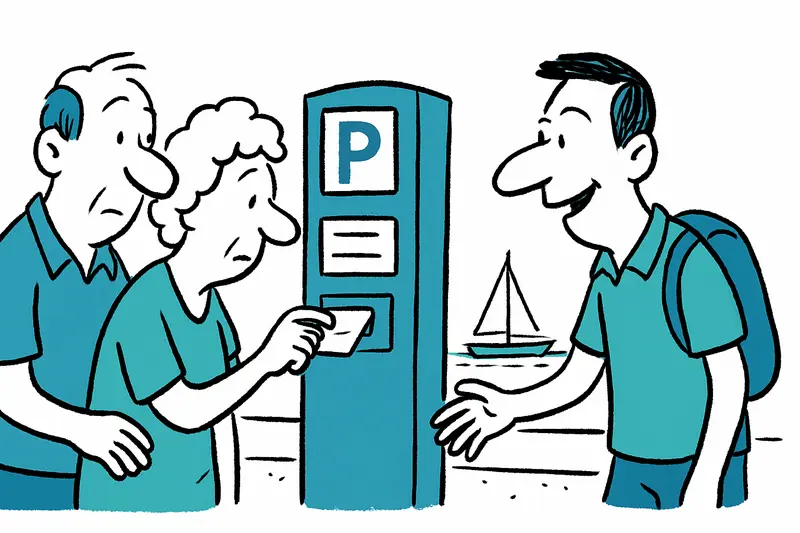
You can picture the scene: at the harbor of Andratx a group leans against the wall, a sailboat glints in the background, an older couple fiddles with the parking ticket, two strangers approach, chat amicably, a short gesture, and a card disappears. Such actions are quiet, almost unspectacular—exactly why they work. In other places like Santa Ponsa the pattern repeats; similar beach and promenade thefts have also led to arrests in other resorts, for example Beach theft in Cala d’Or: Four arrests — what can really protect tourists: sun, promenade, crowds, and a brief lapse in attention is enough.
Concrete solutions
Prevention requires multiple levels and concrete steps. First: visible presence. Harbors and popular parking zones need regular patrols by the Guardia Civil or local police, especially during peak times. Second: obligation to inform. Multilingual notices at parking meters and entrances to harbors and promenades warning about common schemes reduce surprise effects. Third: technical upgrades. Better lighting, more CCTV with good image quality, and reviewing whether ATMs and parking meters are positioned so passersby can see them and observers can spot possible thefts.
Fourth: bank and card measures. Banks must be able to react quickly to unusual withdrawals; points of contact between banks and law enforcement should be expanded so cards can be blocked immediately. Fifth: training and awareness. Port workers, parking attendants, taxi drivers and tourist information staff should know how to intervene helpfully and approach victims without making the situation worse. Sixth: public reporting. A simple multilingual reporting platform for tourists would make it easier to file quick reports and give police a better operational picture.
A few practical rules for holidaymakers
When traveling, keep cards and documents on your person, be sceptical of calls or alleged offers of help and shield PIN entries with your hand. Contactless payments in shops can be a safer alternative where possible. If something is stolen: block the card immediately and report the incident to the Guardia Civil or the local police—every report helps to identify patterns.
Concise conclusion
The arrests in El Arenal show that law enforcement is working—but arrests alone do not end the problem. Cases across Mallorca, including recent actions documented in Arrests at Playa de Palma: How safe are phones on the Schinkenstraße?, illustrate that visible police presence, better information for visitors and closer cooperation between authorities, banks and harbor operators are needed. And all of us—residents and guests—must learn to pay closer attention in these moments instead of just trusting that someone else is watching. Otherwise Mallorca remains an attractive target for those who steal unobtrusively.
Frequently asked questions
How can I avoid parking-meter distraction scams in Mallorca's harbours?
Why do these thefts often target older tourists in Mallorca?
What concrete steps can Mallorca's harbours take to reduce thefts at parking zones and ATMs?
What should I do if my wallet or card is stolen while visiting Mallorca?
What are the best practices for parking near Mallorca's harbours to stay safe?
Which Mallorca spots have been connected to distraction thefts near parking meters?
What environmental changes help deter thefts at Mallorca’s parking zones?
What practical rules should holidaymakers in Mallorca follow to stay safe from card fraud?
Similar News
Eviction in El Arenal: Who protects neighbors — and who protects the homeless?
A vacant hotel on Carrer Girona was cleared and secured. The neighborhood breathes a sigh of relief. But the action trea...
'La Tapita' loses its home: Who will protect Palma's last affordable meeting places?
The bar 'La Tapita' on Simó-Ballester Street will close at the end of December. For neighbors, police officers and small...
Million Heist at Bulgari: Who Is Responsible for Palma's Security Gaps?
Three men stole jewelry worth around one million euros – the crime series began at the end of September and was likely c...
Who pays the bill? Tourists, prices and the reality in Mallorca
Rising costs are felt by travelers and locals alike. A walking observation through Palma's old town shows how tourists e...
Phone robbery at Playa de Palma: Two juveniles arrested — a reality check
On Monday morning three young women were attacked at Playa de Palma; two youths snatched a phone from one of them. The N...
More to explore
Discover more interesting content

Can Cap de Bou

Townhouse Lleo 72
