
How could this happen? A doctor, seven victims and the silence in small health centers
Indictment against a 41-year-old physician: Seven men report indecent touching in the health centers of Alaró and Binissalem. A reality check on the safety gap in outpatient care in Mallorca.
How could this happen? A doctor, seven victims and the silence in small health centers
A 41-year-old doctor is under indictment: He is accused of sexually abusing seven men at the health centers of Binissalem and Alaró between October 2022 and January 2023. The cases range from repeated indecent touching to a forced oral act. According to the public prosecutor, the victims were exclusively men over 50; the trial before the provincial court in Palma is expected to begin soon. The prosecution is seeking up to 24 years in prison, a professional ban and damages.
Key question
How could a practicing doctor in quiet village centers undress and touch patients under the pretext of medical examinations for months without immediate alarm being raised?
Critical analysis
The pattern is alarmingly simple: patients come for everyday complaints (neck, back, blood sugar), are asked to lie down and lower their trousers, supposedly for a prostate or physical examination, and later report that boundaries were crossed. In small health centers like those in Binissalem or Alaró there is often a presumption of trust toward physicians. The treatment rooms are cramped, there is rarely an accompanying person, and patients over 50, some with health concerns, feel vulnerable. All of this creates a danger zone for abuse of power.
There are also organizational weaknesses: missing rules on accompanying persons during intimate examinations, insufficient documentation of individual maneuvers, hardly any standardized information sheets about patients' rights and reporting procedures. In such structures, boundary violations can go unnoticed — until victims find the courage to file a complaint.
What is missing in public discourse
There is much talk about punishment — rightly so. What is often missing, however, are questions about how everyday operations in health centers can be made safer. Not only is punishment important, but so are preventive measures: What training do practice staff and assistants receive? Training gaps were also highlighted by the doctors strike in Palma. Are there mandatory procedures for intimate examinations? Recent medical fraud in Palma cases underline the need for stricter oversight. How are complaints documented and internally reviewed? In villages like Alaró the social network is close; this proximity can further paralyze victims. Politics and health administration should discuss this, not only individual cases and sentences.
An everyday scene from Alaró
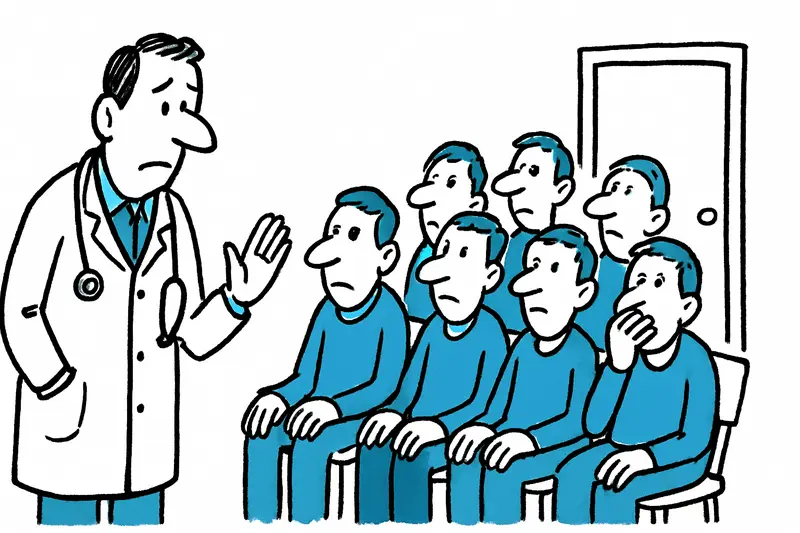
If you stroll through the narrow streets of Alaró on a Sunday, you hear the coffee machine at the café on the Plaça, the clinking of cups and a distant car door on the main road. Early in the morning, sometimes only an older man sits in the waiting room of the health center on a plastic chair, the radio low, disinfectant in the air. In such rooms seconds decide whether a patient feels safe, whether he asks 'Do you really need me to take off my trousers?' or silently obeys. This scene shows how vulnerable patients are — and how important visible protection mechanisms are.
Concrete solutions
1. Obligation to have an accompanying person during intimate examinations: Patients should be actively asked whether they want someone present; assistance by medical staff must be offered without discussion.
2. Standardized consent forms: For prostate or other intimate procedures, clear written consents that describe purpose and procedure.
3. Improved documentation: Each examination should be briefly justified and documented in the medical record (Who? What? Why?). This creates traceability and prevents arbitrary behavior.
4. Training and awareness-raising: Regular training for doctors, nurses and reception staff on boundaries, power dynamics and reporting channels.
5. Secure reporting channels and protection for whistleblowers: Anonymous reporting options and a clear procedure within the health administration, plus psychosocial support for victims. Such procedures were highlighted after an employee was convicted of sexual harassment in a senior residence in Palma.
6. External audits: Independent checks in health centers, especially in rural communities, to review procedures and patients' rights.
7. Public outreach at the municipal level: Information evenings in town halls and notices in health centers explaining patients' rights and encouraging the reporting of incidents.
Conclusion
The case is painful not only because of the acts themselves but because it exposes a gap: in the everyday life of small island communities, trust can quickly turn into powerlessness. Punishments are necessary; more important, however, are instruments that prevent such situations and protect victims. That means: clear rules, better documentation, staff training and greater visibility for patients' rights — so that next time it doesn't take seven reports before an alarm is raised.
Frequently asked questions
What happened at the health centers in Binissalem and Alaró, Mallorca?
Why can abuse go unnoticed in small health centers in Mallorca?
What should I expect during an intimate medical examination in Mallorca?
Can I ask for someone to be present during a private examination in Mallorca?
What can patients do if they feel a doctor in Mallorca crossed a line?
What prison sentence is being sought in the Mallorca doctor case?
What safeguards should Mallorca health centers have for intimate examinations?
Why did the case in Alaró affect so many people in the village?
Similar News
Ancient Piece Brought to Light: Guardia Civil Recovers Roman Anchor Fragment off North Coast of Mallorca
Divers from the Guardia Civil recovered a massive iron piece from Roman times off Mallorca's north coast. The roughly 35...
Who Benefits from the Half‑Hourly Flight on the Edge? Aena, Investments and the Island's Interests
Almost one billion euros is flowing into Son Sant Joan. The figures show the scale of investment and expected beneficiar...
Are the Balearic Islands the Southern Border of Europe? A Reality Check on Immigration
The Balearic Islands are again calling for EU aid after a sharp rise in arrivals by sea. Conflicting priorities between ...
"Expensive chaos" and many open questions: What clients can do when a lawyer suddenly stops responding
Several clients complain that a well-known German lawyer in Mallorca has been unreachable for months. Key question: What...
TV tip: 'The Last Problem' — Mallorca as the setting of a classic crime
A classic whodunit on Mallorca: A new miniseries set in spring 1959 brings storm, an isolated hotel and a dense web of s...
More to explore
Discover more interesting content

Can Cap de Bou

Townhouse Lleo 72
