
Drone over Palma's Old Town: Report after No-Fly Zone Violation
A drone pilot in Palma was reported after launching a drone next to the Almudaina. Safety, missing permits and solutions for a peaceful coexistence between technology and the old town are now on the agenda.
Drone above the Old Town: Report after No-Fly Zone Violation
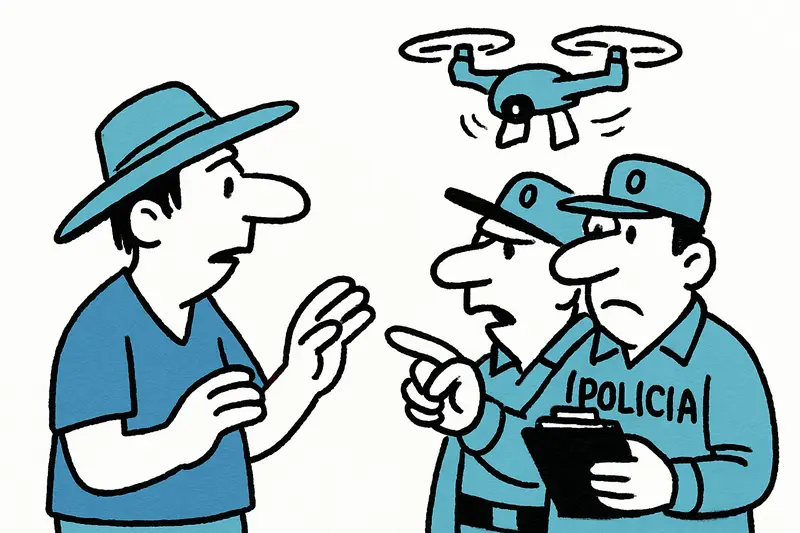
In the late morning, while the bells of La Seu were still slowly fading and the heat shimmered over the stone facades, a quiet but unmistakable sound hummed over the Plaça d'Armes: a drone. A man had launched the device next to the Almudaina Palace – right in the old town, in a clearly marked no-fly zone, as highlighted in Invisible Boundaries: Why a Drone over the Almudaina Is Dangerous. Shortly afterwards the Guardia Civil approached the pilot and initiated an administrative procedure.
Why this is so problematic
It may sound trivial, but the reasons are solid: narrow alleys, tourists, cafes with often carelessly placed parasols and the historic substance of the cathedral make the airspace above Palma's center a sensitive zone. A technical fault, a slipping propeller or just an unexpected gust of wind can quickly turn a seemingly pretty aerial shot into a dangerous situation. The authorities therefore stressed that this is not about bureaucracy for its own sake, but about protecting people and cultural assets, consistent with Regulation of unmanned aerial vehicles in Spain.
The emergency services stated that the man was of Serbian origin and had not presented any permit. The drone was confiscated. Whether a fine will be imposed or further criminal steps will follow now depends on the outcome of the procedure – seizure of the device and reports are typical consequences.
Local view: a brief moment, many looks
Anyone walking along the Passeig del Born or in the shadow of the cathedral may have witnessed the small spectacle: an ice-cream seller nervously sorting his change, two tourists who quickly pulled out their route planner, and a man in a sun hat still trying to take a photo. The Guardia Civil in dark uniforms spoke calmly but firmly. A few pigeons took flight, a child cried out briefly in excitement — everyday life in Palma's old town, disturbed by an acoustic foreign body.
Scenes like this show that digital technology and historic city life do not automatically harmonize. Many hobby pilots underestimate local rules or are not familiar enough with the maps of the competent aviation authority. Others rely on automation functions of modern drones – but geofencing is not always flawless and is not sufficient as the sole protection; similar incidents have even interrupted airport operations, for example Drone over Palma Airport: Guardia Civil Investigates – How Safe Is Our Airspace?.
Less known causes and consequences
Often overlooked is the role of rental drones and of vendors who lend devices to holidaymakers at short notice. Language barriers, lack of instructions and the low time investment required for use can lead pilots to naively venture into sensitive zones. Hotels or event organizers who promise "beautiful aerial shots" also bear responsibility: offers without clear information about permit requirements are risky.
In the long term, repeated violations can lead to stricter regulations that constrain the hobby for everyone. The balance between creative possibilities and public safety is thin – and it shifts when authorities have to react, as discussed in Drone in the Sky over Palma: Why 35 Minutes of Chaos Aren't the Whole Story.
Concrete chances and practical solutions
Today's report is a reminder, but also an opportunity: Palma could become a pioneer in sensible drone management. A few proposals that would help in practice:
1. Multilingual information: Flyers and notices at popular launch points, in rental stations and hotels – in several languages, with clear maps of the no-fly zones.
2. Cooperation with rental companies: Mandatory briefing at the time of rental and clear rules anchored in rental agreements.
3. Targeted controls: Presence during peak times (weekends, events), combined with short training offers rather than just penalties.
4. Digital solutions: Easily accessible, offline-usable maps and a local online check to see whether a launch point is permitted. Fast approval procedures for professional operations could also provide relief.
Conclusion: rules are not a game
A photo from above would undoubtedly have been beautiful — Palma's old town provides plenty of motifs. But not at the expense of public safety. Anyone who owns a drone or plans to rent one: check the official maps, register if necessary and, in doubt, choose a beach area or a designated launch site instead. And for those who live and work here: a little more information could avoid a lot of trouble and action by the authorities. Today's incident was brief, loud and instructive – and reminds us that rules in Palma's stony center are not ornamental.
Frequently asked questions
Can you fly a drone over Palma’s Old Town?
Why is drone flying restricted in Palma city centre?
What happens if you fly a drone in a no-fly zone in Mallorca?
Do you need a permit to fly a drone in Palma?
Where can I fly a drone safely in Mallorca?
Are rental drones in Mallorca more likely to cause problems?
Can drones disturb visitors in Palma’s Old Town?
What should I check before flying a drone in Mallorca?
Similar News

Maribel: Five Decades of Service – Housekeeper from Peguera Celebrated with a Special Honor
Over 50 years in the hotel business: María Isabel “Maribel” Molinos was honored in Palma at the Nit del Turisme by Unive...
Orange Alert over Parts of Mallorca: Are We Prepared?
Dark clouds and an announced wet spell have triggered an Orange alert in parts of Mallorca. A reality check: what's miss...

Sundair & Co.: Sale speculation and what it could mean for Mallorca
Rumors about a possible sale of the airlines Sundair and Fly Air 41, which belong to Schauinsland-Reisen — and whether b...
Anne Wünsche in Mallorca: A job offer with a catch — who fits the role of personal assistant?
Influencer Anne Wünsche has left Berlin and is urgently looking for a full-time personal assistant in Mallorca. Why the ...
Daily from New York: Palma Between Boom and Strain
United will increase the Newark–Palma route to daily flights in 2027 using Boeing aircraft (231 seats). What does the in...
More to explore
Discover more interesting content

Can Cap de Bou

Townhouse Lleo 72
