
When the Drone Circles Over Son Rutlan – Palma, Graffiti and the Night of Surveillance
When the Drone Circles Over Son Rutlan – Palma, Graffiti and the Night of Surveillance
Since April, SFM has been deploying drones at night equipped with thermal cameras and loudspeakers to deter graffiti artists. We pose the central question, examine effectiveness, data protection and alternatives – and provide concrete proposals for how Palma can stay clean without turning the city into a surveillance state.
When the Drone Circles Over Son Rutlan – Palma, Graffiti and the Night of Surveillance
Main question
How much surveillance is acceptable to protect SFM's trains and facilities from graffiti – and who oversees the overseers?
Critical analysis
Since April, drones have regularly flown at night over the Son Rutlan depot; similar incidents have been reported elsewhere, for example Drone over Palma Airport: Guardia Civil Investigates – How Safe Is Our Airspace?. The devices are equipped with thermal cameras and loudspeakers; according to SFM, trained staff conduct between 20 and 25 patrol flights per night. Other measures have already been added: more personnel, additional fixed cameras, a dog unit and collaboration with a handwriting expert to analyze tags and pieces. The facts are clear: damage and cleaning costs are high – last year rail cleanings amounted to well over €120,000, 37 wagons were affected; there were additional damages on the depot of around €40,000. This year too, SFM reports several incidents with further consequences in the four- to five-figure range.
Technology can detect intruders earlier and provide deterrence. But: drones mean more pervasive surveillance, also beyond the fences. Thermal images record movements, loudspeakers can address people – this affects not only suspects but potentially neighboring properties, night-shift workers, walkers and delivery personnel. The balance between protecting infrastructure and the right to privacy is not automatically achieved.
What's missing in the public discourse
The debate currently focuses on two things: the cost of vandalism and the severity of countermeasures. Rarely is it openly discussed how drone operations are technically regulated: How long are recordings stored? Who is allowed to view them? Are there automatic algorithms for detection, and if so, how accurately do they perform? The question of the legal basis is also missing: under which rules does a public transport company conduct nightly surveillance rounds – as a private security measure, on behalf of the police, or with a special permit from the aviation authority, as in Drone over Palma's Old Town: Report after No-Fly Zone Violation?
And another point: the role of prevention and dialogue is underweighted. Authorities increasingly report observing that spray groups arrange themselves online from abroad. Drones have also been used for criminal deliveries, as reported in When the Night Hums: How Palma Can Stop Drone Deliveries to the Prison. But how can we channel this scene locally instead of only criminalizing it?
An everyday scene from Palma
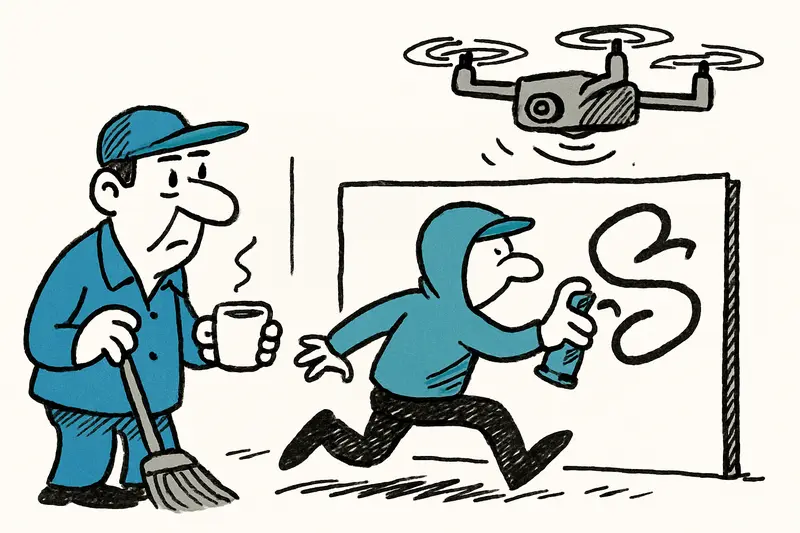
It's three in the morning at the entrance of Son Rutlan. No one around except the night cleaner, sweeping up debris with a coffee in hand, and the distant motor noises of the harbor cranes. Suddenly a quiet whirring in the sky – the drone traces its circling paths, a green thermal image flickers on a small tablet. In Passeig Mallorca five kilometers away the streetlights still stand; pigeons take flight, a dog barks. For the resident this is an unusual spectacle: does this protect public transport or does the night watch become constant surveillance? The scene shows: technology acts immediately, but the effects on everyday life are not confined to the depot and extend into the surrounding neighborhoods.
Concrete solutions
1) Duty of transparency: SFM and the city should publish how long recordings are stored, who has access and whether recordings are handed over to the police. An annual statistic on deployments and outcomes (arrests, proceedings, use as evidence in court) would be useful. 2) Technical limitations: drones can be configured to analyze thermal images only within defined operational areas and not to permanently store video data outside them. Privacy-by-design is possible and reduces surveillance of third parties. 3) External oversight: an independent review mechanism – for example a municipal data protection committee with civil society representation – should spot-check deployments and data usage. 4) Preventive offers: legal walls, funded murals, collaboration with artist groups and urban beautification projects reduce the appeal of illegal actions. A reward system for tips, linked to anonymous reporting channels, can also help. 5) Cost-benefit analysis: before expanding technical measures there should be an honest calculation: What does a night drone flight including personnel cost compared to cleaning and court costs? Measurement of effectiveness instead of faith in technology. 6) Procedure-oriented law enforcement: handwriting experts can help, but the justice system needs clear priorities – between hate-filled insults (which must be removed quickly) and artistically motivated tags, where alternative sanctions like community service cleaning could be appropriate.
Punchy conclusion
The drone over Son Rutlan is a symbol: Palma wants to stay clean, and authorities invest in technology for that. That is understandable. But without clear rules, transparency and accompanying prevention programs, there is a risk of a one-sided response: more surveillance, less urban discourse. If the city truly wants to solve the problem "over years", as it says, it will need more than flying cameras, as shown by incidents like Drone paralyzes Palma — why a small device makes our airport vulnerable – it needs regulations, oversight and programs that engage people instead of just chasing them.
Frequently asked questions
Why are drones flying over Son Rutlan in Palma at night?
How serious is graffiti damage to SFM trains and depots in Mallorca?
What security measures does SFM use against vandalism in Palma?
Does drone surveillance in Palma affect nearby residents?
How are drone recordings from Son Rutlan handled in Palma?
What is the legal basis for drone patrols over SFM facilities in Mallorca?
What privacy concerns do drone patrols raise in Palma?
What alternatives to drone surveillance are proposed for graffiti in Mallorca?
Similar News

Rental Car Theft in El Arenal: What This Incident Reveals About Our Gaps
A teenager steals a running rental car in El Arenal, flees on foot, climbs over walls and is caught by the Guardia Civil...

Red Rope in Palma's Library: What Helps Against Selfie Tourism — and What's Missing
Palma's city library cordoned off an area with a red rope to keep selfie tourism away from reading and working activitie...

Fort San Carlos: Museum, Harbor Dispute — and a Conflict That Demands Answers
The military museum at Fort San Carlos sits right on Palma's harbor, with unexpectedly quiet rooms filled with cannons a...
Old Town Under Pressure: When a Doorway Becomes a Sleeping and Shower Place
For months a woman has been living with a parasol, a clothes rack and personal belongings next to the social welfare off...

When Shopping Weighs Heavier: Mallorca Demands a Tax Pause on Food and Fuel
Rising prices are putting pressure on households and agriculture. The Balearic Islands are calling for temporary tax rel...
More to explore
Discover more interesting content

Can Cap de Bou

Townhouse Lleo 72
