
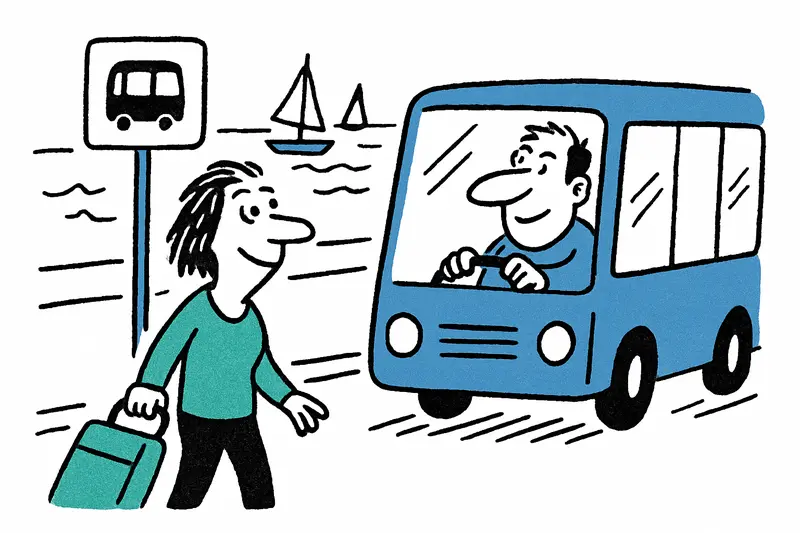
New EMT Line 30: Small Change, Big Questions on the Paseo Marítimo
Since September 11 the new EMT Line 30 runs between the Congress and the Marivent parking lot. Convenient for commuters — but can it really relieve the Paseo Marítimo? A look at opportunities, unintended effects and concrete steps to turn more buses into more tranquility for the promenade.
New line, new feeling by the sea — but is it enough?
Since September 11 there has been a bit more movement in the timetable on the Paseo Marítimo, as described in New EMT Timetable in Palma: Opportunities, Questions and a Metro Experiment: the EMT 30 will in future connect the Congress Palace with the large parking lot at the Marivent Palace, as reported in New Bus Line 30 in Palma: Sea Views between Cala Major and Portixol. If you sit on the Passeig on a windy morning, you can hear the quiet whirr of the buses amid the seagulls and the clatter of the boats — and you quickly notice: there are now more vehicles running, stops are less crowded and queues are shorter.
The key question: Does Line 30 really relieve the Paseo Marítimo?
On paper the calculation sounds simple: Line 30 runs during the day at a 20-minute interval, the existing Line 1 remains in service — together this ideally results in a vehicle every ten minutes on the Paseo. For commuters, visitors to the auditorium or people who park in the Marivent lot, this is initially a noticeable relief. But the real question runs deeper: does more bus capacity sustainably change mobility behavior — or does it merely shift peaks to other times and parts of the city?
What needs closer attention
Four points stand out from observation: schedule reliability, connection quality, displacement effects and usage data. A dense schedule is of little use if buses are delayed or transfers are poorly timed. Likewise, a new line can reduce taxi trips — which is good for inner-city noise and emissions — but at the same time increase parking pressure and delivery traffic elsewhere. And very important: without reliable passenger numbers it remains unclear whether the 30 is permanently sensible or only a seasonal adjustment — a concern echoed in EMT is booming — but Palma's streets remain clogged.
Unintended side effects — easy to overlook
Such changes create small chain reactions. Local shopkeepers on the Paseo might notice more foot traffic in the evenings if concert exits at the auditorium are faster. Taxi operators react — sometimes relieved, sometimes skeptical — and look for new stopping points. Cyclists and strollers don’t lose their space on the waterfront, but the dynamics at the nodes change: more boarding and alighting means crowded sidewalks at peak times. These are not dramatic scenes, rather subtle shifts that only become clear after weeks or months.
Concrete steps to make Line 30 deliver more than expected
I suggest a small checklist for the coming months:
1. Collect data: Systematic collection of passenger numbers at key stops for at least three months.
2. Flexible frequencies: Time-of-day additional runs for events at the auditorium or congress.
3. Better connections: Coordination with other lines and clearer transfer signage so waiting times don’t erode the benefit.
4. Park & Ride optimization: Information boards at the Marivent parking lot showing alternative connections, and secure bicycle parking at stops.
5. Dialogue with stakeholders: Regular consultations with residents, shopkeepers and taxi drivers — also to detect unexpected impacts early.
Practical tips for everyday use
If you want to use the new line: the EMT app shows the updated connections, and on days with events it's worth checking departure times. For walkers: the Paseo remains a promenade — only the nodes are busier. An early coffee in the sun in front of the cathedral and a later trip home after a concert — that’s how to make the most of the new schedule.
Conclusion: Small improvement, big potential — but please measure
More buses by the sea are good news at first: less crowding, better access to the port, as discussed in Detours on the Paseo Marítimo: How Palma Can Ease Access to the Ferry Port, and more relaxed routes from the parking lot to the center. The gain will only become truly sustainable if EMT measures the effects and adjusts — with real-time data, flexible schedules and direct exchange with people on site. Then a small change on the Paseo Marítimo can become a long-term noticeable improvement for Palma. Until then: a look at the sea, a bus arrival and the feeling that something is moving — quietly, but hopefully permanently.
Frequently asked questions
Does EMT Line 30 really make getting around Palma's Paseo Marítimo easier?
How often does EMT Line 30 run in Palma?
Is EMT Line 30 a good option for concert or congress visitors in Palma?
Can I use EMT Line 30 to park at Marivent and travel into Palma?
Will the new bus line change traffic and parking on the Paseo Marítimo in Mallorca?
What should I check before taking EMT Line 30 in Palma?
Is the Paseo Marítimo in Palma still easy to walk along with more buses running?
Why is Palma testing more bus service on the Paseo Marítimo?
Similar News

Caro Robens: 15 kilograms lighter — and again in the crossfire of online comments
Bodybuilder Caro Robens, who lives in Mallorca, has lost 15 kilograms. Her success on Instagram was met with applause — ...

Meager Industry in Mallorca: How the Island Can Be More Than Just Tourism
The industrial sector in Mallorca is shrinking, productivity is falling and firms remain tiny. The key question: can the...
Pre-Nit de l'Art: Galerie Mensing invites to a special evening with Tom Boston
Before the big art night, Galerie Mensing opens its doors: pop art, champagne, a DJ and a hand-signed print by Tom Bosto...

Sea view and more seats: Cappuccino Grand Café reopens in Port d'Andratx
After a long renovation, the Cappuccino Grand Café on the Port d'Andratx harbor promenade has quietly reopened. Larger t...

Enric Mas wins the Vuelta – a triumph that resonates in Mallorca
Mallorcan Enric Mas has won the 82nd Vuelta — the first Spanish overall victory since 2014. Cyclists and neighbors on Ma...
More to explore
Discover more interesting content

Can Cap de Bou

Townhouse Lleo 72
