
Es Molinar: Helicopter Rescue After Failed Anchor Maneuver
Es Molinar: Helicopter Rescue After Failed Anchor Maneuver
In heavy seas a boat operator near Es Molinar got into distress because the anchor apparently would not release. Salvamento Marítimo brought him ashore by helicopter. A reality check: What went well — and what is missing to make such incidents less frequent?
Es Molinar: Helicopter Rescue After Failed Anchor Maneuver
Key question: Why do seemingly harmless anchor problems so often end in risky rescue operations?
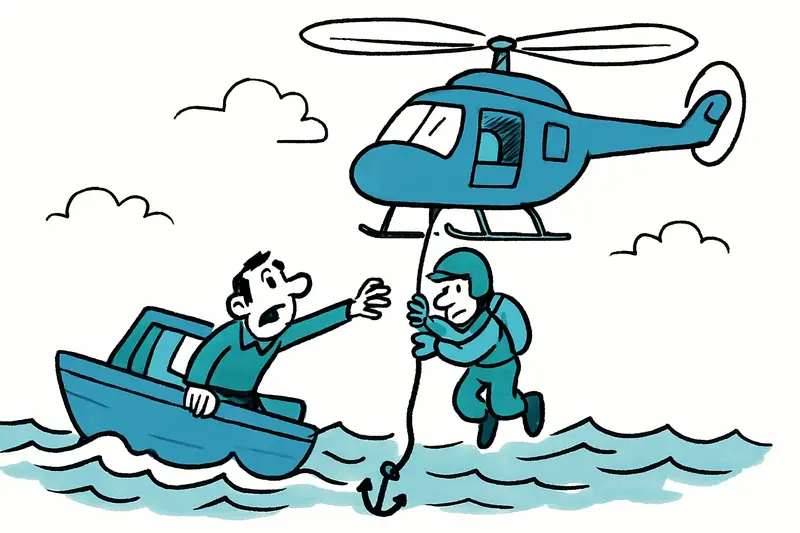
Last evening off the breakwater of Es Molinar a scenario occurred that coastal residents know all too well: heavy seas, high waves and a motorboat with an approximately 40-year-old skipper whose anchor apparently would not release. The nationwide sea rescue service Salvamento Marítimo initially tried to reach the man by rescue boat – but the surf made a transfer impossible. Ultimately a rescue helicopter lifted the skipper out of the situation unharmed. The boat remains at the breakwater.
The helicopter rescue works – the operation demonstrated that. The crew reacted quickly, and in the end the man apparently remained uninjured, as seen in other island incidents such as Dramatic Helicopter Rescue at Puig Major: Lessons from an Afternoon in the Tramuntana. Nevertheless the incident is a wake-up call. A jammed anchor is not a technical detail; in rough seas it can determine life and serious damage.
Critical analysis: The sequence of measures and the reasons for the failure of the boat operation raise questions. Was the rescue boat adequately sized for the waves present? Could a local fishing or harbor boat have intervened more quickly, a question also explored in Emergency on Board the Aidamar: Why a Helicopter Medical Evacuation Raises Questions? Salvamento Marítimo operates according to defined guidelines – the spectacular helicopter landing shows the strength of air rescue but also reveals the limits of sea-based resources when spray and breakers hit the breakwater, a concern echoed in pieces such as Four missions in one day: How fit is Mallorca's mountain rescue?.
In public debate the perspective of prevention is often missing: How well are small recreational yachts maintained? Do owners have a quick-release system for the anchor, and do they know alternative maneuvers for current and wind? In addition there is a lack of clear, easily understandable communication about hazard situations at places where recreational skippers anchor: at the outer edge of the harbor entrance area and at prominent points like the Es Molinar breakwater.
An everyday scene in Es Molinar: On the Passeig Marítim it smells of sea and diesel, the gulls cry, and pedestrians stop to look at the water. Cafés fill with regulars who watch the rotor blades in astonishment. The alarm is so close to our everyday life – and the question is so visible: Are we doing enough to make such operations rarer?
Concrete solutions: First, skippers should perform regular check-ups on anchor installations – especially on quick-release systems and windlasses. Second, the port authority could post clear notices at selected locations explaining how to behave when seas pick up (AEMET warning levels, simple maneuvering tips). Third: local courses and short information briefings at the harbor office for occasional skippers would be helpful; often tourists or weekend sailors have less routine.
Further ideas: Consider mandatory equipment checks for small boats (e.g., spare line, reliable winches), update and regularly drill coordinated alarm plans between the harbor master, coast guard and local rescue services. Technically, it would also be conceivable to equip rescue boats with better heavy-sea protection for critical sections – less costly than it sounds when you consider the expense of a helicopter deployment.
Pointed conclusion: The rescue itself was well executed – a helicopter landing instead of drama on the beach. Nevertheless the discussion should not stop at praising the rescuers. It is time to put more emphasis on prevention: better maintenance, clearer warnings and pragmatic training offers for skippers. Then such spectacular operations will remain the exception rather than the rule.
Frequently asked questions
What should a skipper do if an anchor gets stuck in rough seas in Mallorca?
Why are helicopter rescues sometimes needed off Mallorca's coast?
Is it safe to anchor near breakwaters in Mallorca when the sea is rough?
What are the warning signs that a boat anchor problem could become dangerous in Mallorca?
What basic anchor checks should small-boat owners in Mallorca carry out?
What should tourists know before going out boating in Mallorca?
How does Salvamento Marítimo rescue people at sea in Mallorca?
Why is Es Molinar a sensitive spot for maritime incidents in Mallorca?
Similar News

Are the Balearic Islands the Southern Border of Europe? A Reality Check on Immigration
The Balearic Islands are again calling for EU aid after a sharp rise in arrivals by sea. Conflicting priorities between ...

"Expensive chaos" and many open questions: What clients can do when a lawyer suddenly stops responding
Several clients complain that a well-known German lawyer in Mallorca has been unreachable for months. Key question: What...

TV tip: 'The Last Problem' — Mallorca as the setting of a classic crime
A classic whodunit on Mallorca: A new miniseries set in spring 1959 brings storm, an isolated hotel and a dense web of s...

Nipping Sea Creatures: Why Bathers in Cala Major and Elsewhere Should Be Cautious
In Cala Major, bathers have reported being nipped by small fish. What is behind it, how can problems be avoided — and wh...

Forced eviction in Santa Catalina: When a 65-year-old slept in her car and showered on the beach — a question of responsibility
The story of Pilar López from Santa Catalina represents a problem affecting many Mallorcans: How can an island with a bo...
More to explore
Discover more interesting content

Can Cap de Bou

Townhouse Lleo 72
