
Escalation in a Taxi: Knife, Alcohol and Broken Safety on Ibiza
Escalation in a Taxi: Knife, Alcohol and Broken Safety on Ibiza
Four heavily intoxicated tourists attack a female taxi driver on Ibiza. Only the intervention of passersby and fellow taxi drivers prevented worse. Why such incidents are happening again and what should be done differently.
Escalation in a Taxi: Knife, Alcohol and Broken Safety on Ibiza
Why does a taxi ride escalate, and who bears the responsibility?
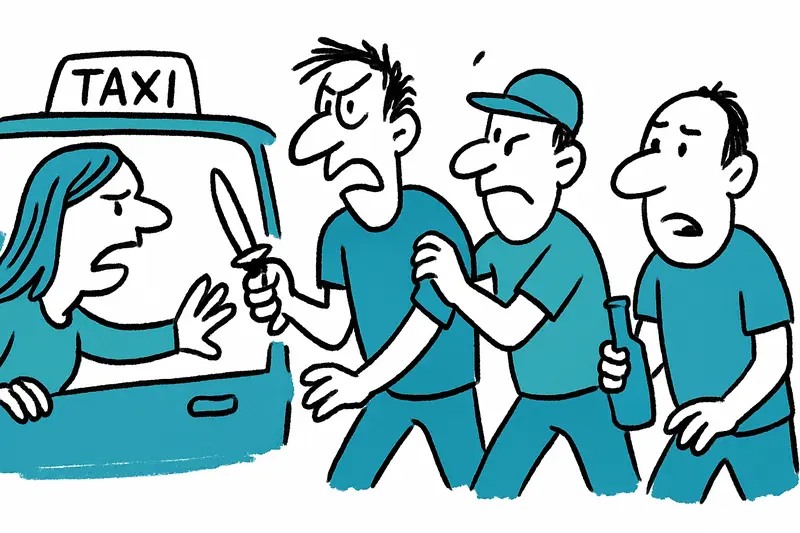
On Saturday morning, around 10:30 a.m., a routine taxi ride ended in a scuffle and a police operation: four heavily intoxicated tourists are said to have been drinking and smoking during the trip. When the driver asked them to get out, two initially refused and another suddenly attacked the woman. A passerby and several taxi drivers intervened; one of the attackers was pinned to the ground, another fled on foot. The Guardia Civil arrived with six officers; the police secured a knife, while a second is nowhere to be found. A resident filmed the scenes, which are now part of the investigation (similar public interventions have been recorded elsewhere, such as taxi drivers stopping a heavily intoxicated driver on Palma's Paseo Marítimo).
The bare facts are sparse but disturbing: violence against drivers, alcohol involved, a knife in a pocket – this is no longer a harmless party excess but a danger to human life. That colleagues and passersby had to step in to prevent something worse says a lot about the state of night and early shifts on the islands.
From everyday life: imagine the street – early sun, a garbage truck, the taxi dispatch radio crackling, a driver looking for calm after hours of shifts, and suddenly the loud clash of drunken guests. Neighbors stop, someone pulls out their phone, tour buses roll by, and the sirens are not yet audible. Such scenes repeat on other summer weekends—for example, a brawl at Playa de Palma—only not all are filmed.
Critical analysis: why does this happen? Alcohol alone does not explain it. It is the convergence of several problems: a group behaving inappropriately; a low perceived risk of facing consequences; and a routine in which taxi drivers often work alone and are poorly protected. In addition, carrying knives near party areas apparently is not an isolated case; recent checks in Eivissa revealed multiple taxi drivers under the influence. Police presence in this concrete case was sufficient to secure the situation – but the escalation had already occurred.
What is missing in the public discourse: there is a lot of talk about "drinking tourism", but rarely about concrete protection mechanisms for employees on duty, reporting channels that actually work, or technical and organizational precautions. Also underexposed is how hotels, bars and event organizers can and must respond to violence prevention. Outrage alone is useless if there are no practicable protection concepts; comparable incidents, such as a woman found waking up on a street near Santa Catalina, underline the stakes.
Concrete, actionable proposals:
1. Safety equipment for taxis: Panic buttons that alert the nearest control centre directly, as well as certified interior cameras that record in a legally secure way and are only reviewed in emergencies. These measures must be coordinated with data protection officers, but they are technically feasible.
2. Better networking: Taxi companies, control centres, hoteliers and club operators should agree on local alarm chains. If a taxi reports problems, hotels could check guest identities by phone and intervene—where legally possible.
3. Presence and prevention: Police patrols in the early morning hours at known drop-off points reduce the incentive to carry knives or form aggressive groups. Mobile prevention teams that are more visible during the summer months would act preventively.
4. Education and sanctions: Accommodation providers should enforce consistent bans and reports to authorities for serious violations (weapons, extreme violence). Multilingual tourist information—already at check-in—about what is criminal in Spain could prevent some escalations.
5. Support for drivers: Mandatory de-escalation training, compulsory insurance for violence incidents, and better shift organization so drivers do not have to work exhausted.
These proposals are not a panacea but are practical: panic-button systems can be implemented within weeks, training in a few months. Longer-term changes needed include modifications to licensing, more controls in nightlife districts, and a clear stance against carrying knives in party areas.
Conclusion: The quick help of passersby and fellow taxi drivers prevented worse that morning. That is good—and shameful at the same time. It cannot be the task of random witnesses alone to replace the state's monopoly on force. Authorities, the industry and hosts are obliged to organise safety so that people do not only realise how fragile it is in a scuffle. Those who work on Ibiza or receive guests should soberly ask in the morning: how do we prevent the next taxi ride from ending the same way?
Frequently asked questions
What is Mallorca’s climate like across the year?
What should I pack for a Mallorca trip?
Can you swim in Mallorca year-round?
What are must-do activities for a first visit to Mallorca?
What’s the best way to get around Mallorca without a car?
Is Palma de Mallorca a good base for exploring the island?
What local foods should I try in Mallorca?
What safety tips should I know for Mallorca’s beaches?
Similar News
Magaluf: Watchtower Alarm – Lifeguards Pull Unconscious Beachgoer from the Water
After a drama in the late afternoon, two lifeguards at Magaluf beach rescued an unconscious 44-year-old man. He was stab...

Turquoise in the City: How dangerous is the color play of the Sa Riera?
The Sa Riera in Palma suddenly turned turquoise — a pretty motif, but behind the effect lies a discharge of saline waste...

Jeckliner at Sunnesching: Cologne spirit sets sail from Palma
In September 2027 the Mein Schiff 2 briefly becomes a floating carnival stage: four days with Cologne bands, comedy and ...
Finally Home: Mike and Leyla Heiter Buy Villa with Sea View in Mallorca
The reality TV couple Mike and Leyla Heiter have bought a house in Mallorca with a roof terrace and sea view. An Instagr...
Arrest after series in Palma: Who protects apartments from repeat offenders?
The National Police arrested a man in Palma who investigators say may have broken into several apartments. In one incide...
More to explore
Discover more interesting content

Can Cap de Bou

Townhouse Lleo 72
