
Nighttime Fall in Biniaraix: What the Rescue Operation Reveals About Hiking Safety in the Tramuntana
Nighttime Fall in Biniaraix: What the Rescue Operation Reveals About Hiking Safety in the Tramuntana
A hiker fell in the Torrent de Biniaraix and was only discovered at daylight after placing an emergency call. Mountain rescue airlifted him to Son Espases hospital. What does the operation reveal about risks and prevention in the Tramuntana?
Nighttime Fall in Biniaraix: Helicopter Rescue Reveals Gaps in Mountain Safety
Key question: Why do harmless tours in the Tramuntana repeatedly end in nighttime rescue operations, and what is missing so that such situations do not arise in the first place?
The Incident
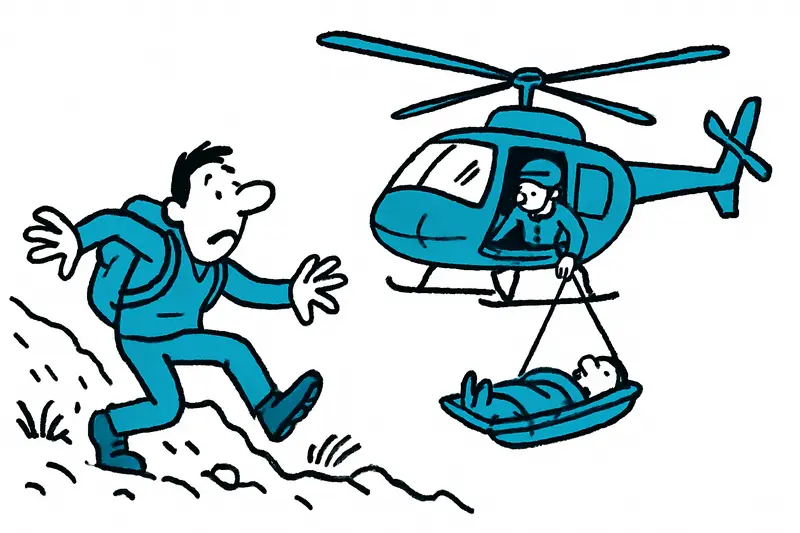
On the night to Sunday, a hiker fell in the area of the Torrent de Biniaraix. He managed to reach a small shelter but could not descend because of his injuries. He only placed an emergency call at daylight; mountain rescue airlifted him by helicopter to Son Espases hospital.
Critical Analysis
The picture is familiar: narrow paths made of old stone slabs, steep slopes, shadows, and at the end of the day a possible missed timetable. Similar nighttime incidents have occurred elsewhere in the Tramuntana, such as the Nighttime Misadventure in the Torrent de Mortitx: What the Mountain Rescuers' Operation Reveals. Those who travel late lose light, overview and often mobile reception. That the emergency call was only made at dawn points to two problems: first, the situation was not immediately recognized as life-threatening, or second, technical means to call for help earlier were lacking. Both scenarios show how quickly a harmless tour can turn into a stressful emergency.
Another point: deploying a helicopter is necessary in many cases but is expensive and weather-dependent. The Tramuntana demands resilience on both sides—hikers and rescue services; recent operations underline this, for example the Dramatic Helicopter Rescue at Puig Major: Lessons from an Afternoon in the Tramuntana, and seasonal data on missions and resources are summarised in 115 Rescue Missions, Hot Trails: Why Mallorca's Mountain Rescue Got Busier — and What Helps Now. We must not rely solely on a helicopter always being ready to fly.
What Is Often Missing in Public Debate
The dramatic images of the rescue are discussed, but prevention gets less attention. Advice at trailheads, clear signs at parking areas, increased information on the risks of night hiking and practical tips for navigation in poor conditions are lacking. The issue of mobile coverage in gorges like the Torrent de Biniaraix is also rarely discussed loudly—even though it determines the ability to call for help early.
Everyday Scene from Mallorca
Imagine Fornalutx in the early morning: the bleating of goats, the smell of damp stone and pine, the low winter sun turning the steps in the torrent golden. A local returns home earlier than a day tourist because he knows the pitfalls of the terrain. This local experience is missing for many occasional hikers.
Concrete Solutions
1. Visible information at parking lots and trailheads: clear notices about walking time, difficulty, water and mobile reception gaps.
2. Recommended compulsory equipment: headlamp, power bank, warm clothing, first-aid kit and sturdy footwear.
3. Digital support: promotion of offline maps, emergency apps and the option to register planned routes with a central service (voluntary but promoted).
4. Awareness campaigns in three languages during peak season: short, concise tips for tourists and seasonal workers.
5. Talks with network operators about targeted improvements to coverage at key points in the Tramuntana.
Conclusion
The man from Biniaraix was lucky: he was in a shelter and the rescue worked. Nevertheless, the incident is a wake-up call: more prevention, better information and a stronger link between local experience and visitors would make such nighttime operations less frequent. The mountains demand respect—a little preparation from all of us would spare some helicopter flights.
Frequently asked questions
Is it safe to hike the Tramuntana in Mallorca at night?
What should I pack for a hike in the Tramuntana in Mallorca?
Why do hikers get rescued at night in Mallorca's Tramuntana?
Is there mobile phone coverage in the Torrent de Biniaraix?
How difficult is the hike through the Torrent de Biniaraix in Mallorca?
What should I do if I get injured while hiking in Mallorca?
Can helicopter rescue always reach hikers in the Mallorca mountains?
Where can hikers get better safety information before walking in Mallorca's Tramuntana?
Similar News
Warning to Bathers: Nipping Fish in Cala Major and Other Coves — a Reality Check
In Cala Major and several beaches around Mallorca, bathers report painful “nips”. Who are the animals, why are they gett...
Rental Car Theft in El Arenal: What This Incident Reveals About Our Gaps
A teenager steals a running rental car in El Arenal, flees on foot, climbs over walls and is caught by the Guardia Civil...
Red Rope in Palma's Library: What Helps Against Selfie Tourism — and What's Missing
Palma's city library cordoned off an area with a red rope to keep selfie tourism away from reading and working activitie...
Fort San Carlos: Museum, Harbor Dispute — and a Conflict That Demands Answers
The military museum at Fort San Carlos sits right on Palma's harbor, with unexpectedly quiet rooms filled with cannons a...
Old Town Under Pressure: When a Doorway Becomes a Sleeping and Shower Place
For months a woman has been living with a parasol, a clothes rack and personal belongings next to the social welfare off...
More to explore
Discover more interesting content

Can Cap de Bou

Townhouse Lleo 72
