
Fatal accident on a finca in Montuïri: What we must learn from the death of a six-year-old
Fatal accident on a finca in Montuïri: What we must learn from the death of a six-year-old
At a family gathering in Son Comelles, a six-year-old boy was fatally injured while a car was reversing. Why do such accidents happen so easily on rural properties — and what needs to change?
Fatal accident on a finca in Montuïri: What we must learn from the death of a six-year-old
What happened?
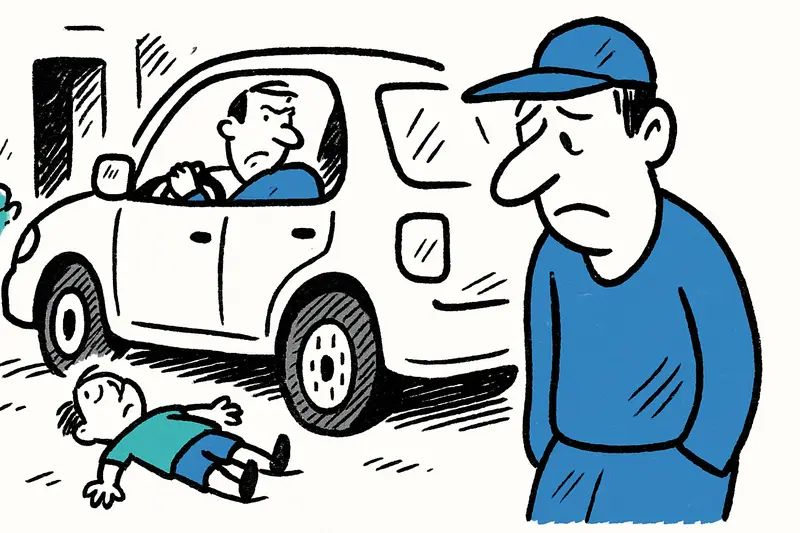
Late on Saturday afternoon in Son Comelles, a rural hamlet about six kilometres from the centre of Montuïri, a six-year-old boy was struck at the rear by a reversing vehicle during a family gathering and suffered fatal injuries. Multiple emergency services — the Guardia Civil, the local police, volunteer civil protection teams and the 061 emergency medical service — rushed to the scene. According to initial reports, the driver did not notice the child while reversing; responders tried for a long time to resuscitate the boy. The psychological emergency service supported relatives and guests. Similar emergency mobilisations were reported after the Nighttime collision at the border of Son Banya: One dead, several fleeing — questions remain.
Key question
How can a simple moment in front of a finca exit turn into a tragedy — and what responsibility do hosts, drivers and authorities have to prevent this from happening again?
Critical analysis
Such accidents are not isolated sensations but the result of a bundle of small failings: narrow driveways, cars parked on obscured rural tracks, children playing who are unaware of the danger, and drivers manoeuvring in a hurry or with restricted visibility. Fincas often lack a clear separation between parking and play areas. Many vehicles today are fitted with rearview cameras, but not all. The crucial factor here was that the child stood close to the rear of the vehicle and was overlooked by the driver — a moment when human factors and the environment combined with catastrophic results.
What is missing from public debate
The public discussion usually focuses on the emotional tragedy — rightly so — but a more sober conversation about concrete prevention is missing. Hardly anyone talks about "safety at private gatherings": How should one park safely on unpaved driveways? Who bears responsibility when a party takes place on private land? There is a lack of simple, widely shared guidance for hosts — not only at urban junctions but also for private rural events. That lack of guidance has surfaced in coverage such as the Tragedy in Coll d’en Rabassa: Child Killed on Sidewalk — Who Protects Our Pavements?.
An everyday scene from Mallorca
Imagine: an afternoon in March, the air still cool, the scent of freshly cut jasmine or citrus trees in the driveway, children running among the parked cars, adults unloading bags from the boot. On a narrow, pine-lined drive, vehicles are parked bumper to bumper. No one thinks about putting up a barrier; music plays softly, conversations about family plans drown out the sound of the television in the house. This is how most family gatherings start — and this is how dangerous moments arise.
Practical solutions
The answers are simple and practical, cost little but require organisation and discipline: 1) Before guests arrive, set basic traffic rules for the event: a clear parking plan, a cordoned-off play area for children or a person responsible for parking. 2) Improve visibility: rearview cameras, audible reversing sensors or mirrors at tight spots can save lives on uneven finca driveways. 3) Reduce speed: introduce a binding walking-speed limit on private tracks and make it visible with clear signage. 4) First aid and resuscitation: hosts and regular visitors should have basic first-aid knowledge; local courses organised by the municipality or clubs would be easy to implement. 5) Municipal guidance: councils could distribute leaflets to owners explaining safe parking and event practices for rural properties. These measures do not replace a police investigation, but they dramatically reduce the risk. The question of responsibility has been central in cases like the Fatal accident in Alcúdia: Who is responsible — and what needs to change?.
Concise conclusion
This accident reminds us that avoidable dangers lurk in familiar surroundings. Grief and sympathy must go hand in hand with the determination to change everyday practices so that children no longer disappear in the shadow of a parked car. Hosts, drivers and municipalities share a responsibility — not only morally but practically: a bit of planning, a few signs, a cordoned play area. It costs little time, but it can save lives.
Frequently asked questions
What should families do to keep children safe around cars at a Mallorca finca gathering?
How can drivers avoid accidents when reversing on a narrow driveway in Mallorca?
What is the safest way to organise parking at a private event on a Mallorca finca?
Why are rural finca driveways in Mallorca especially risky for children?
What can hosts do to make a Mallorca family gathering safer?
Is first aid training useful for people hosting events on Mallorca fincas?
What role do Mallorca municipalities have in preventing accidents on private rural properties?
What lessons can be learned from the Montuïri finca accident?
Similar News
Magaluf: Watchtower Alarm – Lifeguards Pull Unconscious Beachgoer from the Water
After a drama in the late afternoon, two lifeguards at Magaluf beach rescued an unconscious 44-year-old man. He was stab...
Turquoise in the City: How dangerous is the color play of the Sa Riera?
The Sa Riera in Palma suddenly turned turquoise — a pretty motif, but behind the effect lies a discharge of saline waste...

Jeckliner at Sunnesching: Cologne spirit sets sail from Palma
In September 2027 the Mein Schiff 2 briefly becomes a floating carnival stage: four days with Cologne bands, comedy and ...
Finally Home: Mike and Leyla Heiter Buy Villa with Sea View in Mallorca
The reality TV couple Mike and Leyla Heiter have bought a house in Mallorca with a roof terrace and sea view. An Instagr...
Arrest after series in Palma: Who protects apartments from repeat offenders?
The National Police arrested a man in Palma who investigators say may have broken into several apartments. In one incide...
More to explore
Discover more interesting content

Can Cap de Bou

Townhouse Lleo 72
