
Fewer German Guests in Summer — a Reality Check for Mallorca
Fewer German Guests in Summer — a Reality Check for Mallorca
In July nearly 598,000 guests from Germany arrived in the Balearics, 4.06 percent fewer than the previous year. What does that mean for Mallorca — alarm or a reason to change course?
Fewer German Guests in Summer — a Reality Check for Mallorca
Key question: Does the decline in German guests in July represent a structural turning point for Mallorca — or is it just a summer outlier that can be fixed with some pragmatism?
The hard numbers are on the table: In July around 597,889 people resident in Germany traveled to the Balearics, which is 4.06 percent fewer than in July of the previous year. For the year to date, the German market is roughly 1.5 percent below last year. Yet German visitors are spending noticeably more: in July their expenditures amounted to about €4.15 billion, an increase of roughly 8.3 percent; average daily spending rose to about €259 — clearly above the Spanish average of €218.
In short: slightly fewer heads are coming, but they are digging deeper into their pockets. On Mallorca itself July saw just under 1.98 million visitors, slightly below the previous year. Overall, the Balearic Islands on the Rise – More Visitors, Fewer Germans: How Mallorca Can Manage the Transition developed positively in the first seven months: 11.19 million tourists represent an increase of around 1.77 percent compared with the same period last year.
Critical analysis: Why are German bookings weakening?
Everyday conversations with hoteliers, taxi drivers on the Passeig Marítim and the kiosk owner on Playa de Palma paint a picture made of several building blocks. German guests tend to book more short-notice than before; flight capacity and prices remain volatile; competition from other destinations is strong, and early-summer weather quirks create uncertainty — a debate captured by When the Germans Stay Away: Opportunity or Risk for Mallorca?. Hoteliers report good May and June months, with declines concentrated in high summer.
What is missing from the public discourse?
People often talk about percentages and totals, but rarely about the composition of demand: Are the missing guests families, couples, retirees or independent travelers? How are shortened stays distributed across the islands? And: what role do flight connections from secondary German airports play? Without finer data, planning is groping in the fog.
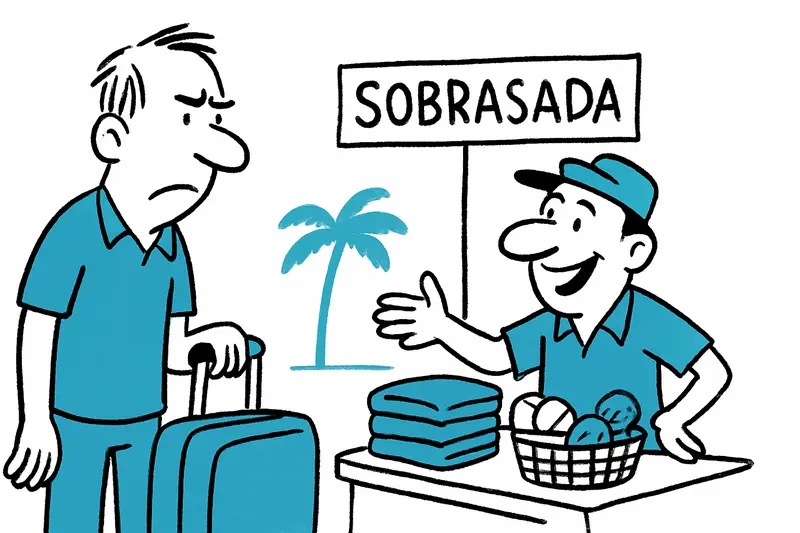
A scene from Palma: On a hot morning on Avinguda de Gabriel Roca a shuttle from Son Sant Joan airport pulls up, suitcase wheels squeak, vendors hawk sobrasada and damp beach towels. Snippets of conversation: "We booked three weeks spontaneously," "The flights were more expensive than last year" — such small things add up to booking losses, a pattern also visible in summer reporting like Mallorca in August: Fewer Regular Visitors, but the Cash Registers Are Ringing.
Concrete solutions
1) Better data foundation: Hoteliers, airports and regional tourism offices need a shared dashboard on origin groups, length of stay and booking windows. Forecasts will become more reliable this way.
2) Differentiate target groups: If fewer spontaneous travelers arrive, it makes sense to promote family packages and longer stays, and to develop premium experiences for the higher daily spenders (local wineries, private boat charters, tailored guided tours).
3) Aggressive late-summer promotion: September and October are both an opportunity and a buffer for Mallorca. Price-attractive package offers linked to events (gastronomy weeks, cycling races, cultural festivals) can compensate for gaps in high summer.
4) Secure flight connections: Engage regional airline partners deliberately, agree flexible contingents and optimize last-minute tools for travelers. Short-notice bookers need confidence in price stability and availability.
5) Pricing strategy and quality: Dynamic pricing and greater transparency on additional costs prevent unpleasant surprises for guests who decide at short notice. At the same time service quality must keep pace; fewer guests, but higher expectations.
6) Extend the season: Investments in year-round offerings — conferences, health tourism, culture — make Mallorca less dependent on the July–August rhythm.
Conclusion: No panic, but a change of course
The numbers do not show a disaster: Mallorca remains in demand, spending is rising, and tourism grew from January to July. But the pattern is clear: booking behavior is changing. Those who ignore it will lose ground. Concretely this means: data-driven planning, focused offers for the higher-spending target groups, and better coordination between flight availability and hotel occupancy. On the street, between suitcases and street music, the change is noticeable. Mallorca is not in intensive care — but the doctors should act now before a summer trend becomes a structural problem.
Frequently asked questions
What is the best time to visit Mallorca for good weather and manageable crowds?
Can I swim safely in Mallorca, and which beaches are good for swimming?
What should I pack for a Mallorca trip?
How easy is it to get around Mallorca without a car?
Is Mallorca family-friendly and what activities suit kids?
What should I know about weather and sea conditions in Mallorca?
What local foods should I try in Mallorca?
Which places in Mallorca are worth visiting for a first-time trip?
Similar News
Why Mallorca Has Become So Terribly Expensive — A Reality Check
Rents are exploding, staple food prices are rising, wages are lagging behind. A look at the causes, what is missing from...
When Paradise Becomes Unaffordable
Hotel rooms, paella and the weekly grocery shop: Mallorca is becoming more expensive for many. Who pays the bill — guest...

End at Ballermann: What Is Lost with the Dino Mini Golf at Playa de Palma
On October 25 the dinosaur mini-golf course at Playa de Palma will close after more than 30 years. Why the city is recla...

Expensive Address Calvià: What Does First Place Mean for Mallorca?
The National Institute of Statistics (INE) ranks Calvià as Spain’s most expensive municipality for property purchases. W...
Emergency over Spain: Ryanair Dublin–Tenerife flight diverted to Santiago after medical emergency
A Ryanair flight from Dublin to Tenerife was diverted to Santiago de Compostela due to a passenger's acute health proble...
More to explore
Discover more interesting content

Can Cap de Bou

Townhouse Lleo 72
