
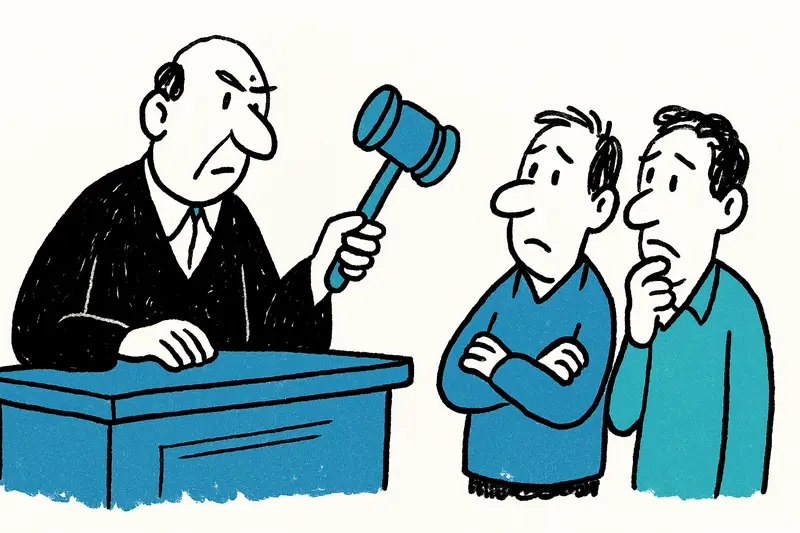
Final verdict in the airport motorway death: What does it mean for Mallorca?
Final verdict in the airport motorway death: What does it mean for Mallorca?
The Supreme Court confirms prison sentences for two men in the case of a German tourist killed on the airport motorway in 2021. A look at responsibility, prevention and what is missing from the public debate.
Final verdict in the airport motorway death: What does it mean for Mallorca?
Key question: Is the confirmation of the prison sentences enough to put the events into context — and will it make Mallorca safer in the future?
Spain's Supreme Court has upheld the convictions in a case that moved many people on the island in 2021: the victim was a German tourist who was pushed out of a small van and died on the airport motorway. The judges upheld the prison terms: the driver received twelve years, the passenger fifteen years. No further appeal is possible.
Those are the clear facts. What can be told succinctly in sober terms leaves an uneasy feeling on the streets around Palma — in the early morning when the first delivery vans are on the road and taxis return from the airport, as recent reporting on Third traffic death in a few days: Do Palma's night streets need to be safer? shows.
Critical analysis: The ruling places criminal responsibility on individuals. The driver was judged to have been in a position to recognize that the apparently drunk man would be in mortal danger if left on the motorway. The passenger was held more accountable for the direct act of violence. With that, the criminal classification is closed. But the conviction does not answer deeper questions: Why do nightly altercations so often end fatally? What roles do alcohol, drivers' working conditions or a lack of protective measures for tourists play, as explored in Alcúdia: Who Was Really at the Wheel? A Reality Check on Alcohol, Responsibility and Investigations?
What is missing from public discourse: Much of the debate revolves around guilt and punishment. Little is said about preventive measures. There is a lack of an honest assessment of night traffic, monitoring of delivery trips, access for heavily intoxicated people and clear protocols for drivers confronted with drunk passengers. Equally neglected is the psychological support for the bereaved and witnesses who have to experience such events.
A small everyday scene: At a bus stop in Son Gotleu on a February morning two women share a thermos of coffee. They speak quietly about the cases they've heard on the radio. A delivery van drives past and the driver casts a brief glance in the rearview mirror. Such glances are commonplace. They show how close routine and potential danger can be.
Concrete solutions that should be put on the table now: First, training and behavioral rules for professional drivers and van rental companies — how to deal with obviously intoxicated passengers without putting them in danger. Second, improved emergency and assistance options at key points near the airport: well-lit stopping areas, reachable rest zones or coordinated taxi/ride-share programs during night hours. Third, cooperation between authorities, tourist services and rental companies so that affected people are not left alone. Fourth, information campaigns in multiple languages that explain how to behave safely after an argument or when alcohol is involved.
Political and administrative questions remain: Are controls and information campaigns enough? Or are legal requirements needed for passenger transport at night, clear duties for drivers and better coordination with emergency services? Concerns raised by cases such as Head-on Crash near Manacor: Two Dead, Questions Remain underline the same doubts. The courts have set the criminal framework; practice must now follow so that a similar tragedy does not happen again.
Punchy conclusion: The clear, final verdict provides legal certainty and signals that the violent act of abandoning a person has consequences. But it is not a cure-all for the circumstances that lead to such acts. Punishment answers the question of guilt. Prevention, better infrastructure and clear rules of conduct answer the question of how we can interact more safely on the island in the future.
Frequently asked questions
What did the final ruling in the Mallorca airport motorway case decide?
Does a court ruling like this make Mallorca safer?
What safety problems come up around the airport motorway in Mallorca at night?
What should professional drivers in Mallorca do if a passenger is drunk or aggressive?
Why is alcohol such a concern in night-time incidents in Mallorca?
Are there plans for better emergency support near Palma airport?
What is the importance of the airport motorway in Mallorca?
How can Mallorca prevent similar tragedies in the future?
Similar News

More water than last year: Mallorca's reservoirs breathe easier
September rain refilled the Tramuntana's reserves: overall fill around 35 percent, Cúber at 40.42 percent, Gorg Blau at ...
Three Luxury Hotels in Banyalbufar: Lots of Money, Many Questions
A Danish investor plans three exclusive accommodations in Banyalbufar — including the historic Son Valentí. The announce...
2.1 tonnes of cocaine on sailing yacht off Spain's coast – a reality check for the coastguard
A 14-metre yacht was seized with 2.1 tonnes of cocaine. Who monitors the ports, how does the international hunt succeed ...

Heat Bonus in Mallorca: 100 Euros Extra for Outdoor Staff at MarSenses
MarSenses pays employees who worked outdoors in August an extra €100 as recognition. Lighter uniforms, reduced hours for...
Renovating in Mallorca: What You Really Can Do Without Neighbour Consent
Many think they can do whatever they want in their apartment. That's partly true — but only as long as structural elemen...
More to explore
Discover more interesting content

Can Cap de Bou

Townhouse Lleo 72
