
First Harry, now Ingrid: Why Mallorca’s winter storm is more than wet streets
First Harry, now Ingrid: Why Mallorca’s winter storm is more than wet streets
Storms Harry and Ingrid bring wind, surge and soon snow. A reality check: how prepared is the island—from promenades to small fishing coves? Concrete questions, concrete steps.
First Harry, now Ingrid: Why Mallorca’s winter storm is more than wet streets
A reality check between the promenade, fishing boats and the school run
Key question: Are our coasts, roads and people really prepared for storm consequences like those from 'Harry' and the approaching low 'Ingrid'—or do many problems only become visible once water is already in the courtyard?
The AEMET map currently shows yellow warnings for coastal areas and strengthening winds that can bring locally strong gusts. The forecast that has been hanging over our island for days is clear: after the push left at the coasts by 'Harry', a second phase comes with 'Ingrid', bringing wind, rain and even snow at higher elevations over the weekend. Forecasts expect gusts around 60 km/h and waves that can locally reach three meters. These numbers are not an abstract meteorology problem; they are directly felt on the promenade. For further context see Severe weather on Mallorca: When it really becomes critical — and what's still missing.
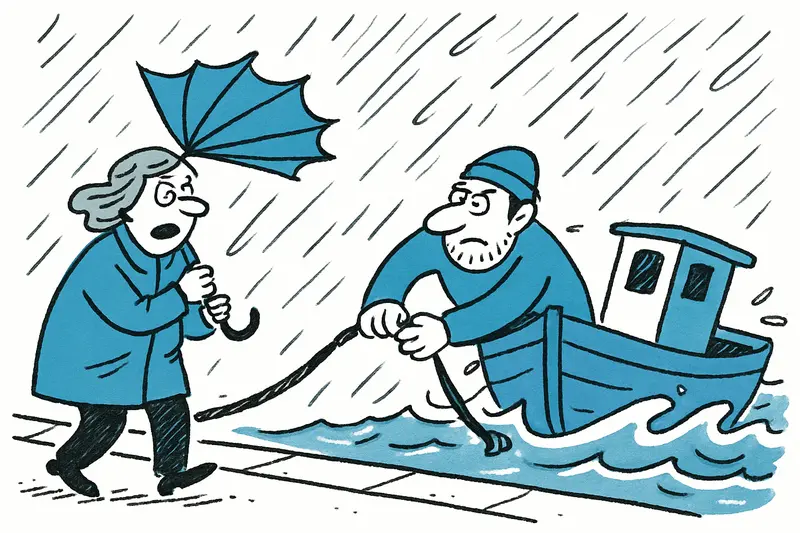
I walked early in the morning along the Passeig Marítim; awnings are rattling, lines clink in the harbor, and a group of anglers at the Molot des Portixol are loudly debating how best to secure their boats. The mood is cautious, not panicked. But if you think further—about the beach bars whose terraces are being taken down, older people carrying their shopping bags home alone, small businesses on the coast—then it becomes clear: weather events like this hit very different people very unequally.
Critical analysis: much of what is in warnings reaches citizens delayed or in fragments. AEMET provides the base data, the municipality puts up signs and closes promenades, but often there is a lack of seamless coordination between harbor operators, fire brigade, road maintenance and neighborhood organizations. Gaps form: a flooded parking lot, a clogged gutter in a side street, a yacht that slips from its mooring line. These in-between spaces are what allow small damages to grow into big problems.
What often gets too little attention in public discourse I heard repeatedly during the walk: who cleans the dunes after the storm? What about renewing groynes and beach nourishment on vulnerable beaches? And: which insurances cover the small bars and apartments that suffer damage from storm surges? Communication also plays a role: not all residents follow official channels; many rely on neighborhood chats or local shopkeepers. These informal networks are valuable but are rarely officially integrated. Similar concerns were raised in Storm, Rain, Maybe Snow: How Well Is Mallorca Prepared for the November Low?.
Concrete solutions: 1) Strengthen early-warning pathways: municipalities should maintain local contact lists of harbor operators, landlords and shop owners to inform quickly via SMS/WhatsApp. 2) Drainage checks before winter: targeted inspections of street drains and manhole covers at known flood spots save follow-up costs. 3) Temporary protective measures: keep mobile barriers for access roads to maritime businesses and sandbags at critical points. 4) Dune and coastal protection plan: coordinate multi-year beach nourishment programs rather than acting ad hoc. 5) Social check-ins: pay special attention to older and single residents on days with warnings; activate neighborhood networks. 6) Public information campaign about insurance and aid routes so small businesses know where to turn.
An everyday example: in Cala Ratjada the harbor authority introduced a small leaflet after past storm events that is distributed at the fishing harbors. It lists phone numbers for the municipality, the fire brigade and the local boat association. Such simple routines—a printed contact list hanging on refrigerators—help more than ten on-screen alerts when the wind is howling and the internet goes out. A comparable community response is described in New Storm Front on Mallorca: How Prepared Are the Island and Its People?.
Financially, you should not only think of large coastal protection projects. Often small investments make the difference: regular cleaning of street drains, a few extra storage places for terrace furniture, targeted securing of commercial goods on ground floors. Planning tied to the tourist season should also take the now visible patterns into account: some places are repeatedly affected and should be prioritized. Past incidents of flooded streets and mudslides show how quickly small oversights become costly, as reported in After the Thunderstorm: Flooded Streets, Mudslides and the Big Question About Mallorca's Preparedness.
On a political level there is sometimes a lack of urgency: winter storms are often dismissed as one-off outliers. The bill for that is paid by residents, businesses and municipal budgets. A sensible approach would be an annual joint "Storm Check" between the island government, municipalities and the affected sectors, held before autumn and winter.
To conclude with a pointed summary: warnings like those from AEMET are necessary and correct, but they are only the starting point. If we do not close the small gaps between waves, manhole covers and neighborhoods, Mallorca will remain vulnerable—not because the weather surprises us, but because we react too slowly. The question is not only how severe 'Ingrid' will be, but how quickly we learn from experience.
If you drive this morning along the Passeig La Rambla or the small road to Platja de Palma: take time, secure your bicycle, listen to the creak of the boats—and ask yourself briefly whether your surroundings are ready. The next severe weather event will certainly come, and it will not ask for a ticket at the cash desk.
Frequently asked questions
What should I expect from a winter storm in Mallorca?
Is it safe to go to the beach or promenade in Mallorca during strong wind?
What should I pack for a Mallorca trip in stormy winter weather?
Can Mallorca roads flood during heavy rain and wind?
Is it normal to see rough seas and three-meter waves in Mallorca in winter?
What happens in Palma’s Passeig Marítim when a storm hits Mallorca?
Why are fishing boats and harbors in Mallorca so vulnerable in bad weather?
How can Mallorca communities prepare better for winter storms?
Similar News
Car on MA-13 near Inca in flames – a safety check for the island
A vehicle caught fire on the MA-13 towards Alcúdia on Tuesday afternoon. The driver was uninjured, the car was destroyed...

Real Estate in Mallorca: Fewer Buyers, Higher Prices — What's Behind It?
Sales on Mallorca are falling, yet prices continue to climb. Why fewer transactions do not equal relief — and what shoul...
Just Bought — Already Trouble: Water Damage in the Heiters' Villa and What Owners in Mallorca Should Know Now
A newly purchased sea-view property — and within days a water damage. What risks lurk in new properties in Mallorca, and...
Rich, Richer, Mallorca? A critical look at the growing super-rich bubble
Numbers: Around 3,600 millionaires in the Balearic Islands hold a combined €27.6 billion. What this concentration of wea...
Chain reaction on the MA-1: Eight injured in rear-end collision near Portopí
On Tuesday morning there was a crash at the Andratx exit to the MA-1 towards Palma: a rear-end collision between a car a...
More to explore
Discover more interesting content

Can Cap de Bou

Townhouse Lleo 72
