
Short-term Free Apartments for the Guardia Civil in Palma: Solution or Band-Aid?
Short-term Free Apartments for the Guardia Civil in Palma: Solution or Band-Aid?
The Island Council is providing 21 furnished units in the Hermanitas de los Pobres on General Riera until the end of September. A quick relief — but how lasting is it?
Short-term Free Apartments for the Guardia Civil in Palma: Solution or Band-Aid?
On a morning on General Riera, when the garbage trucks rumble and the espresso across the street is already steaming at eight, the Hermanitas de los Pobres building seems almost too quiet for the news that is circulating: the Island Council has released rooms in the former nursing home for on-duty members of the Guardia Civil. In total, 21 fully equipped apartments are available — with bathroom, kitchen, bedroom and sometimes living room — enough, the calculation goes, for up to 42 officers in double occupancy. The temporary use is valid until September 30.
Key question: Is this transitional solution enough to sustainably ease the staffing problems of the island police — or does it merely cover up a more pressing structural issue?
Short and clear: The measure is useful because it cushions an immediate need. Anyone who has waited weeks for job postings or looked for affordable housing in Palma knows the hurdles: a tight housing market on the Balearic Islands, high prices, long distances between home and workplace. That the Island Council and professional associations come together and provide housing at short notice is pragmatic. Everyday life around General Riera makes this visible: officers could walk to nearby stations instead of enduring long commutes to the mountains or the coast.
The downside: This is a temporary, targeted solution. There is time until the end of September — then it's over unless extended. Without a clear perspective on permanent housing options for operational staff, the problem is likely to return. The fact that more than 1,000 officers began service on the island between 2021 and 2025 shows the need. Short-term occupancy of 21 apartments only covers a handful: 42 people in total are a drop in the ocean.
Important points that are often left out of public debate: First, the question of costs and responsibilities. Who pays continuously — the Island Council, associations, the state treasury, the municipality? Second, social integration: How will the deployed forces be integrated into the neighborhood, what will contact look like with the people who previously cared for the home? Third, the long-term strategy. Are such emergency aids part of a larger plan for permanent housing or merely a seasonal band-aid against staff shortages?
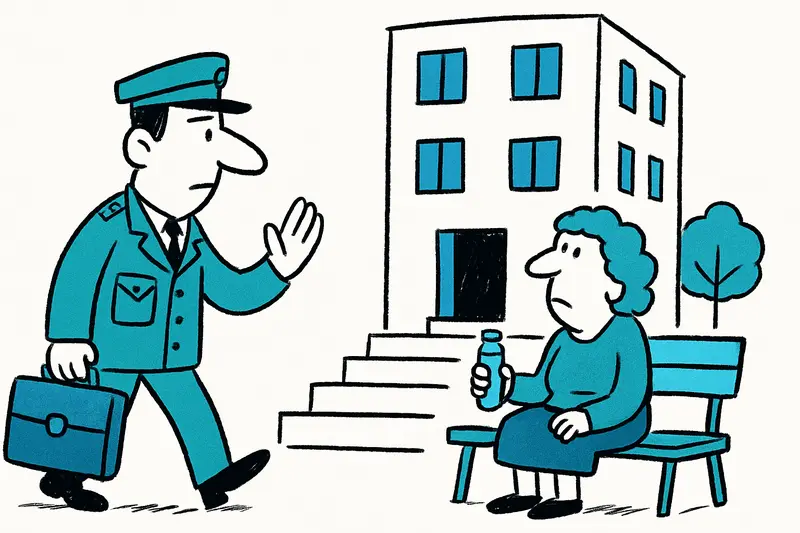
A small everyday scene: In the afternoon a volunteer helper sits on the bench in front of the gate, a bottle of water in her hand, looking at the street where a delivery van stops. A young Guardia Civil officer goes up the stairs, carrying a briefcase, nods curtly — sensitivities that develop quickly when people live and work in tight quarters. Such scenes show that more is needed than a roof over one's head: clear rules for use, mutual consideration and a perspective for longer-term neighborhood planning.
Concrete solutions that now seem sensible:
1. Transitional solution with a roadmap: The use of the Hermanitas apartments should be tied to a clear roadmap: by when will more permanent alternatives be available, which financial resources flow where, and which authorities are responsible? An extension of the deadline alone is no substitute for planning.
2. Short-term mix of measures: A combination of temporary accommodation (as now), rental subsidies for new employees and cooperation with hotels used as temporary housing in Mallorca in less busy months. This reduces pressure on the housing market.
3. Investment in staff housing projects: Public support for projects that specifically create housing for operational staff (cooperative models, trust funds, conversion of vacant buildings — potentially supported by government-funded renovations for rental housing in Mallorca). Mallorca has many buildings with potential — what is often missing is the impetus.
4. Improved mobility instead of mere site-binding: Managed commuting offers, bike-sharing at stations, discounted monthly tickets for bus and tram — this makes more distant, cheaper housing attractive and relieves the core cities.
5. Transparent communication: Cities and the island administration should disclose what agreements, costs and durations apply. Only in this way can trust in the measure be built and local acceptance achieved.
Conclusion: The apartments released on General Riera are a pragmatic first aid — useful, quickly implementable and locally rooted. But they are not a solution to the fundamental problem: affordable, planned housing for the people who guarantee our security. Anyone standing on the corner of General Riera in the morning watching the traffic sees not just a building with windows — they see an opportunity that must be used now to turn a short-term band-aid into a sustainable route.
Frequently asked questions
What’s happening with the short-term free apartments for the Guardia Civil in Palma?
How long will the temporary housing last and can it be extended?
Is this temporary accommodation enough to ease staffing shortages in Mallorca?
Who pays for these temporary apartments and who is responsible?
How will the officers be integrated into the neighborhood around General Riera?
What long-term housing options are suggested for Palma's operational staff?
What mobility measures could help reduce housing pressures in Mallorca?
What daily life impact do housing constraints have on Guardia Civil in Palma?
Similar News
Cafetería San Siro: A Meeting Place on Schinken Street Since 1966
In the middle of Schinken Street, Cafetería San Siro has been offering Mallorcan hospitality for more than six decades —...

From Ballermann to Prison: What the Verdict Against the Femina Operator Means for Palma
The Munich Regional Court convicted a German operator for subsidy fraud. What does the verdict mean for the Femina Club,...

Underpass Verge de Lluc: 19-year-old fights her way out of flooded car – a warning sign for Palma
A 19-year-old recently escaped swimming from her car after the Verge de Lluc underpass held up to one and a half meters ...

When the Floodgates Open Again: Why Palma's Floods Aren't a Coincidence
A sudden heavy downpour around 5 p.m. brought Palma to a standstill: flooded streets, full basements, panicked commuters...
Playa de Palma: Life-saving at Balneario 11 – Lifeguards Act Quickly
A German holidaymaker suffered cardiac arrest at Playa de Palma. Lifeguards resuscitated her on the beach; emergency ser...
More to explore
Discover more interesting content

Can Cap de Bou

Townhouse Lleo 72
