
Free Public Transport 2025: More People, Fewer Engines — and a Bit of Sunday Calm on Our Streets
Free Public Transport 2025: More People, Fewer Engines — and a Bit of Sunday Calm on Our Streets
The free local transport in 2025 was a surprise success: over 41 million rides, three quarters by residents. Why this is more than a number for Mallorca — and how it changes our everyday life.
Free Public Transport 2025: More People, Fewer Engines — and a Bit of Sunday Calm on Our Streets
Over 41 million rides, mainly locals used the buses — a look at the next steps
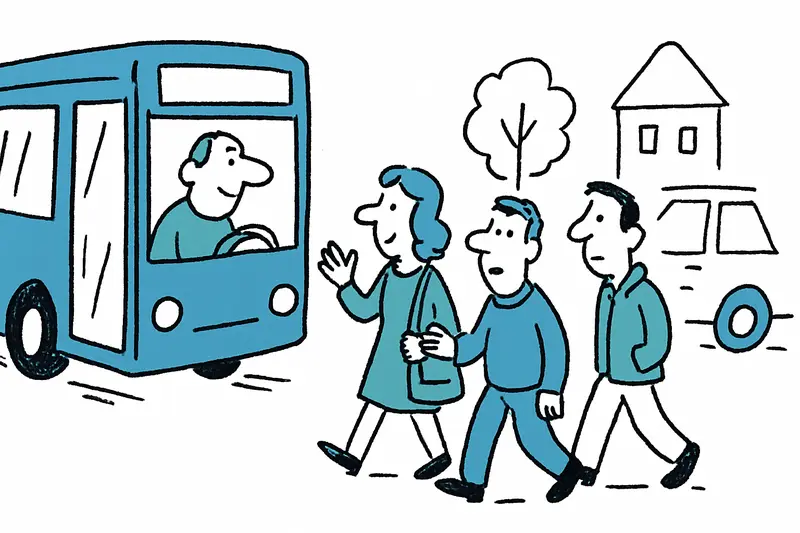
In the early morning, when the tram at Plaça Espanya slowly pulls in and the scent of freshly baked ensaimada drifts through the air, one thing stands out: the seats are emptier less often. In 2025 people on Mallorca used public transport more often than ever — passengers boarded buses, metro or trains more than 41 million times. Three out of four rides came from residents; they continue to benefit from Free Public Transport in Mallorca 2026: Relief — Will the Money Be Enough?.
Especially popular are the intercity connections of the TIB; One Ticket for Everything: Can Mallorca's New Fare Really Simplify Everyday Life? Anyone waiting at the stop in Manacor or at a station on the line towards Sóller knows the feeling: punctual departures, more frequent services and the reassuring sound of a bus engine starting without traffic jams. That makes switching from car to public transport easier — especially on routes where parking is scarce and the waterfront promenade is already full of pedestrians in the morning.
The bare numbers sound good, but they also say a lot about behaviour on the island. That three quarters of passengers are residents shows: the measure is more than a tourist gimmick. It has changed everyday life. Families, commuters, pensioners — many have rediscovered the bus. On the journey you hear Mallorcan conversations, the clatter of shopping trolleys and sometimes the laughter of children on their way to school. This is no longer an abstract mobility experiment, but a piece of familiar island life.
For the island administration and transport planners this means success, but also work. More passengers demand more capacity, denser timetables at peak times and better connections between city and regional lines. It's not enough to set fares to zero; for people to permanently give up the car, journeys must be fast, reliable and comfortable. Improved bus lanes, additional vehicles on heavily used routes and clearer timetables at hubs are the obvious next steps.
Another point is comfort at hubs. Places like the Estació Intermodal in Palma or the stops along the Paseo Marítimo are not just transfer points — they are small living rooms of mobility. More seating, covered areas, informative passenger services and clean toilets — that makes a difference when deciding between car and bus.
What this means for Mallorca can be summed up in two keywords: quality of life and relief from strain. Fewer cars means less noise in the old town, fewer emissions along the coastal road, less parking stress at shopping centres. And it means streets that once again belong to pedestrians and cyclists — families heading to the weekly market instead of lines of honking metal.
The success of 2025 can also be an invitation: to new habits, to joint solutions. Anyone who has once enjoyed a quiet ride from Alcúdia to Palma, without traffic jams and without searching for a parking space, will tell that story. That is contagious. The challenge now is to make this experience reliable — not only on good days, but every day.
Applause alone would not be enough. The responsibility lies with politicians and transport companies Free buses in Palma: Who pays when the coffers close?, but also with neighbourhoods, commuters, employers and shop owners. Small changes make an impact: flexible working hours, targeted information about alternative routes, bicycle parking at stops. If these elements work together, traffic on Mallorca can be sustainably reshaped — for the benefit of the people who live here.
In the end a comforting image remains: an island where you feel the sea breeze when boarding, not the exhaust. 41 million rides are not an end in themselves — they are evidence that a mobility transition is possible in small steps. And anyone waiting for the bus on the Passeig Marítim in the morning notices it immediately: Mallorca sounds a little quieter and feels a bit more relaxed.
Frequently asked questions
Is public transport in Mallorca still free in 2025?
Why are more people using buses and trains in Mallorca now?
How crowded is public transport in Mallorca during busy times?
What improvements does Mallorca’s public transport still need?
What is it like to travel through Palma’s Estació Intermodal?
Does free public transport make Mallorca quieter and less car-dependent?
Is public transport in Mallorca a good option for commuters and families?
What should I know before using Mallorca’s TIB buses?
Similar News

Released with Conditions: The Plus Ultra Suspicion and a Mallorcan Finca as Residence
A Dutch entrepreneur, sought in connection with the Plus Ultra case, was extradited to Spain after his arrest in Germany...

Haute Nuit in Puerto Portals: Fashion, Art and Indulgence by the Water
On October 2 the Lobster Club in Puerto Portals will be transformed into a stage for curated fashion, art and culinary e...

Magaluf: Watchtower Alarm – Lifeguards Pull Unconscious Beachgoer from the Water
After a drama in the late afternoon, two lifeguards at Magaluf beach rescued an unconscious 44-year-old man. He was stab...

Turquoise in the City: How dangerous is the color play of the Sa Riera?
The Sa Riera in Palma suddenly turned turquoise — a pretty motif, but behind the effect lies a discharge of saline waste...

Jeckliner at Sunnesching: Cologne spirit sets sail from Palma
In September 2027 the Mein Schiff 2 briefly becomes a floating carnival stage: four days with Cologne bands, comedy and ...
More to explore
Discover more interesting content

Can Cap de Bou

Townhouse Lleo 72
