
Frontal collision in the Tramuntana: Who protects residents and spectators from risky driving maneuvers?
Frontal collision in the Tramuntana: Who protects residents and spectators from risky driving maneuvers?
Near Fornalutx two motorcycles collided head-on. Shortly before the hill climb race, fans had gathered along the route. One clear question remains: Who is responsible for safety on site?
Frontal collision in the Tramuntana: Who protects residents and spectators from risky driving maneuvers?
Key question: How can the winding roads around Soller be made safer when motorsport fans and speeding vehicles stand close together?
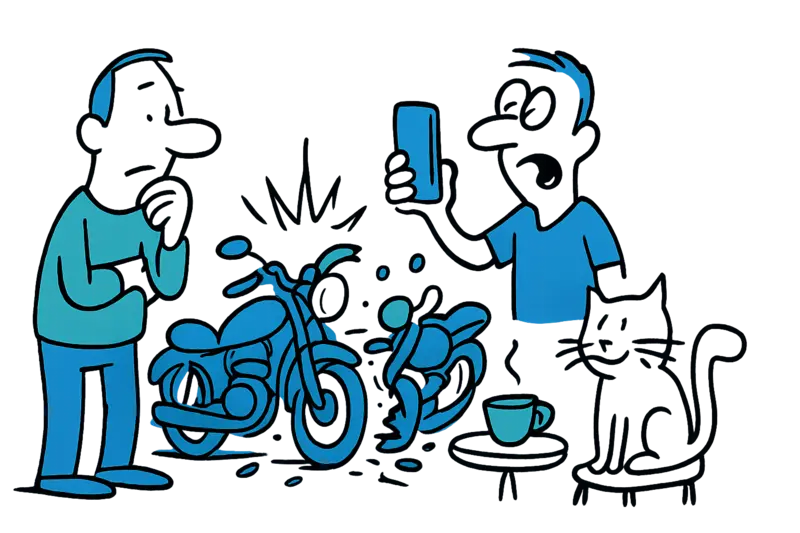
Late on Friday evening there was a serious accident on the connecting road from Soller towards Fornalutx: Two motorcycles apparently collided head-on at high speed, and a resident filmed the scene. According to initial information both riders are said to have avoided serious injuries, but the image remains upsetting: burned-out headlights, motorcycle parts on the asphalt, excited voices at the roadside.
Just a few hours earlier many supporters of the traditional hill climb Pujada al Puig Major in the Serra de Tramuntana had already gathered. Anyone who has ever been on the route on such an evening knows the pattern: cars and bikes park and block steeply banked corners, groups talk loudly, engines roar, lights flash. For many residents this results in sleeplessness, litter and the feeling that things are getting out of control.
Critical analysis: Where it fails
A conversation with a resident who called the Guardia Civil that evening revealed a practical difficulty: responsibilities are being passed around. He was told that the mayors are responsible for additional controls. Hours later a crash still occurred. This is not an isolated case: similar incidents, for example the Head-on Crash on the Ma-11: Three Injured — and the Uncomfortable Question of Greater Safety, show how quickly a few seconds of inattention or a risky overtaking maneuver can lead to a hospital visit.
From the authorities there is often a lack of visible, immediately effective presence. For the Guardia Civil the mountain roads of the Tramuntana are everyday life, but capacities are limited. Municipalities have less staff for night operations and must set priorities. In public debate these practical limits rarely appear in their full breadth; instead people are polarized into “fans” and “troublemakers”.
What is missing in the public discourse
1. An honest debate about responsibility: Who decides on temporary closures, traffic diversions or increased controls on race weekends? The procedure remains nebulous to many residents.
2. Clear rules for spectator areas: Where may people stand, take photos or park safely without encroaching on the roadway?
3. Rapid communication: When residents ask for support, it must be clear who acts – the municipality, the Guardia Civil or the organizer.
An everyday scene from the Tramuntana
In front of a Fornalutx resident's house there is still a half-full cup of café con leche, the cat winds around the chairs, and in the distance the rattling of motorcycle mirrors still echoes. This is what the morning after an evening looks like when motorsport enthusiasts have turned the road into a temporary grandstand. For the people there it is not just an exciting event, but often a burden for weeks.
Concrete solutions
1. Clear assignment of responsibilities: Before race weekends, municipality, Guardia Civil and organizers should bindingly determine who will take which controls and how quickly reinforcements can be requested.
2. Temporary traffic concepts: Road closures for certain sections during sensitive hours, designated parking zones away from tight corners and fenced spectator areas, as was discussed around events like Mallorca by UTMB: When the Tramuntana Sets the Pace — Who Pays the Price?.
3. Mobile speed controls and trained marshals: Rapidly deployable measuring points and track marshals can reduce risky driving maneuvers.
4. On-site information campaigns: Warning signs, announcements at meeting points and leaflet distribution the evening before that draw attention to dangers and permitted areas.
5. Expand organizer obligations: For approved motorsport events comprehensive safety plans should be submitted with police and municipalities, including responsible contact persons on site.
Conclusion
The accident near Fornalutx is a warning sign: it is not enough to say afterward that everything turned out fine. If crowds gather along a winding road every year, binding rules, better communication and fast, clear responsibilities are needed. Similar wake-up calls, such as the Accident near Valldemossa — A wake-up call for the Tramuntana country roads, underline the point. The Tramuntana has enough natural risks; we do not need unnecessary dangers caused by lack of organization.
Frequently asked questions
What safety concerns should Mallorca residents consider during motorsport events in the Tramuntana?
Who is responsible for traffic control and safety on race weekends in Mallorca's Tramuntana?
How can temporary traffic plans improve safety on narrow Mallorca mountain roads during events?
What is the role of speed controls and marshals at these events?
What information should organizers provide to spectators and residents at Mallorca events?
What should a safety plan for a Mallorca motorsport event include?
How can residents ensure they know who to contact for safety concerns during an event?
What lessons does the Fornalutx incident offer about balancing excitement with safety?
Similar News

FC Germania Mallorca aims for the top after just three matches
Newcomer FC Germania Mallorca hosts Deportivo Marratxi on Sunday at the Camp de Futbol La Nova Cabana. New reinforcement...
Etihad comes earlier: More flights between Abu Dhabi and Palma from May
The Gulf carrier shortens its summer break: from 16 May 2027 direct flights with the A321LR and premium cabins are expec...
Sudden braking at a pedestrian crossing in Palma: What this incident says about our streets
Three plainclothes police officers were nearly put at risk by a reckless driving maneuver at a pedestrian crossing in Pa...
Brawl in Palmanova: Two Taxi Drivers Injured – Who Protects the Night Shift?
In Palmanova two taxi drivers were attacked by apparently drunk tourists; one driver was seriously injured. A debate beg...
Etihad brings Mallorca season forward: More flights, more discerning guests
The Gulf airline Etihad plans to bring its Palma connection forward next year and increase frequency. For hotels, restau...
More to explore
Discover more interesting content

Can Cap de Bou

Townhouse Lleo 72
