
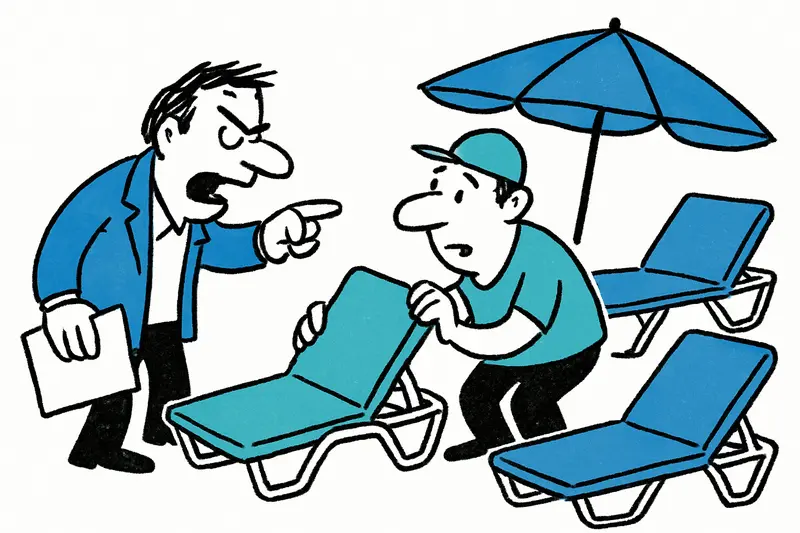
Expensive 'Premium' sunbeds in Cala Major: Who decides what a beach visit is worth?
Environmental group GOB filed a complaint against operators in Cala Major. At the centre: sharply increased prices for so-called 'premium' sunbeds and breaches of permitting rules. What does this mean for visitors, residents and the island's beach culture?
GOB acts against 'premium' prices in Cala Major — and asks a simple question: Who decides what a beach visit is worth?
Even before the first cafés on the promenade breathe a sigh of relief and the seagulls begin their morning chorus, the usual preparations can be seen in Cala Major: operators carrying folded sunbeds, a van creaking along the paved promenade, somewhere the smell of freshly brewed coffee. Into this quiet routine the environmental organisation GOB Mallorca has now filed an official objection and lodged a complaint against several beach operators. The allegations: excessive 'premium' prices and failure to comply with permit conditions.
The central question
The debate can be reduced to a simple but weighty question: Who decides how much public space at the beach may cost? GOB criticises that around a hundred so-called premium sets were offered — with prices of up to €70 per day for a "Premium" set in Cala Major, while a regularly permitted set (two sunbeds and one umbrella) is officially around €18. That is more than three times the price — and noticeable for many holidaymakers and residents.
What bothers people beyond the price
The organisation also complains that kiosks and placement areas do not respect the required minimum distances of 100 metres. In Cala Major, where beach width and promenade length are limited, this is more than a formal error: dense placement increases competitive pressure, reduces free sunbathing areas and changes the character of the beach — fewer chance finds, more tiered, pay-for experiences.
Analytical perspectives that are rarely mentioned
The debate usually revolves around prices and permits. But three aspects often remain underexposed:
1) Spatial economy: Premium sets claim more space because they come with attachments, tables or barriers. That displaces spontaneous beach users — children, older people, families with their own gear — into the shade or less attractive spots.
2) Inconsistent licensing: Permits are granted locally, often with historical deviations. An operator who invests is more likely to be given leeway for new offers; the small neighbour remains at simple rates. This inequality feeds a sense of unfairness.
3) Implicit incentives: When controls are rare or fines low, upselling and 'exclusive' offers are tempting. Operators calculate: more profit per square metre instead of service-oriented quality.
How do people on site react?
At the edge of the promenade, between rolling suitcases and the rumble of a bus gearbox, I spoke with saleswomen. Reactions ranged from eye-rolling to resigned understanding. One salesperson reported how a German family swallowed when they saw the price tag and then preferred to lay their own towels by the water. Such scenes show: it is not just about a few euros, but about the atmosphere and accessibility of the beach.
What are the consequences if nothing is done?
If the situation remains unchanged, several effects could intensify: visitors may move to less regulated beaches, businesses along the promenade may lose foot traffic, and the relationship between permanent residents and tourist infrastructure may worsen. There is also a risk that 'premium' offers become the norm — with long-term consequences for the social mix on the beach.
Concrete: What can be done
Countermeasures must be practical and act quickly. Proposals that take into account both GOB's demands and everyday requirements could include:
- Clear, visible price displays: Uniform, mandatory signs at every rental point with daily prices, additional services and permit contact number.
- Standardised licence categories: A transparent categorisation (basic, plus, premium) with clear area and distance rules that are publicly accessible.
- More frequent spot checks: Mobile checks during peak times, combined with real sanctions up to temporary closures.
- Digital reporting channels: A simple app or hotline through which residents and tourists can report violations — ideally with photo and GPS.
- Public price seal: A visible label for vetted providers who comply with the legal framework — not as a marketing badge, but as a consumer protection tool.
A short outlook
The GOB complaint has sparked the debate. Whether and how quickly the coastal authority will react remains open. For the season this means: operators could expect checks, travellers should compare prices and residents should keep speaking up. In the end it will come down to a mix of better oversight and clear transparency — less control alone will not solve the problem.
I will keep following the story — and like to watch the scene in the mornings on the promenade: the clatter of sunbeds, the smell of croissants and the quiet murmur of people deciding whether the beach will remain an open place or become a stage for sale.
Frequently asked questions
Why are Cala Major sunbed prices in Mallorca being criticised?
How much do sunbeds usually cost at a beach in Mallorca?
What should I check before renting sunbeds on a Mallorca beach?
Can beach operators in Mallorca charge whatever they want for sunbeds?
Why do minimum distances between beach kiosks matter in Cala Major?
Is Cala Major beach still a good option if I want a more relaxed day in Mallorca?
What can residents or visitors do if they spot a problem at a Mallorca beach concession?
What could happen in Mallorca if premium beach pricing keeps spreading?
Similar News
Why so many people in Mallorca are losing their homes — and what needs to happen now
The Balearic Islands top Spain's statistics for evictions. Numbers show contradictions: fewer enforced evictions but man...

Sunday in Palma: Marathon shuts down the Passeig and Old Town – what residents and drivers need to know
On October 18, professional and amateur runners will take part in the Tui Palma Marathon in Palma. Many streets, includi...
Construction by the Sea: Why the New Mega Beach Club in Cala Mendia Has Residents So Angry
Residents of Cala Mendia are suing the building permit for a large beach club with around 220 outdoor parking spaces. Sh...

Just before landing: Fight on Ryanair plane — a safety issue on board?
On a flight from London Stansted to Ibiza on October 5 a dispute escalated when a passenger stood up despite the illumin...

Afterwiesn at Pinos: MM invites to two Bavarian-Mallorcan evenings
Two evenings, Bavarian verve and Mallorcan hospitality: On October 16 and 17 the Pinos restaurant in Sol de Mallorca wil...
More to explore
Discover more interesting content

Can Cap de Bou

Townhouse Lleo 72
