
Groundhandling Strike at Palma Airport: Who Pays the Price?
Groundhandling Strike at Palma Airport: Who Pays the Price?
An open-ended walkout at Groundforce caused around 30 delays in Palma on Good Friday. Why the gap between the collective agreement and practice hits travelers and employees so hard.
Groundhandling Strike at Palma Airport: Who Pays the Price?
Three time windows, twelve airports — and angry travelers
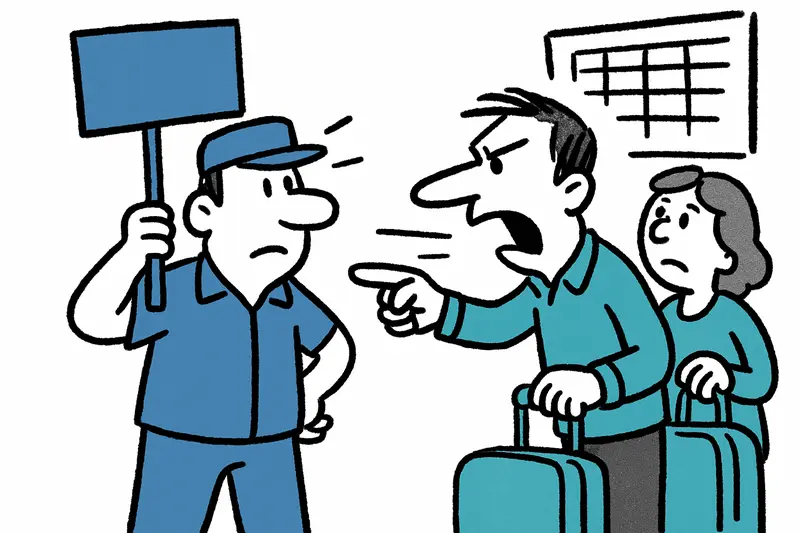
On Good Friday traffic stalled on the arrivals level of Son Sant Joan: baggage carts were queued, announcements echoed through the terminal, and at gate C3 people with suitcases nervously checked the departures board. Aena recorded about 16 affected departures and roughly 14 delayed arrivals in Palma that day — in total around thirty flight movements that did not leave on time. The strike is open-ended and takes place on Mondays, Wednesdays and Fridays between 05:00–07:00, 11:00–17:00 and 22:00–00:00. Strikes at Palma Airport are affecting twelve airports, including Palma; so far Ibiza appears not to have experienced major disruptions.
Key question: Why does a dispute over the interpretation of a collective agreement escalate so quickly that holidaymakers get stuck in processing lines and employees go on strike?
Critical analysis: On one side are unions that speak of a failure to implement agreed wage increases and specifically denounce a restrictive interpretation of Article 96, which management allegedly uses to override Article 94 — the latter is intended to ensure adjustments for the cumulative inflation since 2022. On the other side is a private handling company that cites economic leeway to manage personnel costs. In practice this means: if wage increases are not paid or are reduced, employees' purchasing power comes under pressure. For travelers this shows up as delays, missed connections and extended waiting times.
What is often missing in public debate: a clear presentation of which role Aena, the airlines and the company involved actually have to play in damage limitation. Also rarely discussed is how replacement staff or subcontractors could be mobilized legally and practically at short notice without compromising the quality of handling. And one point travelers need: transparent real-time information and what travelers should do now.
Everyday scene from Mallorca: Outside the terminal a Tramontana wind whistles, taxi drivers at the access road shout "Palma city" and an older couple stares at the display while a young couple with a carry-on argue whether they'll reach their rental car in Playa de Palma on time. The coffee machine is working overtime; the mood is tense but not chaotic — it's the quiet frustration of travel you often see here.
Concrete solutions: First, there needs to be binding mediation by an independent body that legally reviews interpretations of the collective agreement and issues prompt, enforceable decisions. Second, airports and airlines should expand emergency plans: temporary relocation of critical handling tasks, a legal basis for short-term deployment of staff from other regions and clear information chains on passenger rights. Third, greater transparency for employees could help — monthly payroll overviews that make inflation adjustments traceable might defuse conflicts. Fourth: travelers need standardized compensation and rebooking procedures that kick in immediately when a widespread work stoppage is reported.
Looking ahead: A few delays on a holiday are not a catastrophe, but the pattern is worrying, as shown by a second wave of strikes hitting Mallorca's airports. If wage disputes lead to perpetual walkouts, not only punctuality suffers but also trust in the island as a reliable travel destination. Employers and unions must move faster toward practical solutions; authorities and airport companies are called on to establish clear rules for replacement measures.
Punchy conclusion: It's not just about clauses in a contract — it's about money, dignity and appointments. As long as economic concerns are pitted against collective wage commitments, those who have neither bargaining power nor predictability will pay the bill in the end: the employees and the travelers. On Mallorca, where the airport is the gateway to the island, nobody should underestimate that.
Frequently asked questions
How bad are delays at Palma Airport during the groundhandling strike?
When are the strike times at Palma Airport?
What should travelers do if their Palma flight is delayed by the strike?
Does the groundhandling strike affect arrivals and baggage at Palma Airport?
Is Palma Airport still running normally during the strike?
Why is the Palma Airport groundhandling strike happening?
How does the Palma Airport strike affect holidays in Mallorca?
Are other airports in Mallorca or nearby also affected by the strike?
Similar News

When the Wallet Becomes a Danger: Attack in Peguera and Lessons for Mallorca
In Peguera, two women are said to have stolen the wallet from a 75-year-old German couple. When the victim intervened, t...
Plata stays Plata: Young people take over, Llonguets remain
A small bar on Carrer de l'Argenteria will continue: Tolo Serra hands the place over to young Mallorcans at the end of t...

Unnoticed in the Luggage Compartment: How a Boy Traveled More Than 100 Kilometers in a Team Bus
A minor traveled in the undercarriage of a team bus for more than 100 kilometers until his cries for help were heard. A ...

Cap Vermell Grand: Second Michelin Key – a Gift for the East
The Cap Vermell Grand in Capdepera has been awarded its second Michelin key. For the region this elevates the luxury off...
Eurowings lets four aircraft carry names – a friendly idea that also reaches Mallorca
Eurowings is launching a campaign: four Airbus A320s are to carry the first names of people who help others in everyday ...
More to explore
Discover more interesting content

Can Cap de Bou

Townhouse Lleo 72
