
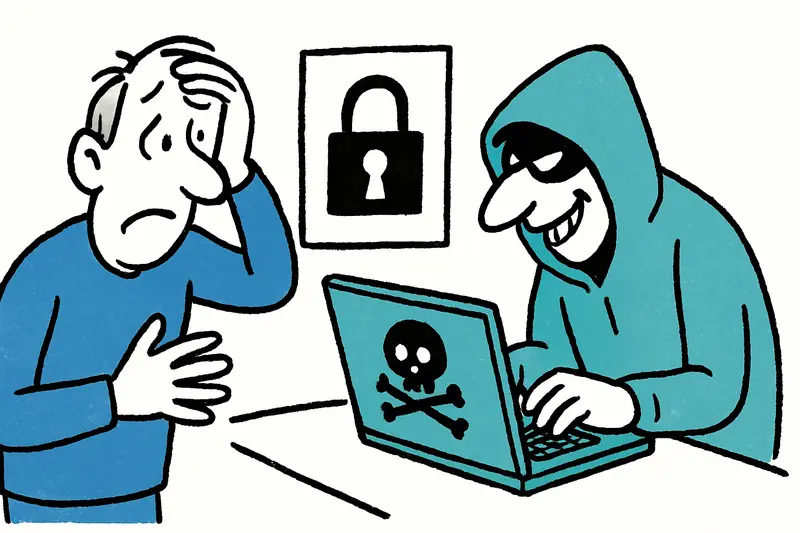
Hacker attack on Endesa: Who protects my data — and how?
Hacker attack on Endesa: Who protects my data — and how?
More than 20 million customer records at Endesa affected. What the incident means for consumers in Mallorca, which questions remain open and which concrete steps should be taken now.
Hacker attack on Endesa: Who protects my data — and how?
Leading question
When an energy provider loses identity documents, contact details and bank details of more than 20 million people: Is an email to those affected sufficient? Or do we need clearer rules, better controls and above all more practical help in Mallorca and elsewhere?
It starts with a sober report: Endesa informed customers by email that unknown parties gained access to its platform and stole sensitive data. According to the company, passwords were not taken; so far there is no official evidence of misuse. These facts are enough — and yet they cause unrest. At the Mercado del Olivar you can hear the conversation: “Did you get the email too?” says a woman with a shopping bag. A moped passes by, a vendor calls out prices; and suddenly the issue is right in the middle of everyday life.
Critical analysis
The incident reveals several problems at once. First: the sheer number of affected people shows how great the risk is when a central service provider is compromised. Second: communication by email is necessary but often too technical and too brief. Third: the statement that passwords were not stolen sounds reassuring — but it does not guarantee that there will be no follow-up damages, for example through access to bank data or identity theft.
Technically, several factors come together: outdated interfaces, insufficient segmentation of databases, a lack of multi-layer monitoring and sometimes employee phishing as an entry point. On the regulatory level one must not forget: under the General Data Protection Regulation (GDPR) incidents must be reported quickly — but reporting is only a first step, not a solution for those affected.
What is missing in the public debate
The debate often focuses on assigning blame and questions of culpability. Less visible are the concrete consequences in everyday life: How does the property management react if bank statements are suddenly debited? What happens to rental deposits? How should small businesses in Mallorca that bill through Endesa check their accounting? And who covers real costs when third parties use stolen data to initiate transfers?
Everyday scene from Mallorca
Imagine the Plaça Major on a January morning: market women sort oranges, tourists take photos, an older man reads the newspaper and shakes his head. For many here, email is not an abstract construct but the gateway to bills, contracts and authorities (see Don't Let Your ID Be Copied: What Mallorca Travelers Should Know at Check‑in). When the email says “we have informed you,” for others this means long phone waiting lines with call centers, piles of paperwork and visits to the bank on Calle Sant Miquel.
Concrete approaches to solutions
For consumers (immediately implementable): 1) closely check account statements and debits for the next three months; 2) inform the bank of the incident immediately and request releases/stops for account movements; 3) report suspicious debits to the Policía Nacional and keep copies; 4) watch out for phishing: never click links in suspicious emails, instead go directly to your trusted online banking site or visit the bank branch; 5) if unsure, arrange to block the account or set limits for online transfers; 6) consider identity theft monitoring.
For Endesa (short and medium term): 1) full transparency about the scope, timing and nature of the access, ideally confirmed by an independent forensic investigation; 2) a telephone support offer for those affected with clear contact points in Mallorca; 3) free identity protection services and bank monitoring for affected customers; 4) technical measures: segmentation of sensitive data, end-to-end encryption, regular penetration testing.
For politicians and authorities: 1) order nationwide audits of critical infrastructures, as discussed in Digital Shield for the Balearic Islands: Is the Budget Enough Against Invisible Attackers?; 2) require faster reporting chains and concrete support services for consumers, and build on recent investments described in Balearic Islands turn to cyber protection — is it enough to really secure the administration?; 3) tougher sanctions for proven neglect of security standards; 4) promote awareness programs — e.g. in town halls, municipal administrations and markets.
Concise conclusion
An email notice alone is not enough. It is not just about technical defense, but about transparent help and reliable processes so that the man on the Plaça Major does not suddenly fail to pay his rent because his banking data were misused. In Mallorca data security also means social stability: electricity bills, bank accounts and daily life are closely linked. Whoever wants to disrupt that must take concrete action — municipalities, companies and regulators together.
For everyone checking their mail this morning: stay alert, report anything suspicious immediately, and if the hotline only offers hold music — be persistent. Data are more than numbers; they are doors to our everyday lives. And those doors deserve better protection.
Frequently asked questions
What should I do in Mallorca if my Endesa data may have been exposed?
Can stolen Endesa data be used for bank fraud or identity theft?
How should I spot phishing emails after the Endesa hack in Mallorca?
What support should Endesa offer to customers affected by the data breach?
Why is a data breach at an energy company a problem for Mallorca households?
What should small businesses in Mallorca do if they use Endesa for billing?
Do GDPR rules require companies like Endesa to notify customers quickly after a breach?
Should I block my bank account after a data breach affecting Mallorca customers?
Similar News
Injured captain, big plans: Germania Mallorca before the away match in Consell
The newly founded FC Germania Mallorca travels to Consell on Saturday. Captain Bastian Müller is out injured, but coach ...
Palma, Palma de Mallorca, Palma‑Mallorca: What is it really about?
The debate over the city's name is more than grammar: it concerns identity, law and branding policy. A sober reality che...
Warning to Bathers: Nipping Fish in Cala Major and Other Coves — a Reality Check
In Cala Major and several beaches around Mallorca, bathers report painful “nips”. Who are the animals, why are they gett...
Rental Car Theft in El Arenal: What This Incident Reveals About Our Gaps
A teenager steals a running rental car in El Arenal, flees on foot, climbs over walls and is caught by the Guardia Civil...
Red Rope in Palma's Library: What Helps Against Selfie Tourism — and What's Missing
Palma's city library cordoned off an area with a red rope to keep selfie tourism away from reading and working activitie...
More to explore
Discover more interesting content

Can Cap de Bou

Townhouse Lleo 72
