
Sea Air and Dough Kneading: Haya Molcho Brings 'Balagan' to Es Trenc
Sea Air and Dough Kneading: Haya Molcho Brings 'Balagan' to Es Trenc
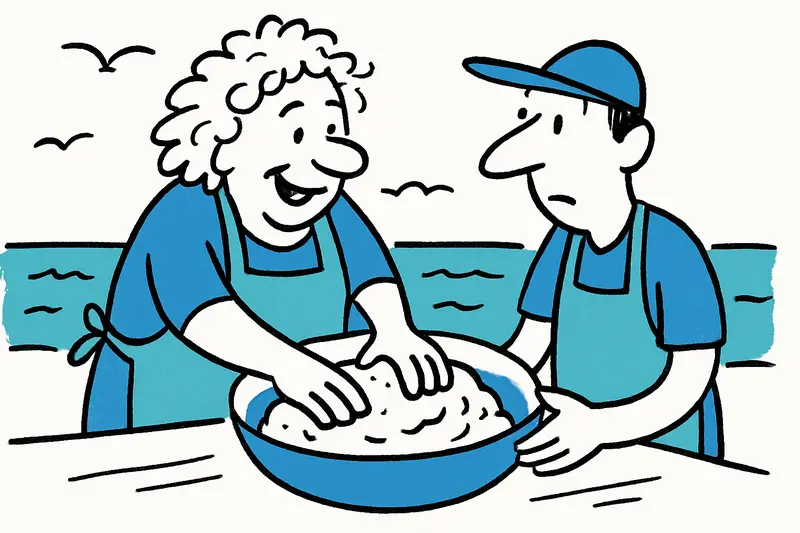
On the terrace of the Bikini Island & Mountain Hotel in Colònia de Sant Jordi, a whole day was spent baking, stirring and sharing stories together. Haya Molcho showed how Mediterranean and Levantine flavors fit together — with plenty of humor and communal eating.
Sea Air and Dough Kneading: Haya Molcho Brings 'Balagan' to Es Trenc
An afternoon with flavors, hands in the dough and the salty breeze of the south
It was one of those spring days in southern Mallorca: morning air, about twenty degrees, a salty hint from the sea and the distant cries of seagulls over the salt flats. Habaneras in Port de Sóller: Seafaring Songs from the Water seemed to linger in the imagination as part of the island's soundtrack. On the hotel terrace of the Bikini Island & Mountain Hotel in Colònia de Sant Jordi, that morning smelled of tomatoes, roasted sesame and fresh basil.
About 15 people from Austria, Germany and Switzerland had gathered to cook together under the guidance of chef Haya Molcho. Not a show-only production, but a practical, lively workshop: aprons on, hands washed, knives sharpened, and off you go. The rhythm of the work shifted between cutting board, pan and conversation — and sometimes you just had to laugh.
At the center was a small culinary togetherness that Molcho likes to describe with the Hebrew word "balagan" — a kind of charming chaos in which many things happen at once. She was accompanied by Tobias Oppitz, her young head chef from Vienna, who guided the group through certain steps.
On the menu were a variety of items: an airy focaccia, homemade tahini paste from roasted sesame seeds, a bulgur tabbouleh with an oriental touch and roasted pistachios, and for the main course sea bass in an intense tomato sauce. For dessert there was an angel-hair pastry based on labneh with a pistachio-heavy tabbouleh side — a combination that sparked conversation at the tables and echoed the island's passion for baking seen in events like La Misericòrdia Becomes a Baking Oasis: Pastry and Bakery Festival in Palma.
What stood out: much was done by hand. Kneading dough, crushing eggplants, stirring tahini — this created a kind of collective tempo. Food was not only produced but immediately shared. Things were chopped, tasted, seasoned and tasted again. Anyone who has watched a Mallorcan kitchen will recognize this rhythm: the kitchen as a social place, the very atmosphere described in pieces such as Saturday in Palma: A Stroll Between Oven Heat and Sugary Shine.
Samy Molcho, the mime artist and Haya's husband, sat comfortably in an armchair and observed the scene. His presence was a quietly amused support: he helped with the washing up and left the pot work to Haya — just like in many couples.
Haya Molcho herself spoke between steps about her culinary journey: born in Tel Aviv, raised with Romanian roots, trained in Germany and today the driving force behind several NENI restaurants. The mix of Levant, Mediterranean and family cooking is also reflected in the recipes she shared with the participants.
For Mallorca, an event like this is more than a celebrity appearance. It brings people to a place who eat, shop and talk about the island — and it puts regional products in the spotlight. The fresh Mallorcan tomatoes and the sea salt from Es Trenc thus take the stage alongside oriental spices. That is good for local value creation and for the island's image as a place where culture and cuisine can be experienced together.
Another effect: participants take recipes and stories home. Those who learned how to make tahini themselves or how to season bulgur correctly leave with a small Mallorca souvenir — not a souvenir in the classic sense, but a recipe and a memory. At a time when travel often focuses on experiences instead of souvenirs, that fits well with the island.
And one more thing: Molcho's approach is practical and down-to-earth. Television has raised her profile, but the workshop made it clear that daily work and cooking together are more important than any media attention. In September she plans a new book that will link memories and recipes — another building block in her work with the kitchen as a space for storytelling.
In the end everyone sat together again, plates were passed around and there was that relaxed disorder that the Hebrew word "balagan" describes. For Colònia de Sant Jordi the day was a small, fragrant reminder that good food not only delivers taste but also encounters.
Anyone strolling around the salt pans in the near future might still hear in their mind the laughter of people who kneaded dough together — it leaves traces, without great effort, with just a pot, a knife and a measure of curiosity.
Frequently asked questions
What is the best time of year to enjoy food events in Mallorca?
Can you swim at Es Trenc in Mallorca in spring?
What should I wear for a cooking workshop in Mallorca?
Why is Es Trenc in Mallorca linked with local food culture?
What kind of dishes are common in Mediterranean cooking workshops in Mallorca?
Is Colònia de Sant Jordi a good base for a relaxed Mallorca holiday?
What are the salt flats near Es Trenc in Mallorca known for?
Who is Haya Molcho and why did she cook in Mallorca?
Similar News

Mueller continues expanding in Mallorca: Artà in 2026, Can Picafort in early summer 2027
The drugstore chain Mueller is opening two new stores in Mallorca: a 1,400 m² shop in Artà on 5 November 2026 and a bran...
The Painter Who Lived Mallorca: Franz Taussig and His Century-Old Secret
A hundred years ago a young Viennese arrived in El Terreno, sketched the island and called himself Francis Caron. Today ...

Airport dispute: Bridge, forecasts and the question of responsibility
A video by the Spanish transport minister has ignited the dispute over DORA figures, capacities and local governance pow...

The Painter Who Invented Himself: How a Young Viennese Drew Mallorca
A hundred years ago a 19-year-old draftsman arrived in El Terreno. His diary and sheets, long known under the pseudonym ...

Released with Conditions: The Plus Ultra Suspicion and a Mallorcan Finca as Residence
A Dutch entrepreneur, sought in connection with the Plus Ultra case, was extradited to Spain after his arrest in Germany...
More to explore
Discover more interesting content

Can Cap de Bou

Townhouse Lleo 72
