
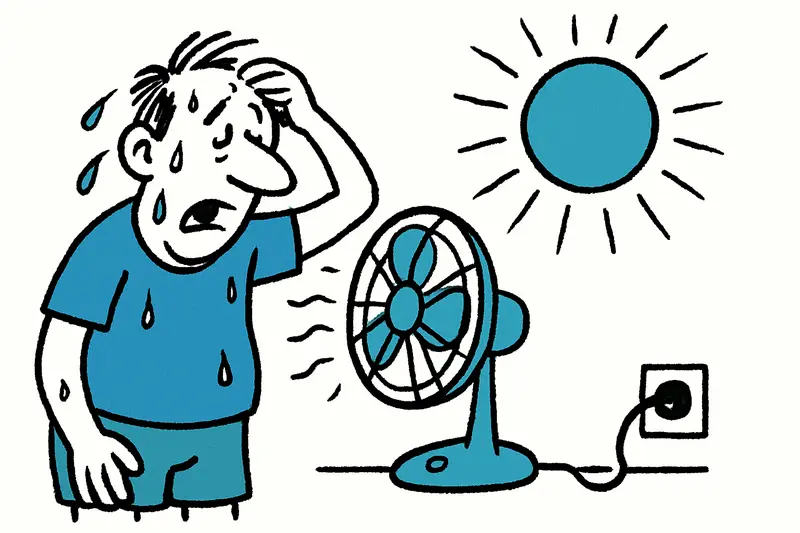
Heat and Power: Why the Balearic Islands Are Sweating Now — a Reality Check
Heat and Power: Why the Balearic Islands Are Sweating Now — a Reality Check
Weeks of heat waves, rising cooling demand and suddenly flickering lights: Mallorca, Ibiza and Formentera have seen an increase in power outages. Time for a sober assessment: Is heat the main cause — or do the failures reveal deeper grid problems?
Heat and Power: Why the Balearic Islands Are Sweating Now — a Reality Check
Key question: Is the prolonged heat really the trigger for the increasing power outages in the Balearic Islands — or does the heat only expose an existing weakness in the grid?
What we are seeing
In recent weeks there have been more frequent disruptions: hotels in Playa de Palma and Can Pastilla reported failed cooling systems, small shops were left without tills, and in Es Pil·lari lights flickered while the murmur of conversation on the promenade suddenly died away. On Ibiza and Formentera the island councils registered large-scale interruptions. Menorca also reported voltage fluctuations. The local energy provider cites the weeks-long heat spells as an important factor — technical investigations of the damage are ongoing and are being discussed alongside Heat alert on Mallorca: How well is the island prepared for infernal heat days?. These incidents have also been documented in recent reporting such as Over 100 emergency responses after storm in the Balearic Islands – What now matters for Mallorca.
Critical analysis
The explanation "thermal stress from heat" is technically plausible: underground cables transfer heat to the ground. If the ground itself is heated and nights offer little cooling, this heat dissipation worsens. At the same time, air conditioners increase peak demand. But heat does not automatically explain every failure. Similarly, short, intense thunderstorms can relieve temperatures but expose other vulnerabilities in drainage and preparedness, as discussed in Finally cooler – Thunderstorms bring relief, but also questions for Mallorca's infrastructure. Here are a few problem areas that can contribute to the current situation:
- Legacy issues and maintenance delays: Many distribution networks are decades old. Regular replacement cycles, spare parts and personnel are limited. When components reach their load limits, an additional stressor like heat is enough to provoke failures.
- Lack of transparency in grid data: Citizens and municipalities so far receive no detailed, timely information on load patterns, fault frequency or affected infrastructure sections. Without these data the public debate remains vague.
- Centralized power supply and lack of decentralization: Regions with few substations and long distribution routes are more vulnerable. Decentralized generation and storage could reduce load peaks, but are not yet widely available.
What is missing from the public discourse
There is much speculation about causes, but little concrete information emerges. Earlier coverage of sudden weather shifts underlines how rapidly changing conditions can expose infrastructure weaknesses, as shown in Sudden weather change in Mallorca: heat, storms — is the island prepared?. Three points are urgently missing:
1) Clear on-site data: Which cable sections, transformers or switchgear are affected? How high are the load peaks temporally and regionally? Such numbers are the basis for sensible action.
2) Independent inspections: Technical reports by independent experts could create trust — especially where political calls for immediate measures are growing loud.
3) Emergency and information plans: For tourism businesses, hospitals and care homes, cities and companies need coordinated procedures. What priorities will apply in future outages?
Everyday scene from the island
At midday on the Avinguda de Jaume III in Palma you hear the rattling of delivery vans, somewhere an information board flashes, and in the ice cream café on the corner the generator starts up — a steady hum that drowns out the heat. In Alcúdia, after a repeated outage, guests sat on restaurant terraces drinking red wine by torchlight while staff frantically wrestled with ice cream machines. Such images are no longer a mere inconvenience; they show how much daily life and the economy depend on a reliable grid.
Concrete solutions
Short term (days to months):
- Prioritization of critical consumers: Clinics, drinking water supply and cold chains for food must be given priority in emergency plans.
- Mobile resources: Temporary transformers, emergency generators and increased standby teams can close acute gaps.
- Load management: Agreements with large consumers (hotels, businesses) on targeted load shifting during peak times reduce stress on the grid.
Medium term (months to years):
- Smart metering: Temperature and current sensors along cable routes provide real-time data and warn of overheating.
- Grid modernization: Renewal of critical cable sections, expansion of medium- and low-voltage networks and better cooling concepts for underground lines.
- Decentralization: More rooftop photovoltaics coupled with battery storage and smart grid operation reduce peak loads.
Who must do what?
The energy provider must make technical causes transparent and act quickly. The island governments should demand independent inspections and require clear investment plans. Municipalities can create emergency plans and run information campaigns for businesses and residents. Tourism operators are called on to develop contingency plans and proactively inform guests.
Punchy conclusion
Heat is not an excuse but a wake-up call. It reveals where the grid was already under pressure. Now we need honest numbers, independent inspections and concrete investments — not just warm words. If we want to get through the coming summer without comparable outages, short-term relief measures and a clear mid-term modernization program are necessary. Otherwise the next heat wave will be more than a natural event; it will be a stress test for which we are poorly prepared.
Frequently asked questions
When is the best time to visit Mallorca for good weather and fewer crowds?
Is it safe to swim in Mallorca's coastal waters?
What should I pack for a Mallorca trip?
What’s the best way to get around Mallorca without a car?
What are good day trip options from Palma?
Are there family-friendly beaches in Mallorca?
What is the weather like in Mallorca during winter?
How can I enjoy Mallorca's food without overspending?
Similar News
Rats in Llucmajor: How Uncollected Garbage Became a Health Problem
In Llucmajor, uncollected trash bags, overflowing containers and rain are leading to increased rat sightings. An assessm...
Sly Distraction Scam at Ballermann: How Tourists Became Targets — and What Must Be Done Now
Five suspected pickpockets were arrested. Their method: distract, secure the loot, return the wallet — without the cash....
Eviction in El Arenal: Who protects neighbors — and who protects the homeless?
A vacant hotel on Carrer Girona was cleared and secured. The neighborhood breathes a sigh of relief. But the action trea...
'La Tapita' loses its home: Who will protect Palma's last affordable meeting places?
The bar 'La Tapita' on Simó-Ballester Street will close at the end of December. For neighbors, police officers and small...

Million Heist at Bulgari: Who Is Responsible for Palma's Security Gaps?
Three men stole jewelry worth around one million euros – the crime series began at the end of September and was likely c...
More to explore
Discover more interesting content

Can Cap de Bou

Townhouse Lleo 72
