
Inca as a Lab: How the Eco Rally Makes the Mobility of Tomorrow Tangible
Inca as a Lab: How the Eco Rally Makes the Mobility of Tomorrow Tangible
For the sixth time Inca invites you to the Eco Rally Mallorca – Inca Ciutat (20–21 March 2026). The city uses the event to showcase e-mobility, charging infrastructure and a pedestrian-friendly urban development.
Inca as a laboratory: How the Eco Rally makes the mobility of tomorrow tangible
Sixth edition of the Eco Rally Mallorca brings electric mobility and urban life together
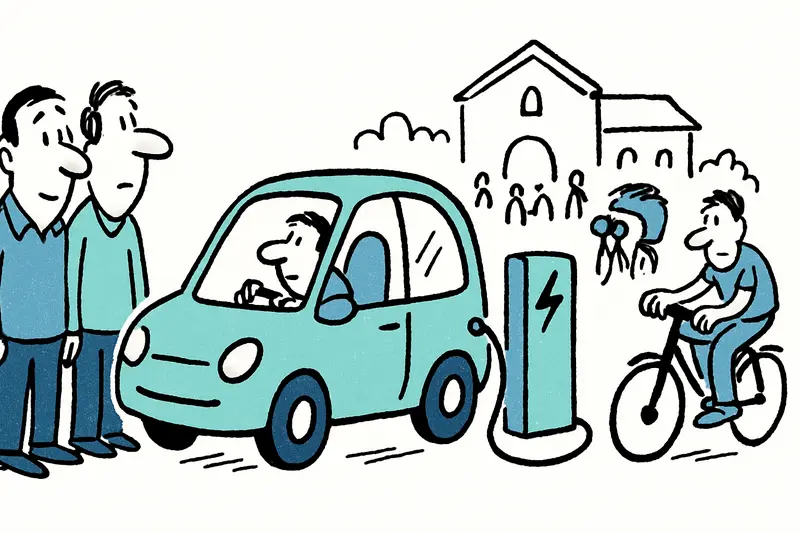
On Saturday morning in Inca there is that typical cool March air, inviting you to leave your jacket open and have a coffee on the plaza. Market stalls clatter (Dijous Bo in Inca: Market, Music and the Return of the Boats), a church bell tolls, and electric cars hum between pedestrians — here they are not just demonstration objects but meant to become everyday vehicles. This weekend (20 and 21 March 2026) Inca is hosting the Eco Rally Mallorca – Inca Ciutat for the sixth time, an event that combines sport, technology and sustainability.
The city administration under Mayor Virgilio Moreno deliberately uses the race as a showcase. Inca is conveniently located in the center of the island, linking villages and towns, and is therefore well suited as a testing ground for mobility solutions that can later be transferred to other places. In practice this means test runs for charging infrastructure, test drives with electric and hybrid vehicles, and information offerings for residents and visitors.
Concrete steps are already planned or in progress. The municipality wants to have its own network of charging stations operated: almost 50 charging points, many of them mid- and fast-chargers, so that a high availability is created within a compact area. Maintenance and operation are to be handled by a specialized company so that the technology runs reliably and users are not left with empty promises. The system will be openly accessible and an app is to make usage easier — for locals and for people passing through. More details are covered in Inca builds first municipal fast-charging network — a step with question marks.
At the same time Inca is moving towards a 10-minute city: a compact core in which the most important destinations are quickly reachable on foot. To relieve the city center, the park-and-ride network will be expanded. Currently there are around 38 different parking zones with about 1,800 spaces; more areas will follow as opportunities arise. The goal is simple: less car traffic in the center, more space for pedestrians, shopkeepers and café life.
Something is also happening for cyclists. The expansion of bike lanes remains on the agenda, including links to public facilities and routes towards neighboring towns. Inca is also examining models such as publicly available e-bike rentals to make short trips without a car more attractive. Mayor Moreno often sees the city as an experimental field: pilot projects should run where they are practical for residents and bring real benefits.
For businesses and tourism the Eco Rally brings visibility in a language other than the usual beach photos. When visitors see that a town offers charging infrastructure and that they can conveniently stop, charge and stroll, it acts like an invitation to stay longer. The accompanying programs of the rally, including events with the label Energy, are intended not only to show technology but to inform households: How do I save energy? How does charging at home work? Such information is decisive for many to lower barriers.
The mood on the street is easy to capture: market traders wave, a taxi driver parks an electric vehicle, young people push their bikes by. This is no revolution overnight, rather a pilot operation where small changes work together. If the infrastructure is reliable and incentives are right, acceptance increases. That is visible in Inca.
Why is this important for Mallorca? Because solutions that work here can serve as a blueprint for other municipalities, especially those without rail connections or with sparse bus service. A central town with good accessibility like Inca can show how e-mobility, parking strategies and local supply work together. For the island this means fewer emissions, new tourist offerings and a higher-quality urban image.
If you are in Inca this weekend, you should not see the Eco Rally only as a race but as an invitation: try things out, ask questions, test charging and get to know the town as a living laboratory. When the charging cables are plugged in and the cafés are full, that has far more impact than any brochure — because change happens where people live, work and shop.
Outlook: The coming months will show how quickly the planned charging points are installed and how well the park-and-ride network is accepted. In any case, the Eco Rally provides the framework to make e-mobility tangible — and Inca remains something like a neighbor who goes ahead and says: Give it a try. For more background on developments and remaining questions see First municipal charging network in Inca: Progress with open questions.
Frequently asked questions
What is the Eco Rally Mallorca in Inca?
Why is Inca being used as a test place for mobility in Mallorca?
How many charging points are planned in Inca?
What does the idea of a 10-minute city mean in Inca?
Where can you park in Inca to avoid driving into the center?
Can you get around Inca by bike more easily now?
What can visitors do during the Eco Rally Mallorca in Inca?
Why does the Eco Rally in Inca matter for Mallorca as a whole?
Similar News
Large-scale Anti-Tourism Graffiti at Cala Mendia: Protest or Vandalism?
On the morning walkers discovered an approximately 50-meter-long slogan against tourism on the wall above Cala Mendia. W...
Bomb threat before Jet2 flight in Tenerife: A reality check for security protocols
A passenger reported a bomb in luggage shortly before departure in Tenerife. Evacuation, baggage checks, delays — and ma...
Who is stripping Mallorca's coast bare? Why entire slopes are being removed for villas
On Mallorca steep slopes are again being removed to make way for luxury construction sites. Who bears the responsibility...

Robber Falls While Fleeing in Sant Agustí: Who Takes Responsibility?
During a purse-snatching in Sant Agustí, a non-commissioned officer chased the suspect; the man jumped from a bridge and...

Bomb threat on board? Why the Tenerife incident concerns us in Mallorca
A passenger on a Jet2 flight from Tenerife to London triggered an evacuation and intensive security checks. The result: ...
More to explore
Discover more interesting content

Can Cap de Bou

Townhouse Lleo 72
