
Meter-high Flames at Cala Santanyí: When a Jeep Threatens the Forest
Meter-high Flames at Cala Santanyí: When a Jeep Threatens the Forest
An older Land Rover Defender caught fire early in the morning in Cala Santanyí. Lifeguards and emergency personnel prevented a larger fire — but the scene reveals gaps in handling vehicle fires at sensitive coastal parking areas.
Meter-high flames at Cala Santanyí: When a Jeep threatens the forest
Key question: Are our coastal parking areas in Mallorca adequately protected against vehicle fires?
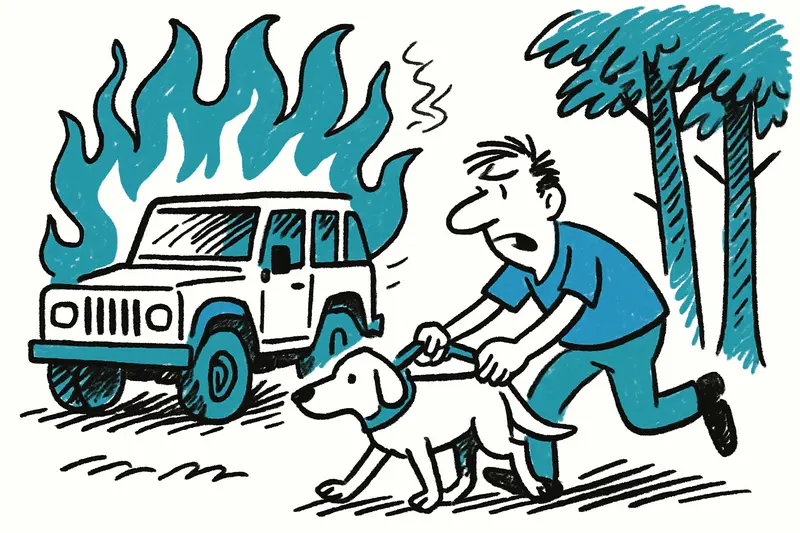
Around 9:30 on Monday morning a 4x4 was ablaze in the Cala Santanyí parking lot. The vehicle, an older Land Rover Defender, was completely destroyed within minutes. Lifeguards who were just starting their shift pulled the driver and her dog out of the danger zone. Local police, civil protection and the fire department arrived shortly after and extinguished the fire. The woman suffered minor burns to her hands.
The scene was striking: a black column of smoke over the pines, the chirring of cicadas, the salty bay air mixed with the acrid smell of burning plastic. Early in the morning the area is often only frequented by locals and dog walkers; on this day there were noticeably fewer cars in the lot, otherwise the outcome could have been worse.
In short: the car could not be saved. The flames had already reached the tree branches when helpers sprayed the area with water. Because the incident occurred early and the lot was not yet full, other vehicles were spared. The cause of the fire is suspected to be related to the vehicle's advanced age.
Critical assessment: A burning car at the edge of a pine forest is more than an isolated incident; similar cases have been documented, for example Flames on Camí del Far: Burning Car Raises Concerns in Sóller. In the summer months, when vegetation is dry, little is needed for a vehicle fire to turn into a wildfire. Parking sites like Cala Santanyí are particularly vulnerable: narrow access roads, dense tree cover and often little firefighting water supply on site. This vulnerability has been underlined by events such as Field fire near Manacor: What the operation on the Ma-15 reveals about Mallorca's fire risk.
What is missing in the public debate: First, discussion about simple minimum standards for sensitive parking areas — such as clear firebreaks, well-marked firefighting points and signage with behavioral rules. Second, there are hardly any clear recommendations for older vehicles left at beaches: when is a vintage car too risky for exposed spots? Third, the role of everyday first responders, for example lifeguards and dog owners, is rarely recognized and supported. The urgency of clearer precautions is reflected in regional warnings like Alarm Level 4 in the Balearic Islands: Why Every Spark Counts Now.
An everyday scene I often see: in the morning at Cala Santanyí runners grab their coffee from the kiosk, retirees stroll with their grandchild, lifeguards check their equipment. The pines cast long shadows, and cars arrive with roof boxes, bicycles and holiday rubbish. It doesn't take much imagination to picture how quickly a misstep, a faulty engine or burning cable insulation can change everything. Protected areas have faced multiple ignition points recently, as shown in Nighttime Fires in S'Albufera: Six Ignition Points — How Do We Protect the Wetland?.
Concrete solutions, without bureaucratic language: 1) Install visible firefighting points at sensitive parking lots (simple hydrants or permanent water reserves in tanks). 2) Prescribe firebreaks and minimum distances to pines — even a few meters can make the difference. 3) Information signs at parking lots: what to do in a vehicle fire? Photo of the procedure, a QR code with a short video. 4) Regularly train lifeguards and parking attendants on vehicle fires and equip them with portable fire extinguishers. 5) Volunteer afternoon patrols during the high season: short rounds that report hot engines or smoking vehicles. 6) For older vehicles: voluntary safety checks at beaches, possibly offered on weekends by the municipality or local workshops.
Practically and immediately implementable are especially signage and providing two or three portable fire extinguishers at every large parking lot. In the medium term, actual water supplies are worthwhile — it costs, but is cheaper than a forest fire that threatens houses and infrastructure.
Another point: raising drivers' awareness. Many react reflexively, try to extinguish flames with bare hands, as happened here, and injure themselves. An easy-to-remember tip on signs or in short videos could encourage people to keep distance, call emergency numbers and allow first responders to act from a distance until professionals arrive.
The case at Cala Santanyí ended relatively well, but it is a wake-up call. It's not enough to hope for good weather or luck. We need pragmatic rules, more visible infrastructure and a bit more shared responsibility — from tourists to municipal workers.
Conclusion: The burning bodywork was a warning sign. If we are to learn something from such images, it should not be in euphemistic tones, but with clear steps: fire prevention, simple equipment at sensitive sites and more practical training for the people who are first on site in the morning. Otherwise one spark is enough, and Cala Santanyí would no longer be the bay where we let our dogs run from the parking lot without worry.
Frequently asked questions
Is it safe to park near pine forests in Mallorca during the summer?
What should I do if a car catches fire in Mallorca?
Are beach parking lots in Mallorca prepared for vehicle fires?
When is the safest time to visit Cala Santanyí in Mallorca?
What makes Cala Santanyí in Mallorca more vulnerable to fire?
Can an older vehicle be a problem at Mallorca beach car parks?
What safety measures should Mallorca parking areas have near forests?
How can visitors help prevent a car fire at Cala Santanyí or other Mallorca beaches?
Similar News
Mini-tsunamis in Mallorca: Harmless natural phenomenon — or an underestimated danger?
Two harbor towns in Mallorca recorded unusual water level fluctuations. An analysis: How rissagas form, who is at risk —...
Stinging jellyfish in Cala Banyalbufar: Why everyone suddenly fled the water
In Cala Banyalbufar, Pelagia noctiluca washed up in droves. A personal account of why this is no coincidence, what is of...
New low-pressure trough brings rain — and the heat remains: What's missing in Mallorca?
A short, intense window of showers hit Mallorca, yet the air remained muggy and warm. Key question: Why does rain hardly...

Klaus-Michael Kühne has died: The entrepreneur who gave Mallorca a second home
He first arrived on the island at 60; later the holiday house became Castell Son Claret – a hotel, a music venue and an ...

Buying Instead of Moving Away? Why Every Fourth Property Owned by Balearic Residents Isn't Located Here
Almost a quarter of the apartments purchased by Balearic residents are located on the Spanish mainland. A concise analys...
More to explore
Discover more interesting content

Boat Tour with BBQ along Es Trenc Beach

Private transfer from Mallorca Airport (PMI) to Pollensa
