
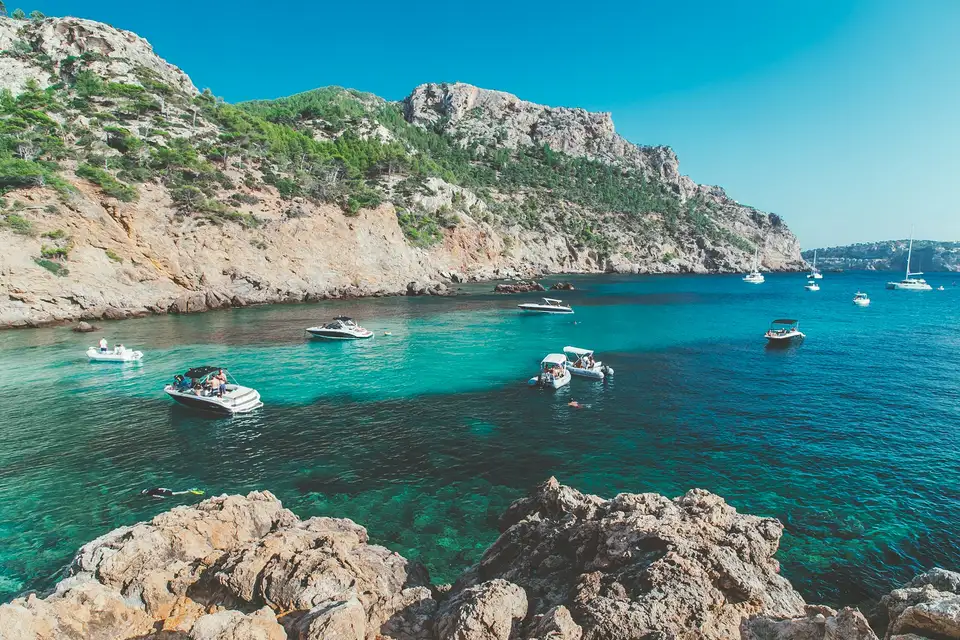
Jump from Ferry Ends in Death – A Critical Look at Safety and Alcohol On Board
When a man jumped from a ferry between Cambrils and Salou, a 38- or 40-year-old British man died. What went wrong on board — and what measures must be taken now?
Jump from Ferry Ends in Death – A Critical Look at Safety and Alcohol On Board
Two brothers jump from a ferry, one survives, the other drowns – how could this happen?
A hot late-summer morning on the Costa Daurada: Two British brothers (40 and 38 years old) were travelling with their parents, the family was still on board when the ship reached the coast of Salou. Witnesses report the men appeared intoxicated and wanted to order beer on board; the crew refused because the ship was about to dock. Instead of waiting, the two jumped out of a window into the sea, only one reached the shore exhausted, the other was unconscious and drowned. Salvamento Marítimo launched a search, and the Guardia Civil and the Catalan Mossos d’Esquadra are investigating the incident. Besides exhaustion, the influence of alcohol is seen as a possible cause.
Key question: Could stricter safety rules and better prevention on board have prevented this death?
It is a simple, harsh question. We hear about lifeboats and the police, about fatigue and alcohol. But between those words lies a whole complex: How are behaviour, rules and infrastructure on board and at the berths organised? Who is responsible when guests leave on their own through a window?
The first points of critical analysis are obvious: The crew apparently refused the drink request — a safety decision. At the same time, a way to leave the crossing in a risky manner apparently remained possible. Windows and accesses do not seem to have been sufficiently secured, or the presence of staff in the cabin/on deck was not enough to prevent such behaviour. That parents were on board does not make the situation easier: adults make decisions that children and relatives cannot stop.
What is often missing in the public discourse: we talk about the single tragedy, but rarely about systemic gaps. Discussions about alcohol consumption on ferries end in moral judgments, not in operational consequences. There is a lack of clear debate about the last minutes before docking: what rules apply, how are they enforced, what technical safeguards exist at windows or exit openings?
A picture I often see when I walk along the Passeig Mallorca: ferries sway in, announcements over loudspeakers, vendors packing up their stalls, taxi drivers honking. In Palma the berths are busy, but there are quiet corners where a drunk tourist can seem just as lost as anywhere on the Costa Daurada. The smell of diesel, the screeching of seagulls, announcements in several languages — and when safety does not go hand in hand with routine, a single moment is enough for tragedy.
Concrete solutions that are not only attractive in theory but also practical:
- Clear, written last-minute rules for the phase before docking: no alcohol served from X minutes before arrival, clearly posted in several languages.
- Physical locks and safeguards on windows and low exits: lockable covers, alarm contacts or at least clearly visible warning signs and barriers in the final phase of the crossing.
- Increased presence of trained staff in areas where passengers might leave the ferry; targeted training on de-escalation in cases of alcohol-related behaviour.
- Deck plans and emergency procedures for passengers, short and clearly communicated by announcement before docking: “Please remain on board until safe arrival.”
- Cooperation between port authorities, ferry operators and search-and-rescue services to evaluate dangerous spots along the coast; mapping of hazard zones for swimmers and additional rescue resources at sensitive ports.
- Multilingual awareness campaigns for tourists explaining behaviour in and around ports – also via tour operators and car rental companies.
Technology helps: motion sensors on windows, automated alerts to the bridge, better lighting in corridors — these are not science-fiction solutions but simple investments. Equally important is the culture on board: staff must not only read out rules, they must be authorised to prevent dangerous situations decisively and, if necessary, inform the police before people put themselves at risk.
From the perspective of island society, the discussion must go beyond tourism. Ferries connect countries and ways of life; they are rolling communities. If routine contributes to the death toll, it is not only the fault of individual passengers but of systemic weaknesses, expectations and inadequate prevention.
Concise conclusion: This death is not a natural event. It is the result of a series of decisions — by people and by structures. Those who now respond only with sorrow have not understood that something must change on board and at the berths. It is not about demonising the sea, but about enforcing simple, immediately implementable measures that will prevent such moments in the future.
For the affected family the incomprehensible remains. Our duty as a society is to learn from it — and not only to mourn, but to act.
Frequently asked questions
What safety measures do ferries serving Mallorca have to prevent alcohol-related incidents?
How can passengers help keep Mallorca ferry crossings safe?
What should I do if I witness dangerous behavior on a Mallorca ferry?
How do ports and ferry operators work together to improve safety around Mallorca’s coast?
What signs should I look for at Mallorca ferry terminals regarding safety and rules?
What are the best times of year to take a ferry to Mallorca, considering weather and seas?
Do ferries to Mallorca limit alcohol consumption, and how is it enforced?
Why is ferry safety important for island communities like Mallorca?
Similar News

Who will clean up? Illegal rubbish heaps on the highway near Son Gual drive residents onto the streets
For months, construction debris and household waste have piled up along the highway between Palma and Manacor near Son G...

Amundi takes over Bikini Island & Mountain Port in Sóller – many questions remain open
The French asset manager Amundi has acquired the four-star Bikini Island & Mountain Port hotel in Sóller from an Austria...

Silvia was allowed to see the sea once more – a small farewell in Port de Soller
A team from the Balearic health service IB-Salut fulfilled a terminally ill woman's wish: one last trip to the water in ...
Magaluf: Imprisonment for Beach Club Employee after Theft of a Bag — What the Ruling Overlooks
A former dishwasher received a one-year prison sentence for stealing a Louis‑Vuitton bag. The appellate court upheld the...

Road collapse at Port de Valldemossa: Who will pay for the next wave of damage?
A section of the MA-1131 near Port de Valldemossa slipped after heavy rains from cold front "Adam". Residents are strand...
More to explore
Discover more interesting content

Can Cap de Bou

Townhouse Lleo 72
