
K Variant: Reality Check - How dangerous is the severe flu wave for Mallorca?
K Variant: Reality Check - How dangerous is the severe flu wave for Mallorca?
The new A(H3N2) "K" variant is spreading earlier and faster and vaccines are less effective. A critical look: what do we really know, what is missing in the debate — and how can Mallorca respond concretely?
K Variant: Reality Check - How dangerous is the severe flu wave for Mallorca?
Clear question: Is the health system at risk of overload — and what can citizens and authorities practically do now?
The streets of Palma smell of freshly brewed coffee, market stalls at the Olivar are well stocked, and people in heavy coats wait at the bus stop on Avinguda Antoni Maura. But behind this everyday picture there is currently uncertainty: the version of the seasonal influenza virus A(H3N2) referred to as "K" — discussed in Early flu wave in Mallorca: How dangerous is the K variant really? — is arriving earlier, spreading faster and rendering part of previous immunity less effective. Emergency departments, especially at Son Llàtzer Hospital, have already responded by expanding bed capacity. This is not alarmism but a practical reaction to numbers that are clearly rising.
What we know: the variant causes the usual flu symptoms — cough (in around 81.6 percent of cases), high fever (80.3 percent), general malaise and fatigue (74.5 percent), stuffy nose (72.8 percent), sore throat (60.1 percent) and in many cases severe body aches (41 percent). Epidemiologically, infection waves are starting three to four weeks earlier than in past seasons and the epidemic threshold was reached regionally sooner. Laboratory findings point to mutations that may increase transmissibility and make immune recognition after vaccination or previous infections more difficult.
Key question: Does higher transmissibility automatically mean more deaths and more severe courses? Short answer: not necessarily. Higher infection rates, however, mean that more people fall ill overall. Even if the share of severe cases remains the same, absolute numbers of hospitalized patients rise — and with them the pressure on emergency departments and intensive care units. That is exactly the danger local health services are warning about.
Critical analysis: In many conversations with doctors and nurses I hear the same concern — there is a lack of concrete, easily accessible information for the public. Which groups are truly most at risk? How effective are this year’s vaccines specifically against K — and for whom is vaccination still particularly worthwhile despite reduced effectiveness? Authorities talk about a "heightened alert level" and recommended hygiene measures, a topic covered in Flu wave in the Balearic Islands: Why the epidemic classification now demands practical measures, but queues are already forming at general practitioners' offices while some care homes lack staff to manage visitor flows sensibly.
What is missing from the public discourse: transparent real-time information on available beds, clear prioritization for vaccines (who first and why), pragmatic rules for sick leave of staff in critical infrastructure and binding recommendations for ventilation in schools and offices. There is also currently no visible offer of free or low-cost rapid tests in neighborhoods with many elderly residents — areas like La Soledat or Son Gotleu would benefit from this.
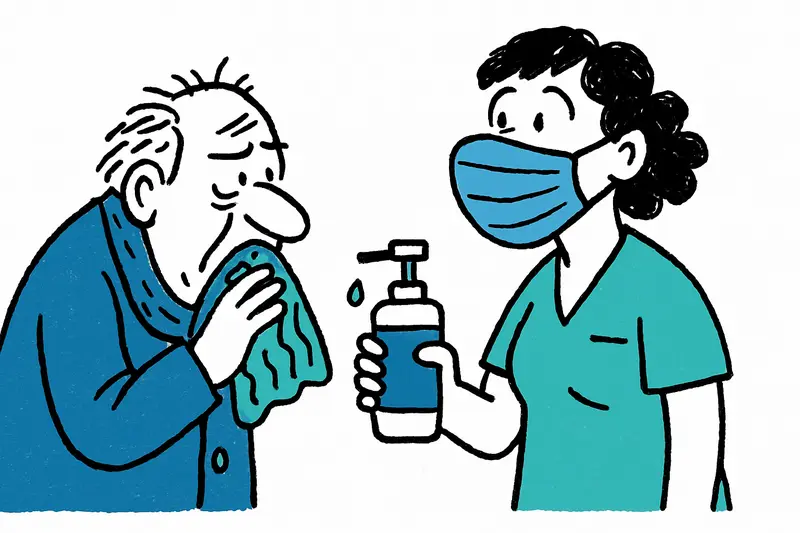
Everyday scene: At the entrance of Mercat de l’Olivar a vendor prudently wears a mask while an older man beside her disinfects his hands. In Son Llàtzer additional beds have been set up in the corridors, the beeping of monitors mixes with the sound of rolling suitcases near the emergency department. Such scenes say more than numbers: the island is adjusting infrastructure, but the system is operating close to its limits.
Concrete solutions — ready to implement:
1) Prioritized vaccination and transparent communication: Reserve vaccination offers clearly for the elderly, chronically ill, care staff and pregnant women. Publish how well the vaccine protects against K and why it is still advisable.
2) Capacity management: Release flexible bed pools, rapidly boost staff (short-term contracts, reactivation of retirees with voluntary support) and coordinate transfers between clinics to avoid bottlenecks.
3) Protection in care facilities: Testing stations at entrances and exits, visitor rules depending on regional case numbers, additional protective equipment and targeted vaccination campaigns for residents and staff, aligned with proposals to reinstate masks in clinical settings (Masks Back in Clinics? A Reality Check for Mallorca).
4) Everyday protection: Free or low-cost rapid tests at central locations (Mercat de l’Olivar, Plaça Major), clear recommendations for masks indoors when infection rates are high, as discussed in Masks Return in Mallorca: What the New Flu Wave Means for Us, mandatory ventilation in schools and offices and simple guides for businesses.
5) Strengthening primary care: Additional consultations, telemedicine offers for mild cases, rapid access to antiviral medications for risk groups.
These measures require money and organisation — but they prevent many individual cases from destabilising the entire system.
Pointed conclusion: The K variant is not an unpredictable monster, it is a fast-moving opponent. Those who only react will fall behind. Mallorca now needs transparent information, targeted protection packages for the vulnerable and pragmatic relief for hospitals. If you protect your grandmother, you protect the health system — and vice versa. So open the windows, wash your hands, check your vaccination appointment and stay home if you have symptoms: small everyday decisions add up to big effects.
Frequently asked questions
How dangerous is the K variant flu wave in Mallorca right now?
What flu symptoms are most common with the K variant in Mallorca?
Who should consider getting a flu vaccine in Mallorca this season?
Should people in Mallorca still wear masks during a strong flu wave?
What should families in Mallorca do if someone has flu symptoms?
Why is Son Llàtzer Hospital under more pressure during the Mallorca flu wave?
Are there extra flu precautions for care homes in Mallorca?
Where could Mallorca offer better public access to flu tests?
Similar News
Smuggling in the secured area: How a gang exploited the duty-free zone at the airport
Two further arrests at Son Sant Joan airport: the Guardia Civil stopped a group that used cheap flight tickets to access...

Brawl at Palma Airport: When Competition Turns to Violence
In the arrivals area of Son Sant Joan a dispute between transfer service drivers escalated. One man was arrested, the vi...
77-year-old missing in Llucmajor: Why such cases on the island must not become routine
A 77-year-old German is missing in Llucmajor. SOS Desaparecidos is searching for Reiner Schnell. A critical assessment: ...
Ham Street, Sunglasses, Cocaine: When Sales Tricks Become Dangerous
A vendor at Playa de Palma offered a pair of sunglasses — and apparently hid a small packet of cocaine. The central ques...
Dancing Instead of Complaining: The Viral Duty‑Free Artist and the Payment Gap at Palma Airport
An actor dances through the duty‑free area in Palma, goes viral — and speaks of unpaid bills. Who is responsible, and wh...
More to explore
Discover more interesting content

Can Cap de Bou

Townhouse Lleo 72
