
Nighttime escalation at Playa de Palma: knife attack at bus stop — what's missing now
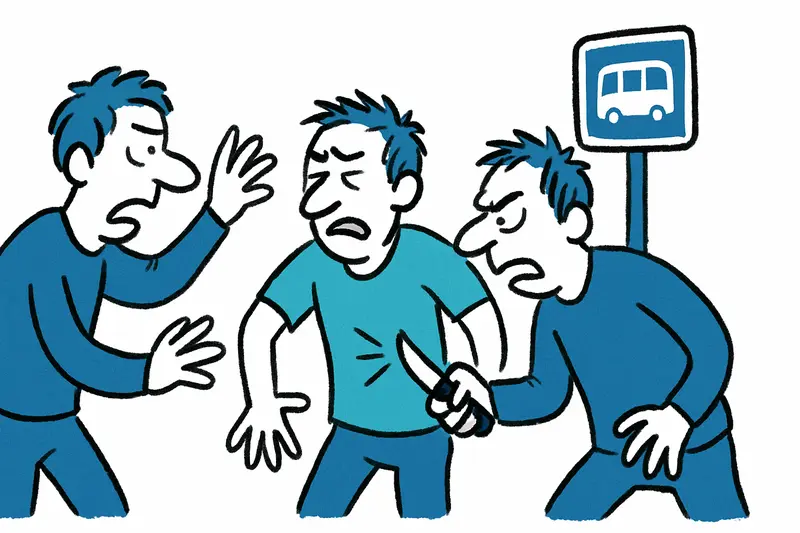
After an altercation on a public bus, a dispute escalated at the Manuela de los Herreros stop: two men are said to have seriously injured a third with a knife. The National Police are searching for the suspects.
Nighttime escalation at Playa de Palma: knife attack at bus stop — what's missing now
National Police search for two suspects after dispute on a public bus
Late on Friday evening, around 10:30 p.m., a serious act of violence occurred at the stop on Manuela de los Herreros Street at Playa de Palma. Three men had been traveling together on a public bus; after an argument they got off together, and according to witnesses the confrontation escalated there. Two persons fled, a third was wounded by stab injuries and was treated by emergency medical services (061); the team stabilized the man on site before he was taken to Son Llàtzer hospital. The National Police are investigating and searching for the two alleged perpetrators; previous coverage of incidents in the area can be found in Playa de Palma at Night: Phone Tracking Catches Suspect — But What Does It Say About Our Safety?.
The brief causal description is straightforward: argument, knife, hospital. But what does this say about the nighttime reality at Playa de Palma? The promenade in summer is a mix of tourist activity, bars, buses, taxi stands and locals heading home after work. In such scenes, short-term sensory overload, alcohol and tight transport connections collide — a combustible mix that flares up at night more often than many want to admit.
From a crime-statistics perspective, a single case does not indicate a general trend shift; still, the practical question remains: how could it escalate so far in the public space of a bus and at a stop, and what happened in the minutes immediately afterwards? The available facts name the time, place, number of people involved and the outcome of the act — but not the preventive context, a topic also discussed in coverage of violence on Palma's party mile such as Nighttime Attack on the Paseo Marítimo: How Safe Is Palma’s Party Mile Really?.
Public discourse often lacks three things: reliable data on the frequency of altercations on buses, clear information on whether the stop had cameras or adequate lighting, and a sober account of the role of witnesses. Did other passengers act, did drivers alert authorities, was there immediate help from passersby? Such questions are crucial when it comes to preventing future incidents, as earlier violent confrontations documented in Brawl at Playa de Palma: Why a verbal exchange could have ended fatally demonstrate.
Manuela de los Herreros is not an anonymous point on a map; in the evening you hear the clinking of glasses from beach bars, the sound of the sea and the headlights of passing buses. In such everyday scenes the line between a normal night scene and escalating violence can be thin. A patrol car in sight, a functioning surveillance system or well-trained bus drivers can often have a de-escalating effect — when these elements are missing, risk increases.
Concrete approaches that could help in the future are less abstract than some debates assume. First: better lighting and visible presence at heavily frequented stops. Visible police patrols are not a cure-all, but they change behavior on the street faster than long prevention campaigns.
For public transport a practical check is worthwhile: emergency buttons on buses must work and their use must be simple. Drivers need regular training in de-escalation and alarm procedures — someone driving alone at night must know how to call for help quickly and safely. Technical measures such as monitored communication channels between the bus and the control center are also useful here.
Another point: first-aid competence among residents and employees in tourism businesses. The 061 emergency teams were on site and provided life-saving help — but seconds count. If more people had basic knowledge in stopping bleeding and stabilizing casualties, injured people could be better supported in critical minutes.
The legal side must not be neglected either. The severity of the injuries later influences the penalty, and therefore careful medical documentation is central. Investigators are now checking whether victim and suspects knew each other or whether the dispute started on the bus; this distinction has consequences for the direction of the investigation and possible motives.
What has been missing so far in the public debate is prevention at the interface of tourism and neighborhood: information campaigns for foreign guests who are out at night, cooperation between bus companies and local venue operators, and low-threshold points of contact for conflicts. Locally anchored solutions often work better than generic security rhetoric.
Immediate measures that the municipality, transport operators and police could tackle together: an analysis of stops, temporary increased patrols during the summer months, visible signage with information on emergency options and a pilot project for security assistants on particularly busy evening routes.
In the long term, investments in urban lighting, more staff in public transport and a networked reporting system for incidents help. And yes: cultural work, for example through neighborhood initiatives and educational offers, will not eliminate conflicts overnight — but it reduces the oxygen for escalation.
For now remains an image nobody likes to see: a bus stop, reflections of blue lights, the smell of sea and diesel, people whispering or staring at their phones. The victim is at Son Llàtzer; his condition was serious, and early reports do not indicate an immediate threat to life. The search for the two suspects is ongoing.
Conclusion: a single incident cannot be brought to zero by technology or policing alone. But it reveals gaps in local prevention — and which practical steps would be possible. If Palma does not want Playa de Palma to become the scene of further nighttime violence, it needs more than outrage now: visible measures, clear responsibilities and a little more community spirit during the evening hours.
Frequently asked questions
Is Playa de Palma safe at night?
What should I do if there is a violent incident at a bus stop in Mallorca?
How common are knife incidents in tourist areas of Mallorca?
Why can a bus ride in Playa de Palma escalate into violence at night?
What is the National Police doing after the Playa de Palma stabbing?
What kind of first aid helps after a stabbing injury in Mallorca?
What could improve safety at night in Playa de Palma?
Should I avoid taking the bus late at night in Mallorca?
Similar News
Who Benefits from the Half‑Hourly Flight on the Edge? Aena, Investments and the Island's Interests
Almost one billion euros is flowing into Son Sant Joan. The figures show the scale of investment and expected beneficiar...
Are the Balearic Islands the Southern Border of Europe? A Reality Check on Immigration
The Balearic Islands are again calling for EU aid after a sharp rise in arrivals by sea. Conflicting priorities between ...

"Expensive chaos" and many open questions: What clients can do when a lawyer suddenly stops responding
Several clients complain that a well-known German lawyer in Mallorca has been unreachable for months. Key question: What...
TV tip: 'The Last Problem' — Mallorca as the setting of a classic crime
A classic whodunit on Mallorca: A new miniseries set in spring 1959 brings storm, an isolated hotel and a dense web of s...
Nipping Sea Creatures: Why Bathers in Cala Major and Elsewhere Should Be Cautious
In Cala Major, bathers have reported being nipped by small fish. What is behind it, how can problems be avoided — and wh...
More to explore
Discover more interesting content

Can Cap de Bou

Townhouse Lleo 72
