
License Plate Left on the Paseo Marítimo: An Accident, Many Open Questions
License Plate Left on the Paseo Marítimo: An Accident, Many Open Questions
On the Avenida de Gabriel Roca three vehicles collided on May 1. The driver who fled left his license plate behind and could thus be identified. The case raises questions about drink-driving, traffic checks and public safety.
License Plate Left on the Paseo Marítimo: An Accident, Many Open Questions
How can Mallorca prevent late‑night alcohol‑related drives from ending in dangerous collisions?
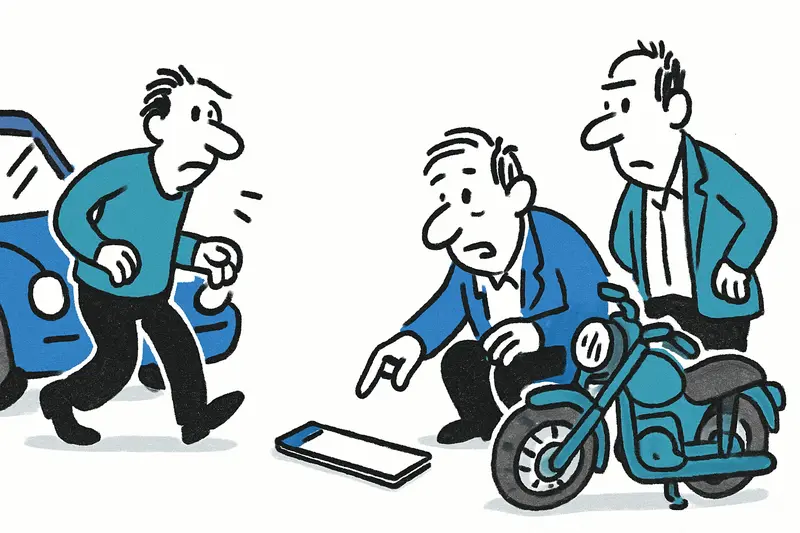
On May 1, a collision occurred on the Avenida de Gabriel Roca — the Paseo Marítimo in Palma — involving a moped and two cars. According to on-site reports, a moped rider and a car were stopped at a red light when another car, travelling at high speed and without lights, struck the stationary vehicle; that car then collided with the moped, causing its rider to fall. The alleged cause of the accident left the scene but dropped his license plate, which made it possible to identify him as a 31‑year‑old Bolivian national. The police recorded a breath alcohol concentration of 0.86 mg/l for him; another person involved registered 0.47 mg/l and will face a fine. The case joins other recent incidents on the promenade, such as the Nighttime accident on the Paseo Marítimo: alcohol, a tripping hazard and many questions.
Main question: Why is it so often impossible to reduce the problem of drink‑driving effectively despite controls and campaigns — and which steps are missing from the public debate on the island?
Critical analysis: This case reveals a dangerous combination of speed, poor visibility (driving without lights) and alcohol. Fleeing the scene is an unfortunately common reflex — yet it is equally striking how careless it was to leave the license plate behind. The causes often run deeper: low perceived risk of sanctions, too few late‑night checks on main routes such as the Avenida de Gabriel Roca, and a lack of infrastructure for sustainable night mobility. The facts are clear: a breath alcohol concentration of 0.86 mg/l in the alleged perpetrator is well above criminal thresholds; such levels are scientifically linked to significantly slowed reaction times and a higher risk of accidents, a pattern visible in coverage such as the Fatal Accident on the Paseo Marítimo: Trial Raises Questions About Safety and Control.
What is often missing from public discussion are concrete, everyday preventive measures. Incidents are reported — and they provoke outrage — but there is too little coverage of recurring life realities: shift workers, people returning late from bars along busy stretches like the Paseo Marítimo, groups of tourists out drinking at night, and locals who think that a “short drive home” is harmless. Authorities also rarely communicate openly about data‑based control densities or about which roads are particularly risky at which times.
Scene from everyday life in Palma: It is a Saturday night, the lampposts by the sea cast long shadows over the promenade, murmurs seep from the bars and a tram squeaks in the distance. A taxi waits at the port entrance, two young people argue loudly about the last ferry. On nights like this, when the mood lightens, speed and alcohol combine in a particularly deceptive way.
Concrete proposals beyond mere appeals: first, targeted night‑time control blocks on selected routes, not only occasional spot checks, so that perceived risk increases. Second, better lighting and visibility measures at critical junctions — vehicles without lights are a potential trigger for chain collisions. Third, expansion of affordable night transport and clearly promoted short‑trip taxi fares during peak hours; if an inexpensive alternative exists, people are more likely to use it. Fourth, mandatory refresher courses and stiffer penalties for hit‑and‑runs and reckless driving, combined with transparent publication of statistics: the public and policymakers must be able to see which measures are effective.
Additionally, the municipality could work seriously with restaurants and event organizers to create preventive offers — for example discounted rides home for guests on weekends or information campaigns directly in nightlife districts. Not all solutions are policing measures; many are pragmatic everyday supports, as contrasted with alarming single-vehicle incidents like the Car on the Paseo Marítimo in Flames – Bang, Smoke and Many Questions.
Punchy conclusion: The incident on the Paseo Marítimo is not a bizarre isolated case but a small blueprint of what can go wrong on Mallorca's streets at night: alcohol, speed and missing alternatives. The fact that the license plate was left behind and enabled identification is almost ironic — a silent sign of stupidity but also of systemic gaps. Anyone who wants change must tackle controls, infrastructure and everyday offers simultaneously. Otherwise such scenes will remain a recurring reality — with dangerous consequences for cyclists, moped riders and pedestrians.
Frequently asked questions
What is the weather usually like in Mallorca in spring?
Can you swim in Mallorca in spring?
When is the best time to visit Mallorca for good weather?
What should I pack for Mallorca in spring?
Is spring a good time for hiking in Mallorca?
What is Port de Sóller like in spring?
Is Palma busy in spring?
What is the weather like in Sa Coma in spring?
Similar News
Magaluf: Watchtower Alarm – Lifeguards Pull Unconscious Beachgoer from the Water
After a drama in the late afternoon, two lifeguards at Magaluf beach rescued an unconscious 44-year-old man. He was stab...
Turquoise in the City: How dangerous is the color play of the Sa Riera?
The Sa Riera in Palma suddenly turned turquoise — a pretty motif, but behind the effect lies a discharge of saline waste...

Jeckliner at Sunnesching: Cologne spirit sets sail from Palma
In September 2027 the Mein Schiff 2 briefly becomes a floating carnival stage: four days with Cologne bands, comedy and ...
Finally Home: Mike and Leyla Heiter Buy Villa with Sea View in Mallorca
The reality TV couple Mike and Leyla Heiter have bought a house in Mallorca with a roof terrace and sea view. An Instagr...
Arrest after series in Palma: Who protects apartments from repeat offenders?
The National Police arrested a man in Palma who investigators say may have broken into several apartments. In one incide...
More to explore
Discover more interesting content

Can Cap de Bou

Townhouse Lleo 72
