
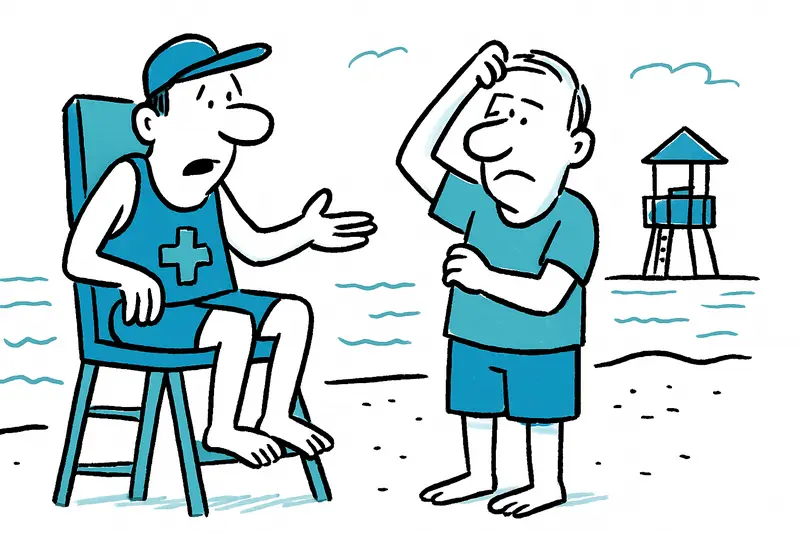
Lifeguards in Palma: Strike suspended — what now?
Lifeguards in Palma: Strike suspended — what now?
The walkout by lifeguards announced for August 12 has been provisionally called off. Exactly what has been achieved remains unclear — and the real test is still ahead.
Lifeguards in Palma: Strike suspended — what now?
Moratorium instead of a solution: The calm on the beach must not become a sedative
On a late summer morning at the Passeig Marítim there is the smell of saltwater and roasted almonds; lifeguard towers dot the bay of Pere Antoni like painted points in the shimmering light. The news that the lifeguards' strike in Palma, Calvià and Ibiza scheduled for August 12 will not take place for now brings relief to families on the sand and restaurant owners along the promenade. The big question remains, however: Is this breathing space enough to actually solve the underlying problems?
The union has suspended the planned strike after talks with the city government and the operator of the rescue service. It is clear that there have been "progress" in the discussions — that is the formulation in the air. From the perspective of those affected it is a sign, but not proof. Anyone who looks out over a crowded beach knows: visible presence and real readiness for action are measurable; mere promises are not.
The critical question is therefore very concrete: Which specific steps were agreed, within what timeframe and with what legal binding force? So far there are no clear answers in the public perception. It is not enough to hear that people "want to do something"; it must be disclosed how many additional staff will be hired, which equipment will be procured and which spatial improvements are planned — and who will guarantee the funding.
At the moment the conflict centers on the upcoming tender for the next contract for rescue and first-aid services in Palma. This will decide whether the agreements from the talks become reality. One unresolved point: tender documents are often technical and get lost behind paragraphs — for the people standing watch in the towers practice matters: enough staff during peak times, functioning vehicles, and fixed rest and changing rooms. These practical failings are illustrated in Open-ended Lifeguard Strike: Island Caught Between Safety and Labor Dispute.
What hardly appears in the public debate are clear control mechanisms. Who checks whether a commitment is kept? What do sanctions look like if a new contract does not ensure coverage? Without such controls there is a risk that improvements remain only on paper. This risk has been highlighted in reports such as Lifeguards in Palma: When Wooden Crosses Speak Louder Than Megaphones. Transparency in award criteria, regular inspections and an independent complaints office would be pragmatic additions to the negotiation results.
Concrete proposals that should be put on the table now: first, a timetable with milestones and concrete numbers for personnel and equipment; second, a commitment to publish the specification for the next tender; third, an independent monitoring body with representatives of the lifeguards, municipal oversight bodies and citizens; fourth, an emergency agreement for peak loads in high summer that mandates short-term staff pooling and equipment reserves.
Practically speaking: on the Passeig promenade it is easy to observe how individual towers are understaffed, how shifts overlap or are scheduled too tightly. A pilot project on a municipal beach section — for example Pere Antoni — could show whether improved duty rosters and additional rescue boats really reduce response times. Similar concerns were raised during Lifeguards stage protest at Can Pere Antoni — a wake-up call for Mallorca's beaches. Such pilot tests should be documented and publicly evaluated.
The union has framed the suspension as a vote of confidence. That is legitimate. At the same time, the ball is now in the court of the city and the operator: if they only want to buy time, the next escalation will not be long in coming. People who rely on rescue in the surf on hot August days have little patience for makeshift solutions.
Conclusion: On August 12 Palma's beaches will remain calm — good news for everyone who wants to swim or seek peace. But this calm must not be mistaken for satisfaction. Poor services cannot be replaced by a few peaceful weeks. The city must now provide clearer commitments, verifiable agreements and transparent procurement rules. Lifeguards should accompany the negotiations and keep the public informed. Then a postponed confrontation could become a sustainable step toward reliable beach supervision.
Frequently asked questions
What does the temporary suspension of the lifeguard strike mean for Palma's beaches this summer?
What concrete steps have been proposed to improve lifeguard services in Palma?
Who will verify that commitments to lifeguard services are kept in Palma?
What role will the next rescue and first-aid services tender play in Palma's beach safety?
Could a Pere Antoni pilot project test new lifeguard measures in Palma?
What timelines and funding assurances are expected for Palma's beach safety upgrades?
How can visitors stay safe on Mallorca beaches if lifeguard coverage is uncertain?
How do weather and peak-season conditions affect lifeguard readiness on Mallorca?
Similar News

Turquoise in the City: How dangerous is the color play of the Sa Riera?
The Sa Riera in Palma suddenly turned turquoise — a pretty motif, but behind the effect lies a discharge of saline waste...

Jeckliner at Sunnesching: Cologne spirit sets sail from Palma
In September 2027 the Mein Schiff 2 briefly becomes a floating carnival stage: four days with Cologne bands, comedy and ...
Finally Home: Mike and Leyla Heiter Buy Villa with Sea View in Mallorca
The reality TV couple Mike and Leyla Heiter have bought a house in Mallorca with a roof terrace and sea view. An Instagr...

Arrest after series in Palma: Who protects apartments from repeat offenders?
The National Police arrested a man in Palma who investigators say may have broken into several apartments. In one incide...

How a Teenager Without a Driver's License Stole a Rental Car — and What It Means for El Arenal
In El Arenal a minor took advantage of an unattended rental car with its engine running. Flight, climbing over walls and...
More to explore
Discover more interesting content

Can Cap de Bou

Townhouse Lleo 72
