
Major operation in Llucmajor: Villa burns, propane business narrowly saved — what's left in the dark?
Major operation in Llucmajor: Villa burns, propane business narrowly saved — what's left in the dark?
A luxury villa near Llucmajor was engulfed in flames on Thursday evening. One resident suffered from smoke inhalation, and firefighters prevented the blaze from spreading to a nearby propane business. A retrospective with clear questions and concrete proposals.
Major operation in Llucmajor: Villa burns, propane business narrowly saved
Key question: Do safety rules and inspections carry enough weight in rural areas when it comes to protecting people and businesses?
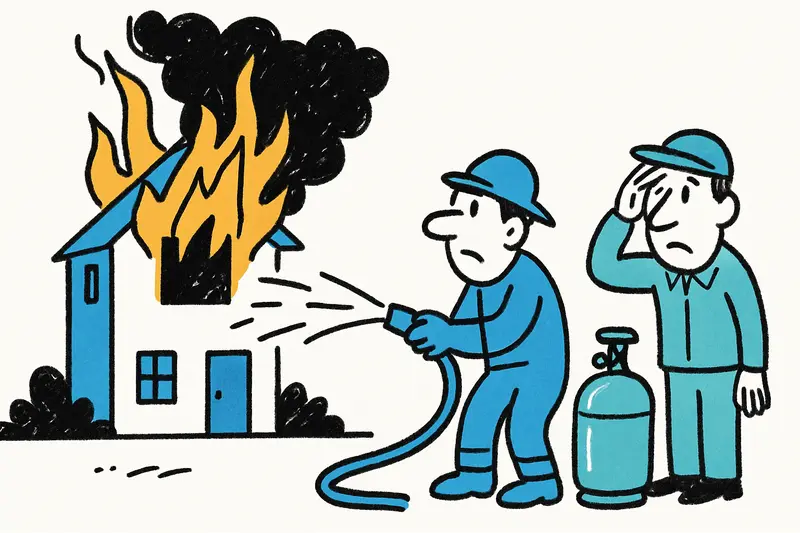
On Thursday evening around 7 p.m., the once-quiet stretch along the Camí de Galdent between Algaida and Llucmajor turned into a scene of sirens, flashing lights and acrid smoke. A two-storey villa caught fire on the top floor. Large flames were visible from a door on the upper level, and a dense column of smoke rose. According to current facts, a young woman from the house was treated for smoke inhalation. The fire brigade responded with a large deployment and was able to prevent the fire from spreading to a business that sells propane gas cylinders.
Critical analysis
The immediate danger from burning buildings is obvious, as other local incidents such as Nighttime fire in Llucmajor: pets die, questions remain have shown, but the proximity to the gas cylinder company made the situation particularly delicate. Fire and explosive gases are a dangerous mix, especially on windy nights, which are not uncommon on Mallorca's south coast. What was achieved here was containment by emergency services; exactly how that was accomplished remains unclear. Questions arise: Were there sufficient safety distances, were the storage conditions for the cylinders compliant with regulations, and how quickly could neighbouring properties be warned and evacuated? These points are crucial to prevent similar scenarios in the future.
What is missing from the public debate
Attention usually focuses on the fire itself: blue lights, injured person, damage, a pattern visible in incidents like Pets Die in House Fire in Llucmajor — How Safe Are We Really?. Less discussed are the systemic questions: How strictly are permits for storing propane monitored in rural commercial zones? Are there mandatory minimum distances between residential areas and gas sales outlets? And how is cooperation organized between the fire brigade, municipal administration and the operator? Such details are uncomfortable because they touch on responsibilities and funding, as debates after Major fire in Son Castelló: Bakery hall puts fire safety on Mallorca's agenda showed. In conversations with neighbours you often hear only: 'It shouldn't be allowed this close.' That is exactly what often remains in the dark.
An everyday scene from Mallorca
The next morning the area was oddly quiet. In the field next to the Camí de Galdent an old tractor chugged, roosters crowed, and a dog suspiciously trotted past the spot where charred remains still lay. A neighbour opened his door, brushed ash off his jacket and shook his head. The usual evening crowd at the Llucmajor bar was smaller that day; people spoke quietly about the fire, the sirens still ringing in their ears. Such images show how closely danger and everyday life lie together here.
Concrete solutions
Several practical steps can be derived from the incident: First, establish clear buffer zones between LPG storage sites and residential areas. Second, mandatory regular safety checks for businesses that store or sell gas cylinders; these should involve fire safety officers and independent inspectors. Third, standardize response plans between the municipality, fire brigade and affected businesses, including alert chains and evacuation drills for residents. Fourth, ensure simple but effective infrastructure measures such as a sufficient density of hydrants and easily accessible access routes for fire engines. Finally, increase transparency for residents — informational leaflets, notices at company premises, annual public meetings.
Why this helps in concrete terms
These measures cost money and require enforcement, but they significantly reduce risk. Buffer zones prevent fires from spreading immediately, regular inspections uncover deficiencies early, and coordinated response plans save valuable minutes in an emergency. For Mallorca's rural areas, this means a return to a degree of normality: less fear of explosions and greater trust in authorities and businesses.
Pithy conclusion
The major operation in Llucmajor prevented worse outcomes, but that must not be the end of the debate. The guiding question remains: Should residents keep hoping that the fire brigade will be lucky next time, or will we create binding rules that make such luck unnecessary? Local politics, businesses and the fire brigade must now sit down together, set clear rules and enforce them. Otherwise, after the blast there will always be only ash and the feeling that what could have been avoided was never dared to be regulated.
Frequently asked questions
What should residents in rural Mallorca do if a nearby house fire threatens gas storage?
How dangerous is a propane gas cylinder business near homes in Mallorca?
What makes house fires in rural Mallorca harder for firefighters to control?
What safety checks should gas cylinder businesses in Mallorca have?
When is the highest fire risk in Mallorca’s countryside?
What happened in Llucmajor when the villa caught fire near the propane business?
Why are buffer zones important around gas storage sites in Mallorca?
What should Mallorca residents expect after a nearby fire in a rural area?
Similar News
When the Wallet Becomes a Danger: Attack in Peguera and Lessons for Mallorca
In Peguera, two women are said to have stolen the wallet from a 75-year-old German couple. When the victim intervened, t...
Plata stays Plata: Young people take over, Llonguets remain
A small bar on Carrer de l'Argenteria will continue: Tolo Serra hands the place over to young Mallorcans at the end of t...
Unnoticed in the Luggage Compartment: How a Boy Traveled More Than 100 Kilometers in a Team Bus
A minor traveled in the undercarriage of a team bus for more than 100 kilometers until his cries for help were heard. A ...

Cap Vermell Grand: Second Michelin Key – a Gift for the East
The Cap Vermell Grand in Capdepera has been awarded its second Michelin key. For the region this elevates the luxury off...
Eurowings lets four aircraft carry names – a friendly idea that also reaches Mallorca
Eurowings is launching a campaign: four Airbus A320s are to carry the first names of people who help others in everyday ...
More to explore
Discover more interesting content

Can Cap de Bou

Townhouse Lleo 72
